

Introduction
Workout pants vs running pants is a question many fitness enthusiasts in the US face when choosing the right gear for their workouts. While both types of pants are designed for physical activity, they serve very different purposes. Understanding the differences in fabric, fit, and performance can help you pick the right pair for your training, whether you’re hitting the gym, going for a jog, or combining both in your routine.
Table of Contents
1. What Are Workout Pants?
Workout pants are designed for a wide range of fitness activities, especially gym-based workouts such as weight training, cross-training, stretching, and functional exercises. In the comparison of workout pants vs running pants, workout pants are built to handle multiple movements rather than repetitive forward motion.
Most workout pants are made from stretchable, durable fabrics like polyester blends, spandex, or cotton-blend performance materials. These fabrics allow easy bending, squatting, and lunging while maintaining comfort during intense workouts. Many options also feature moisture-wicking technology, which helps manage sweat during long gym sessions.
In terms of fit, workout pants usually offer a relaxed or slightly tapered fit. This design provides freedom of movement without feeling restrictive. Unlike running pants, they are not focused on aerodynamics; instead, they prioritize flexibility, support, and durability. Reinforced stitching and thicker fabric panels are common, making them suitable for exercises that involve contact with gym equipment or floors.
Another key feature of workout pants is versatility. They can be worn for strength training, warm-ups, cool-downs, and even casual athleisure wear. Many styles also include practical elements like deep pockets, elastic waistbands, and adjustable drawstrings, which add convenience during workouts.
In the debate of workout pants vs running pants, workout pants stand out as the better choice for people who need all-purpose training pants that perform well across different workout styles rather than a single activity like running.
2. What Are Running Pants?
Running pants are specifically designed for running and jogging, where comfort, breathability, and efficiency matter the most. In the comparison of workout pants vs running pants, running pants are built to support continuous forward movement and help runners maintain a smooth, distraction-free stride.
These pants are usually made from lightweight, performance-focused fabrics such as polyester or nylon blends. The materials are highly breathable and moisture-wicking, allowing sweat to evaporate quickly during long runs. Many running pants also include mesh panels or ventilation zones, which improve airflow and prevent overheating, especially during outdoor runs.
The fit of running pants is typically tapered or slim, reducing excess fabric that could cause friction or drag. This streamlined design helps minimize chafing and makes them ideal for both short sprints and long-distance runs. Some styles offer a slightly snug fit around the calves or ankles, improving stability while running.
Running pants are also designed with runner-specific features, such as zippered pockets for keys or cards, reflective details for visibility in low-light conditions, and flexible waistbands that stay secure while moving. However, they are generally less durable than workout pants because they are not meant for heavy lifting, floor exercises, or repeated contact with gym equipment.
In the workout pants vs running pants comparison, running pants are the better choice for people who prioritize speed, airflow, and comfort during runs, especially for outdoor or long-distance running sessions.
3. Workout Pants vs Running Pants: Key Differences
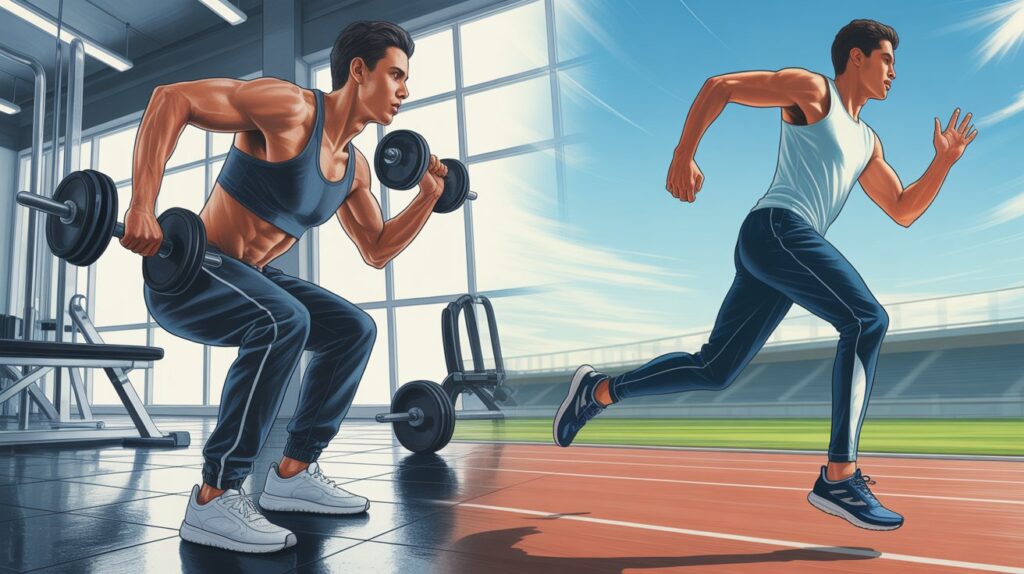
When comparing workout pants vs running pants, the differences come down to purpose, design, and performance. While both are made for physical activity, each type is optimized for a specific way the body moves. Understanding these key differences helps you choose the right pants for your fitness routine.
Purpose and Activity Type
The biggest difference in workout pants vs running pants is how they are used. Workout pants are designed for gym training, strength workouts, and cross-training, where movements include squatting, stretching, lifting, and changing directions. Running pants, on the other hand, are built specifically for running and jogging, focusing on forward motion and consistent pacing.
Fabric and Breathability
Workout pants typically use slightly thicker and more durable fabrics to handle friction from gym equipment and floor exercises. They still offer moisture-wicking properties but prioritize strength and stretch. Running pants are made from lightweight, highly breathable materials that help release heat and sweat quickly, making them better suited for long runs and outdoor conditions.
Fit, Flexibility, and Movement
In the workout pants vs running pants comparison, fit plays a major role. Workout pants usually have a relaxed or flexible fit, allowing full range of motion during multi-directional exercises. Running pants feature a tapered or slim fit that reduces excess fabric, minimizes chafing, and improves efficiency while running.
Comfort and Performance
Workout pants are designed for overall comfort during varied movements, with added stretch and support in key areas. Running pants focus more on lightness and airflow, keeping runners comfortable over distance and time. This difference becomes noticeable during longer workouts or runs.
Durability and Features
Workout pants are generally more durable, with reinforced seams and thicker fabric to withstand intense training. Running pants often include runner-friendly features like reflective elements and zippered pockets but sacrifice some durability to remain lightweight.
Overall, in the debate of workout pants vs running pants, the right choice depends on your primary activity. Workout pants are ideal for versatile training, while running pants deliver better performance for dedicated running sessions.
4. Can You Use Workout Pants for Running?
Yes, you can use workout pants for running, but it depends on the type of run and your comfort needs. In the comparison of workout pants vs running pants, workout pants are more versatile, while running pants are more specialized.
Workout pants work reasonably well for short runs, warm-ups, or treadmill running at the gym. Their stretchable fabric and flexible fit allow basic running movement without feeling restrictive. For casual runners or people who mix light jogging with strength training in the same session, workout pants can be a practical choice.
However, workout pants may become less comfortable during long-distance or outdoor runs. Because they are usually made from thicker fabric, they can trap heat and hold moisture longer than running pants. This can lead to discomfort, overheating, or chafing over time, especially in warmer weather.
Another limitation is fit and weight. In the workout pants vs running pants debate, workout pants are not designed to reduce friction or drag. Extra fabric around the legs may move or rub during repeated strides, which becomes noticeable on longer runs.
In summary, workout pants are suitable for occasional or short runs, particularly indoors. But if running is your main activity, especially outdoors or for longer distances, running pants offer better breathability, lighter weight, and overall performance.
5. Can You Work Out in Running Pants?
Yes, you can work out in running pants, but they are not always the best option for every type of training. In the comparison of workout pants vs running pants, running pants are designed for speed and airflow, not heavy or multi-directional gym movements.
Running pants work well for light workouts, such as cardio machines, bodyweight exercises, stretching, or mobility routines. Their lightweight fabric and breathable design help keep you cool, especially during high-heart-rate activities like cycling or elliptical training.
However, running pants have some limitations in the gym. Because they are made from thinner materials, they may not hold up well during strength training, deadlifts, squats, or floor-based exercises. Repeated contact with benches, mats, or equipment can cause faster wear and tear compared to workout pants.
Fit is another important factor in the workout pants vs running pants comparison. Running pants often have a slimmer, more tapered fit, which can feel restrictive during deep squats, lunges, or lateral movements. This may reduce comfort and range of motion during intense training sessions.
In short, running pants are fine for low-impact or cardio-focused workouts, but for full gym sessions involving lifting or varied movements, workout pants provide better durability, flexibility, and overall support.
6. Workout Pants vs Running Pants: Comparison Table
A clear way to understand the differences in the workout pants vs running pants debate is through a comparison table. This helps you see at a glance which type of pants is best for your activity, comfort, and performance needs.
| Feature | Workout Pants | Running Pants |
|---|---|---|
| Primary Purpose | Designed for gym training, strength exercises, and cross-training | Designed specifically for running and jogging |
| Fabric | Slightly thicker, durable fabrics with stretch; often cotton-blends or polyester-spandex | Lightweight, breathable, and moisture-wicking fabrics like polyester or nylon blends |
| Fit | Relaxed or slightly tapered fit to allow multi-directional movement | Slim or tapered fit to reduce friction and improve running efficiency |
| Breathability | Moderate, designed to manage sweat during varied exercises | High, with mesh panels or ventilation zones for airflow |
| Comfort & Performance | Offers support and flexibility for squats, lifts, and floor exercises | Focuses on lightness, airflow, and comfort for long or repeated strides |
| Durability | Highly durable; withstands friction from equipment and floor contact | Less durable; optimized for repeated forward motion rather than heavy training |
| Extra Features | Elastic waistbands, deep pockets, adjustable drawstrings | Reflective details, zippered pockets, secure waistbands for running stability |
| Best Use | All-purpose gym and indoor workouts, functional training | Outdoor running, treadmill sessions, jogging, and long-distance running |
| US Climate Suitability | Suitable for most gym and indoor environments; heavier fabrics for cooler climates | Lightweight fabrics ideal for outdoor running in warm or moderate weather |
This table makes it easy to compare workout pants vs running pants at a glance. Choosing the right pair depends on your primary activity, climate, and comfort preference. For multi-directional workouts in the gym, workout pants are the better choice, while running pants excel in forward-motion activities like jogging or long-distance running.
7. How to Choose the Right Option for You
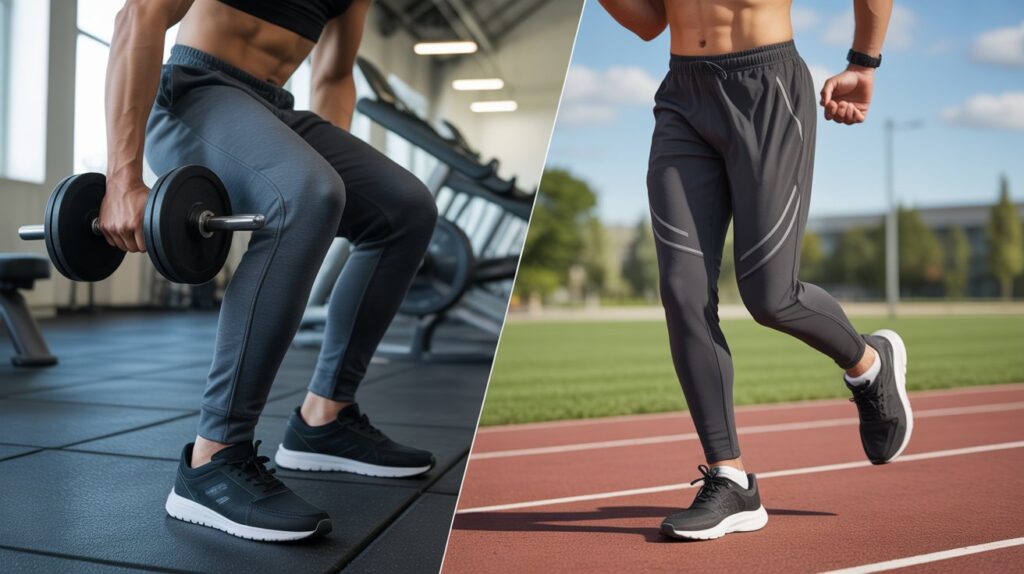
Choosing between workout pants vs running pants depends on your activity type, comfort needs, and environment. Understanding the differences and your personal preferences will help you pick the best pants for maximum performance and comfort.
1. Consider Your Primary Activity
The first step is to evaluate how you’ll use the pants. If you spend most of your time in the gym lifting weights, doing cross-training, or performing functional exercises, workout pants are the ideal choice. They provide flexibility, durability, and support for a wide range of movements.
If your main focus is running, jogging, or treadmill sessions, running pants are better. Their lightweight, breathable fabrics and slim fit reduce friction, keep you cool, and improve efficiency during forward-motion activities.
2. Evaluate Comfort and Fit
Comfort is key in deciding between workout pants vs running pants. Workout pants generally offer a relaxed or slightly tapered fit, making them suitable for multi-directional movements. Running pants are slimmer and more tapered, which helps prevent chafing but may feel restrictive for exercises like squats or lunges. Always try pants on or check sizing charts to ensure proper fit.
3. Consider Climate and Season
Fabric choice matters, especially in different US climates. Workout pants with thicker materials are great for cooler indoor gyms or colder months, while running pants made from lightweight, breathable fabrics are better for outdoor running in spring, summer, or mild weather. Some running pants also feature reflective details for early morning or evening runs.
4. Look for Extra Features
Additional features can influence your decision. Workout pants may include elastic waistbands, adjustable drawstrings, and deep pockets for convenience during workouts. Running pants often offer zippered pockets and reflective accents, improving safety and usability during runs.
5. Balance Versatility and Specialization
Ask yourself whether you need all-purpose gym pants or specialized running gear. Workout pants are versatile and can handle a variety of exercises, while running pants are specialized for enhanced running performance. If you split your time between gym workouts and running, you might consider having both types in your fitness wardrobe.
In conclusion, when deciding between workout pants vs running pants, focus on your main activity, comfort, climate, and practical features. Choosing the right pair ensures better performance, comfort, and overall workout experience.
8. Common Mistakes to Avoid
When deciding between workout pants vs running pants, many people make simple mistakes that can affect comfort, performance, and durability. Avoiding these pitfalls ensures you get the most out of your fitness gear.
1. Choosing Pants Without Considering Activity
One of the most common mistakes is picking pants based on style rather than purpose. Workout pants are great for gym exercises and cross-training, while running pants are designed for forward-motion activities. Using the wrong type can lead to discomfort or reduced performance. Always ask yourself: What activity will I do most?
2. Ignoring Fabric and Breathability
Fabric matters more than most people realize. Workout pants often use thicker materials for durability, which may trap heat during running. Running pants prioritize breathability but may not hold up under heavy lifting or floor exercises. Avoid buying pants without checking fabric type, moisture-wicking ability, and breathability, especially if you plan to train outdoors or in hot conditions.
3. Overlooking Fit and Flexibility
Many people choose pants that are too tight or too loose. In the workout pants vs running pants debate, fit is crucial. Workout pants should allow full range of motion, while running pants should minimize friction. Choosing the wrong fit can cause chafing, restrict movement, or even lead to injuries. Always check sizing guides and try pants on if possible.
4. Prioritizing Style Over Function
It’s tempting to pick pants that look good rather than perform well. While style is important, functionality should come first. Workout and running pants are designed for specific movements and conditions—ignoring these can compromise your workout experience.
5. Not Considering Seasonal or Environmental Needs
Some pants are better suited for indoor gyms, while others excel in outdoor conditions. Using thick workout pants in hot weather or thin running pants in cold weather can be uncomfortable and reduce performance. Always match your pants to the climate and training environment.
6. Skipping Extra Features
Practical features like pockets, drawstrings, and reflective details can make a big difference. A lot of people don’t pay attention to these details until problems arise. For example, running outdoors without reflective details or secure pockets can be inconvenient or unsafe.
In summary, avoiding these mistakes ensures you choose the right pair in the workout pants vs running pants comparison. Focus on activity type, fabric, fit, function, and environment to get maximum comfort, durability, and performance from your fitness pants.
Conclusion
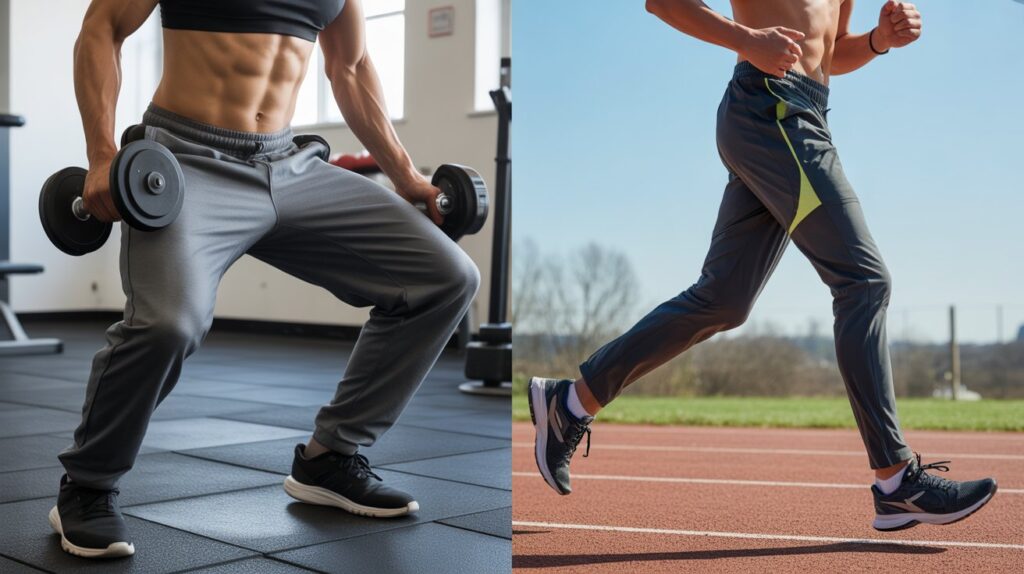
In the comparison of workout pants vs running pants, choosing the right pair comes down to your activity, comfort, and performance needs. Workout pants are versatile, durable, and perfect for gym exercises, strength training, and multi-directional movements. Running pants, on the other hand, are lightweight, breathable, and designed to enhance efficiency and comfort during running or jogging.
Understanding the differences in fabric, fit, breathability, and features ensures you select pants that will keep you comfortable and supported during your workouts. By considering your primary activity, climate, and personal preference, you can make a choice that improves performance and reduces discomfort.
Ultimately, whether you opt for workout pants, running pants, or both, the key is to match your fitness gear to your training style. Making an informed choice will help you stay motivated, perform better, and enjoy every session, whether in the gym or on the track.
9. FAQs
What is the main difference between workout pants and running pants?
The primary difference lies in their purpose and design. Workout pants are made for multi-directional gym exercises, offering flexibility, durability, and support. Running pants are lightweight and tapered, designed specifically for forward-motion activities like jogging or long-distance running.
Can I use workout pants for running outdoors?
Yes, you can use workout pants for short or casual runs, especially indoors or on a treadmill. However, they may feel heavier and less breathable than running pants, making them less comfortable for long-distance or outdoor runs.
Are running pants suitable for strength training?
Running pants can be used for light workouts, cardio, or stretching, but they are not ideal for heavy lifting or floor exercises. Their slimmer fit and thinner fabric may limit flexibility and durability during intense gym sessions.
How do I choose between workout pants and running pants?
Consider your primary activity, comfort, climate, and features. Choose workout pants for gym or cross-training, and running pants for jogging, treadmill workouts, or outdoor running. Fabric breathability, fit, and special features like pockets or reflective elements should also guide your decision.
Can one pair of pants work for both workouts and running?
While some workout pants can handle light running, and running pants can work for low-impact exercises, having both types is ideal if you regularly train in the gym and run outdoors. Each type is optimized for different movements, comfort, and performance needs.