

Introduction
When it comes to choosing the perfect pants for work, casual wear, or daily activities, the debate of stretch pants vs non-stretch pants is one every wardrobe-conscious person faces. Each type offers unique benefits—stretch pants provide comfort and flexibility, while non-stretch pants deliver structure and durability. Understanding their differences can help you select the right pair for your lifestyle, ensuring both style and all-day comfort.
Table of Contents
What Are Stretch Pants?
Stretch pants are designed to move with your body instead of restricting it. Unlike traditional rigid pants, they are made with flexible fabrics that stretch when you walk, sit, bend, or stand. In the debate of stretch pants vs non-stretch pants, stretch pants are often preferred for their comfort and adaptability, especially for everyday wear and active lifestyles.
Stretch pants are usually made by blending standard fabrics—such as cotton, polyester, or nylon—with elastic fibers like spandex or elastane. This combination allows the fabric to expand and return to its original shape, giving you a better fit without feeling tight or stiff.
One of the biggest advantages of stretch pants is freedom of movement. They are ideal for people who spend long hours sitting at a desk, standing at work, or moving throughout the day. Because the fabric flexes naturally, stretch pants reduce pressure around the waist, thighs, and knees—areas where non-stretch pants often feel uncomfortable.
Another important feature is their improved fit. Stretch pants adapt to different body shapes more easily than non-stretch options. This makes them more forgiving if your size fluctuates slightly or if you prefer a tailored look without feeling restricted. In the comparison of stretch pants vs non-stretch pants, this flexible fit is a key reason many Americans choose stretch styles for work and casual wear.
Stretch pants also perform well in modern workwear and travel. Many brands now offer stretch chinos, stretch dress pants, and stretch jeans that look polished while still feeling comfortable. This makes them suitable for business-casual offices, commuting, flights, and long road trips.
However, stretch pants are not just about comfort—they are also designed for practical use. The added elasticity helps prevent fabric tearing during movement and makes daily activities easier. When cared for properly, high-quality stretch pants can maintain their shape and comfort for a long time.
In short, stretch pants combine flexibility, comfort, and modern style. When comparing stretch pants vs non-stretch pants, stretch pants stand out as a smart choice for people who value ease of movement, a better fit, and all-day wear ability.
Pros of Stretch Pants
- Superior comfort – flexible fabric reduces tightness and pressure
- Better mobility – allows easy movement, bending, and sitting
- Adaptive fit – comfortably adjusts to a wide range of body types
- More forgiving sizing – comfortable even with slight size changes
- All-day wearability – stays comfortable for long hours
- Less restriction – ideal for work, travel, and daily activities
- Modern versatility – works for casual and business-casual looks
- Lower risk of tearing – fabric stretches instead of pulling
Cons of Stretch Pants
- Can lose shape over time with frequent wear
- Less durable than non-stretch fabrics in some cases
- Elastic fibers may weaken after repeated washing
- Often cost more than non-stretch pants
- May not look as structured or formal
- Can feel too tight if the stretch is excessive
- Sensitive to heat and improper care
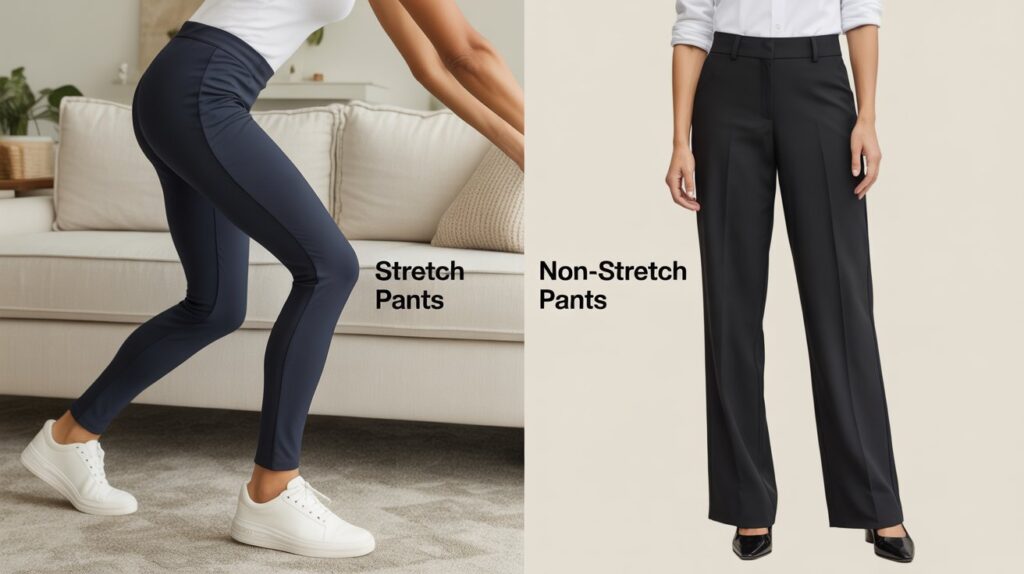
What Are Non-Stretch Pants?
Non-stretch pants are traditional pants made from fabrics that do not contain elastic fibers, meaning they maintain their shape and structure without stretching. In the discussion of stretch pants vs non-stretch pants, non-stretch pants are often chosen for durability, classic style, and a more formal appearance.
Non-stretch pants are commonly made from materials like cotton, denim, wool, or linen. These fabrics provide a firm structure that holds its shape over time, making non-stretch pants ideal for professional settings, formal events, or situations where a polished, tailored look is important.
One of the key characteristics of non-stretch pants is their stable fit. Since the fabric does not stretch, these pants provide a consistent shape and silhouette. This stability is especially valued in workwear or dress pants where a crisp appearance is necessary.
Non-stretch pants are also known for their durability. Because the fabric does not rely on elastic fibers, it is less likely to wear out from constant stretching or lose its form after repeated washes. This makes non-stretch pants a long-lasting option for people who prioritize longevity over flexibility.
However, non-stretch pants are less forgiving in terms of movement. They can feel restrictive when sitting, bending, or performing physical activities, unlike stretch pants that move with your body. In the stretch pants vs non-stretch pants comparison, this limitation is one of the main differences.
Non-stretch pants are available in various styles, from formal dress pants to casual denim, making them versatile for different occasions. They are often preferred by individuals who value classic fashion, professional appearance, and structured fit over extreme flexibility or elasticity.
In short, non-stretch pants provide durability, a polished look, and consistent shape. While they may lack the flexibility of stretch pants, they excel in areas where structure and long-term wear are important.
Pros of Non-Stretch Pants
- Durable and long-lasting – fabric holds up well over time
- Structured fit – maintains a crisp, polished appearance
- Classic style – ideal for formal and professional settings
- Less prone to sagging – retains shape even after multiple wears
- Easy to maintain – can handle regular washing without losing form
- Better for tailored looks – perfect for dress pants and suits
- Affordable options – often cheaper than stretch pants
- Versatile for different occasions – casual to formal wear
Cons of Non-Stretch Pants
- Limited flexibility – can feel restrictive when moving or sitting
- Less comfortable for long wear – not ideal for active lifestyles
- Can feel tight if sizing is slightly off
- Prone to creasing – wrinkles more easily than stretch fabrics
- Less forgiving for body changes – not adaptable to size fluctuations
- Not ideal for travel or physical activities – restricts movement
- May require more precise sizing – wrong size affects comfort
Stretch Pants vs Non-Stretch Pants: Key Differences
When comparing stretch pants vs non-stretch pants, understanding their key differences helps you choose the right pair for your lifestyle, work, or casual wear. Both types have unique characteristics that affect comfort, fit, durability, and style.
1. Comfort and Flexibility
Stretch pants are made to flex and adapt to your body’s movements. The elastic fibers like spandex or elastane provide greater flexibility, making them ideal for sitting, bending, or active movements. Non-stretch pants, on the other hand, have a rigid structure that can feel restrictive, especially during prolonged wear or physical activity.
2. Fit and Adaptability
Stretch pants offer a more forgiving fit, adapting to various body shapes and slight size changes. This makes them ideal for people who prefer a tailored look without feeling tight. Non-stretch pants maintain a consistent, structured fit, which is perfect for formal occasions but less adaptable to body fluctuations.
3. Durability
Non-stretch pants are generally more durable because their fibers do not rely on elasticity, which can wear out over time. Stretch pants, while comfortable, may lose their shape after repeated washing or extended use, making them slightly less long-lasting than their non-stretch counterparts.
4. Appearance and Style
Non-stretch pants usually have a crisp, polished look, making them suitable for professional or formal settings. Stretch pants can also look stylish, but they often lean toward casual or business-casual wear due to their flexible and softer fabric.
5. Maintenance and Care
Stretch pants require gentle washing and careful handling to preserve elasticity, while non-stretch pants are easier to care for, often tolerating regular machine washes without losing structure.
6. Ideal Use Cases
- Stretch pants: travel, commuting, casual wear, active jobs, long office hours
- Non-stretch pants: office, formal events, professional meetings, traditional business attire
In summary, the main differences in the stretch pants vs non-stretch pants comparison revolve around comfort, flexibility, fit, durability, and appearance. Stretch pants excel in mobility and all-day comfort, while non-stretch pants shine in structured style and long-lasting durability. Choosing the right type depends on your lifestyle, work needs, and personal preference.
Which Is Better for Workwear in the US?
When deciding between stretch pants vs non-stretch pants for workwear in the US, the best choice depends on your job type, daily activities, and workplace dress code. Both types offer advantages, but their suitability varies by situation.
Stretch Pants for Active Jobs
For occupations that require movement—such as warehouse work, healthcare, retail, or construction—stretch pants are often the better choice. Their flexible fabric allows employees to bend, squat, lift, or walk comfortably throughout the day. The forgiving fit also reduces pressure on the waist and knees, making long hours less tiring. In environments where comfort and mobility are essential, stretch pants outperform non-stretch options.
Non-Stretch Pants for Professional Settings
In more formal workplaces—like corporate offices, law firms, or client-facing roles—non-stretch pants are preferred. Their structured fit and polished appearance create a professional, put-together look that aligns with US business dress codes. While they offer less flexibility, their durability and classic style make them suitable for jobs where mobility is secondary to presentation.
Hybrid Options
Many modern US workwear brands now offer stretch dress pants or stretch chinos, combining the mobility of stretch pants with the polished look of non-stretch fabrics. These hybrid options are ideal for professionals who need comfort without compromising style.
Key Considerations for Choosing Work Pants
- Activity Level: Stretch pants for active roles, non-stretch for desk or formal jobs
- Dress Code: Ensure compliance with company standards
- Comfort vs Appearance: Balance flexibility and professional appearance
- Durability: Non-stretch pants last longer in high-wear environments
In conclusion, the stretch pants vs non-stretch pants debate for US workwear comes down to your job requirements. Stretch pants are best for active roles and long hours of movement, while non-stretch pants excel in formal, professional, and structured settings. Choosing the right pair ensures both comfort and appropriateness for the workplace.
Stretch vs Non-Stretch Pants for Casual & Everyday Wear
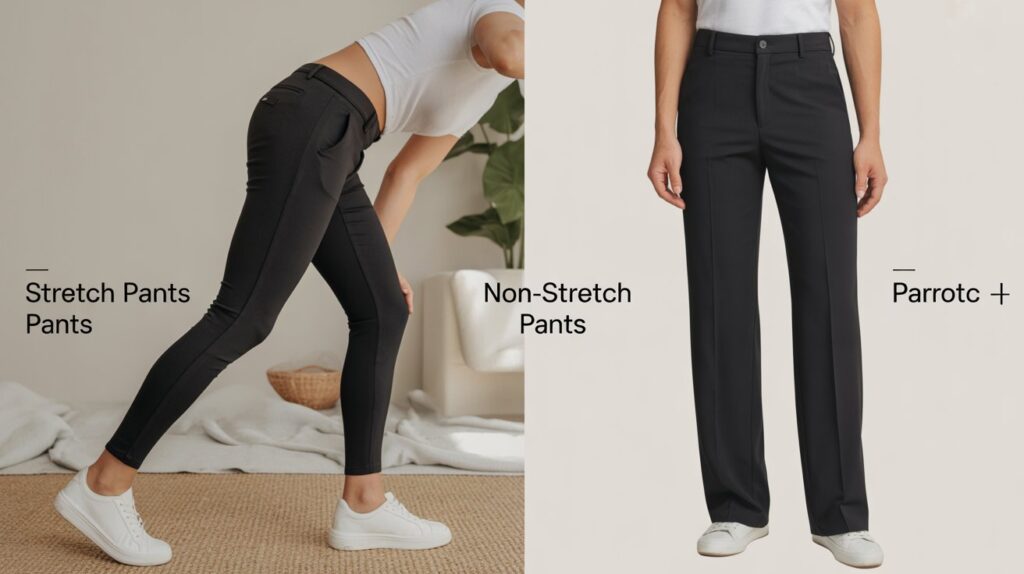
When it comes to casual and everyday wear, the debate of stretch pants vs non-stretch pants largely depends on comfort, lifestyle, and personal preference. Both types of pants have their place in a modern wardrobe, but they serve different purposes.
Stretch Pants for Comfort and Mobility
For daily activities such as running errands, commuting, traveling, or lounging, stretch pants are often the preferred choice. Their flexible fabric allows for unrestricted movement, making them ideal for sitting, walking, or bending without feeling tight or uncomfortable. Stretch pants also adapt to different body shapes, providing a flattering fit even after long hours of wear.
Non-Stretch Pants for Style and Structure
Non-stretch pants, on the other hand, are perfect when you want a more polished, structured look. They hold their shape well, making them suitable for casual outings where style matters, such as brunches, casual meetings, or social gatherings. While they offer less flexibility, non-stretch pants maintain a crisp appearance that stretch pants may lack.
Versatility and Wardrobe Choices
Many people opt to include both types in their casual wardrobe. Stretch pants are great for comfort-focused days, like traveling or casual weekends, while non-stretch pants are ideal for occasions where a neat and structured appearance is preferred.
Fabric and Seasonal Considerations
- Stretch pants often include cotton or polyester blends with spandex, which makes them breathable and easy to move in.
- Non-stretch pants may be made of denim, wool, or linen, which are durable and can suit different climates but may feel stiff initially.
Key Takeaways for Everyday Wear
- Choose stretch pants for comfort, flexibility, and active casual days.
- Choose non-stretch pants when style, structure, and durability are priorities.
- Balancing both types ensures your wardrobe is versatile for various daily needs.
In summary, the stretch pants vs non-stretch pants comparison shows that stretch pants dominate in comfort and mobility for everyday wear, while non-stretch pants are favored for structured style and polished casual looks. Combining both types provides a practical and stylish approach to daily dressing.
Which Pants Last Longer?
When comparing stretch pants vs non-stretch pants, durability is a key factor to consider, especially if you wear pants daily or for work. The longevity of a pair depends largely on the fabric composition, care, and frequency of use.
Non-Stretch Pants: Built to Last
Non-stretch pants are typically made from durable fabrics like cotton, denim, wool, or linen, which are naturally strong and resistant to wear and tear. Because they do not contain elastic fibers, they maintain their shape over time and are less prone to sagging or stretching out. This makes them ideal for people who want pants that can withstand regular use and washing without losing their structure.
Stretch Pants: Comfort vs Longevity
Stretch pants, while offering superior comfort and flexibility, contain elastic fibers like spandex or elastane that allow the fabric to move with your body. Over time and with frequent washing, these fibers can weaken, causing the pants to lose shape, sag, or become less elastic. High-quality stretch pants can last several years if properly cared for, but generally, they are slightly less durable than non-stretch options.
Factors That Affect Longevity
- Fabric Quality: Higher-quality fibers last longer, whether stretch or non-stretch.
- Frequency of Use: Daily wear increases wear and tear.
- Washing and Care: Stretch pants require gentle washing; non-stretch pants tolerate regular machine washing.
- Activity Level: Stretch pants may wear faster if used in high-movement environments.
Key Takeaway
In the debate of stretch pants vs non-stretch pants, non-stretch pants generally last longer due to their strong, stable fabric and resistance to sagging. Stretch pants excel in comfort and flexibility but may require more careful handling to maintain their shape and elasticity over time.
How to Choose Between Stretch and Non-Stretch Pants
Choosing the right pants comes down to understanding the key differences in comfort, fit, durability, and style. When deciding between stretch pants vs non-stretch pants, several factors should guide your decision to ensure you select pants that suit your lifestyle and needs.
1. Consider Your Activity Level
If your daily routine involves frequent movement—bending, walking, commuting, or long hours of sitting—stretch pants are ideal. Their flexible fabric allows unrestricted movement, reducing discomfort and fatigue. Non-stretch pants, while durable, may feel restrictive during active tasks.
2. Evaluate Your Work or Dress Code
For professional or formal environments, non-stretch pants often work better because of their structured, polished appearance. Stretch pants, while stylish, are usually more casual or business-casual in look. In workplaces with strict dress codes, non-stretch options help maintain a crisp and professional silhouette.
3. Think About Comfort vs Structure
- Stretch pants: prioritize comfort, flexibility, and a flattering fit.
- Non-stretch pants: emphasize structure, durability, and a neat appearance. Your choice depends on whether comfort or a structured look matters more for your daily use.
4. Consider Body Type and Fit
Stretch pants adapt to various body shapes, making them forgiving if your size fluctuates slightly. Non-stretch pants require precise sizing to ensure comfort and avoid restriction. This is important when comparing stretch pants vs non-stretch pants for a perfect fit.
5. Factor in Durability and Care
Non-stretch pants generally last longer and tolerate regular washing without losing shape. Stretch pants require more careful care to maintain elasticity and may wear out faster over time. If longevity is a priority, non-stretch pants may be a better investment.
6. Assess Your Lifestyle and Wardrobe Needs
For travel, casual outings, or active daily routines, stretch pants provide comfort and versatility. Non-stretch pants are better for formal occasions, office wear, or situations where a polished look is essential. Many people find a combination of both types provides the most practical wardrobe.
Conclusion
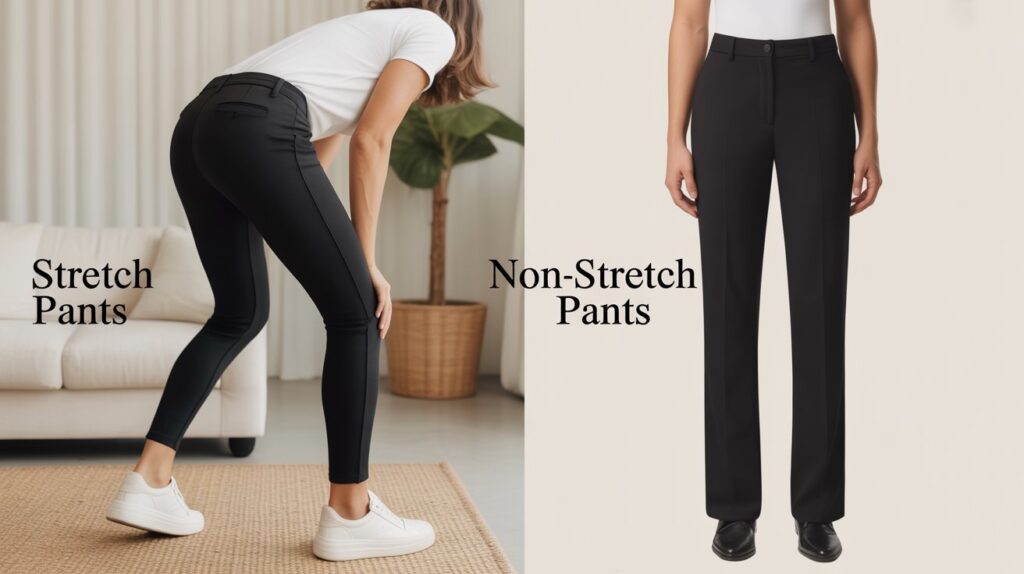
Choosing the right pants comes down to understanding your needs, lifestyle, and preferences. In the debate of stretch pants vs non-stretch pants, stretch pants stand out for comfort, flexibility, and ease of movement, making them ideal for active jobs, travel, and casual everyday wear. Non-stretch pants, on the other hand, excel in durability, structure, and a polished appearance, making them perfect for professional or formal settings.
Ultimately, there’s no one-size-fits-all answer. The best approach is to balance both types in your wardrobe: rely on stretch pants for comfort-focused days and non-stretch pants when style, structure, and long-lasting durability matter most. By understanding the differences, you can make an informed choice that keeps you both comfortable and stylish in every situation.
FAQs
Are stretch pants better than non-stretch pants for daily wear?
Yes, stretch pants are often more comfortable for daily wear because their elastic fabric allows easier movement. However, non-stretch pants may be preferred if you want a structured, polished look for work or formal occasions.
Do non-stretch pants last longer than stretch pants?
Generally, yes. Non-stretch pants are made from durable fabrics like cotton, denim, or wool, which maintain their shape over time. Stretch pants can lose elasticity with frequent washing or heavy use.
Can stretch pants be worn in professional settings?
Yes, many modern stretch pants are designed to look sleek and business-casual. Stretch chinos or stretch dress pants can provide comfort without compromising a professional appearance.
How do I know which type of pants suits my body shape?
Stretch pants are more forgiving and adapt to different body types, while non-stretch pants require precise sizing. If your measurements fluctuate or you want a snug fit without tightness, stretch pants are usually better.
Are non-stretch pants less comfortable for active jobs?
Yes, non-stretch pants can feel restrictive during activities that require bending, squatting, or extended walking. For active jobs, stretch pants are typically the better option for all-day comfort.