

1. Introduction
When deciding what to wear for outdoor activities or daily adventures, the choice between breathable pants vs waterproof pants can make a big difference in comfort and performance. While breathable pants keep you cool and dry from sweat, waterproof pants protect you from rain, snow, and wet conditions. Understanding the key differences, benefits, and ideal uses of each type can help you pick the perfect pair for your lifestyle and the weather you face.
2. What Are Breathable Pants?
Breathable pants are designed to allow air and moisture to pass through the fabric, helping your body stay cool and dry during movement. In the comparison of breathable pants vs waterproof pants, breathable pants focus more on comfort and airflow rather than blocking out water.
These pants are usually made from lightweight materials such as cotton blends, stretch synthetics, nylon, or fabrics with moisture-wicking technology. Some breathable pants also include mesh panels or ventilated weaves that improve air circulation. This helps sweat evaporate faster, reducing that sticky or overheated feeling—especially important in warm or humid US climates.
The main purpose of breathable pants is temperature regulation. When you walk, hike, travel, or work for long hours, your body produces heat. Breathable fabrics release this heat instead of trapping it, making these pants ideal for summer wear, indoor-outdoor activities, and everyday use.
In the breathable pants vs waterproof pants debate, breathable pants are better suited for dry weather and high-activity situations. They are commonly worn for hiking, travel, casual work environments, and daily errands where comfort and flexibility matter more than rain protection.
However, breathable pants are not designed to block heavy rain or wet conditions. While some may offer light water resistance, their primary advantage is comfort, softness, and ease of movement rather than full weather protection.
In short, breathable pants are the go-to choice when staying cool, dry from sweat, and comfortable is the top priority—making them a key option when comparing breathable pants vs waterproof pants for everyday and warm-weather use.
3. What Are Waterproof Pants?
Waterproof pants are designed to block rain, snow, and external moisture, keeping your lower body dry in wet conditions. In the comparison of breathable pants vs waterproof pants, waterproof pants prioritize weather protection over airflow and ventilation.
These pants are typically made from tightly woven synthetic fabrics such as nylon or polyester and are treated with waterproof membranes or coatings. Popular technologies include fully sealed seams, laminated layers, and durable water-repellent (DWR) finishes that cause water to bead up and roll off the surface instead of soaking in.
The primary purpose of waterproof pants is moisture protection. They are commonly used in rainy, snowy, or windy environments where staying dry is essential for comfort and safety. In many parts of the US—especially in coastal regions, mountainous areas, or during winter—waterproof pants are a reliable choice for outdoor activities.
When comparing breathable pants vs waterproof pants, waterproof pants are ideal for hiking in rain, camping in wet conditions, snow sports, outdoor work, and commuting during storms. Some waterproof pants also include limited breathability features, such as vents or breathable membranes, but they generally trap more heat than breathable pants.
One important distinction is the difference between waterproof and water-resistant. Waterproof pants can handle sustained rain and wet exposure, while water-resistant pants only repel light moisture for a short time.
In summary, waterproof pants are built for protection rather than ventilation. They are the better option in the breathable pants vs waterproof pants comparison when weather conditions are unpredictable, wet, or cold, and staying dry is the top priority.
4. Breathable Pants vs Waterproof Pants: Key Differences
When choosing between breathable pants vs waterproof pants, the main differences come down to comfort, weather protection, and intended use. While both serve important purposes, they are designed for very different conditions.
Breathability and Airflow
Breathable pants allow air to move through the fabric, helping sweat evaporate quickly. This keeps your body cool during physical activity or warm weather. Waterproof pants, on the other hand, are built to block outside moisture, which limits airflow and can cause heat and sweat to build up inside.
Moisture Protection
The biggest advantage of waterproof pants is their ability to keep rain, snow, and wet ground from soaking through. Breathable pants offer little to no protection from heavy rain and are best suited for dry conditions. In the breathable pants vs waterproof pants comparison, waterproof pants clearly win for wet environments.
Comfort and Wear Time
Breathable pants feel softer, lighter, and more flexible, making them comfortable for all-day wear. Waterproof pants are often stiffer due to layered fabrics and coatings, which can reduce comfort during long periods of use, especially in warm weather.
Temperature Control
Breathable pants help regulate body temperature by releasing heat. Waterproof pants trap warmth, which can be helpful in cold or windy conditions but uncomfortable in hot climates. This difference is important when deciding between breathable pants vs waterproof pants for seasonal use.
Weight and Packability
Breathable pants are generally lightweight and easy to wear for travel or daily activities. Waterproof pants are usually heavier and may feel bulky, though many are designed to be packed and worn only when needed.
Best Use Cases
In the breathable pants vs waterproof pants debate, breathable pants are ideal for summer, travel, casual wear, and high-movement activities. Waterproof pants are better for rain, snow, outdoor work, and unpredictable weather.
Overall, the key differences between breathable pants vs waterproof pants come down to airflow versus protection. Choosing the right option depends on your climate, activity level, and weather conditions.
5. When to Choose Breathable Pants
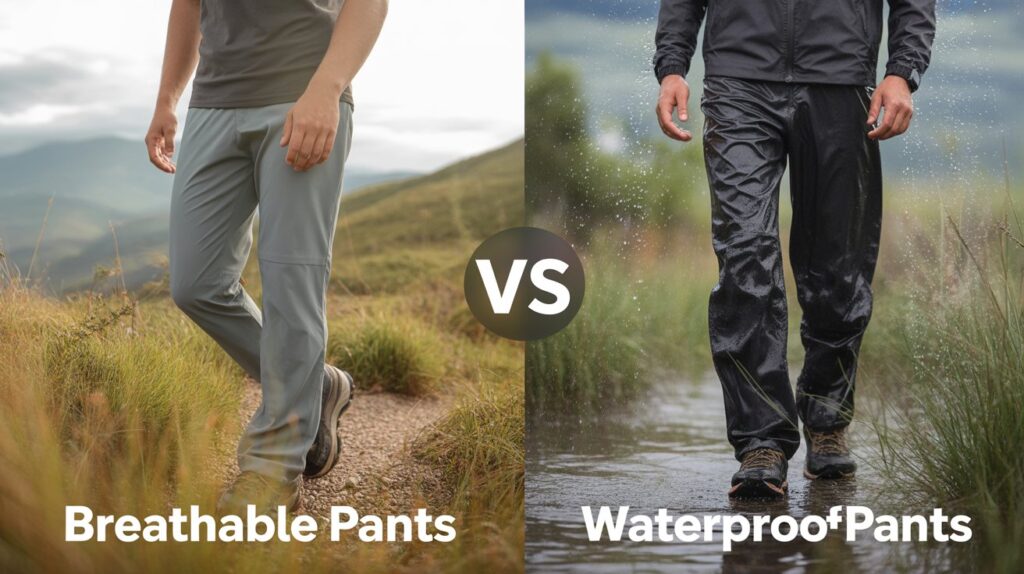
Choosing the right option in the breathable pants vs waterproof pants comparison depends largely on weather, activity level, and comfort needs. Breathable pants are the better choice when staying cool, flexible, and comfortable is more important than blocking rain.
Hot and Humid Weather
Breathable pants are ideal for warm and humid climates, especially during summer. Their lightweight fabrics allow heat and sweat to escape, helping prevent overheating. In regions with dry or mildly humid weather, breathable pants offer superior comfort compared to waterproof options.
High-Activity Situations
If your day involves a lot of movement—such as hiking, walking, sightseeing, or working on your feet—breathable pants are the smarter choice. They reduce sweat buildup and allow greater freedom of movement, which is a key advantage in the breathable pants vs waterproof pants debate.
Dry Outdoor Activities
Breathable pants work best in dry conditions where rain is unlikely. They are commonly worn for day hikes, outdoor workouts, and casual outdoor work. Without heavy coatings or layers, they feel lighter and more natural on the body.
Travel and Long Wear
For travel, breathable pants are often preferred because they remain comfortable during long flights, road trips, and extended wear. They pack easily, dry quickly, and do not trap heat, making them practical for multi-day trips in fair weather.
Everyday and Casual Use
In the breathable pants vs waterproof pants comparison, breathable pants are better suited for daily wear. Their soft feel and flexible design make them appropriate for casual offices, errands, and relaxed settings where weather protection is not a priority.
In summary, breathable pants are the right choice when comfort, airflow, and ease of movement matter most. They are best for warm temperatures, active lifestyles, and dry conditions—making them a key option in the breathable pants vs waterproof pants decision.
6. When to Choose Waterproof Pants
In the breathable pants vs waterproof pants comparison, waterproof pants are the better option when protection from rain, snow, and wet conditions is the top priority. These pants are designed to keep moisture out, even during prolonged exposure to harsh weather.
Rainy or Wet Weather Conditions
Waterproof pants are ideal when heavy rain or consistent moisture is expected. They create a protective barrier that prevents water from soaking through, making them essential for rainy seasons, stormy weather, or travel to wet regions. In the breathable pants vs waterproof pants debate, this is where waterproof pants clearly stand out.
Cold and Windy Environments
Waterproof pants are well-suited for cold or windy conditions because their layered construction helps block wind and retain body heat. This makes them a practical choice for fall and winter activities where warmth and dryness are critical.
Outdoor Work and Tough Conditions
For outdoor jobs or activities that involve mud, snow, or wet surfaces, waterproof pants provide reliable protection. Construction work, landscaping, fishing, or trail maintenance often require pants that can handle moisture without compromising durability.
Hiking, Camping, and Adventure Use
When hiking or camping in unpredictable weather, waterproof pants offer peace of mind. They are especially useful on long trails, mountain areas, or during multi-day trips where rain can quickly change conditions. In the breathable pants vs waterproof pants comparison, waterproof pants are the safer option for uncertain forecasts.
Situations Where Staying Dry Matters Most
If getting wet could lead to discomfort, health risks, or reduced performance, waterproof pants are the smarter choice. They help maintain body temperature and prevent moisture-related irritation during extended outdoor exposure.
Overall, waterproof pants are best chosen when weather protection outweighs ventilation. In the breathable pants vs waterproof pants decision, they are the right fit for wet, cold, and unpredictable environments where staying dry is essential.
7. Breathable vs Waterproof Pants for Hiking
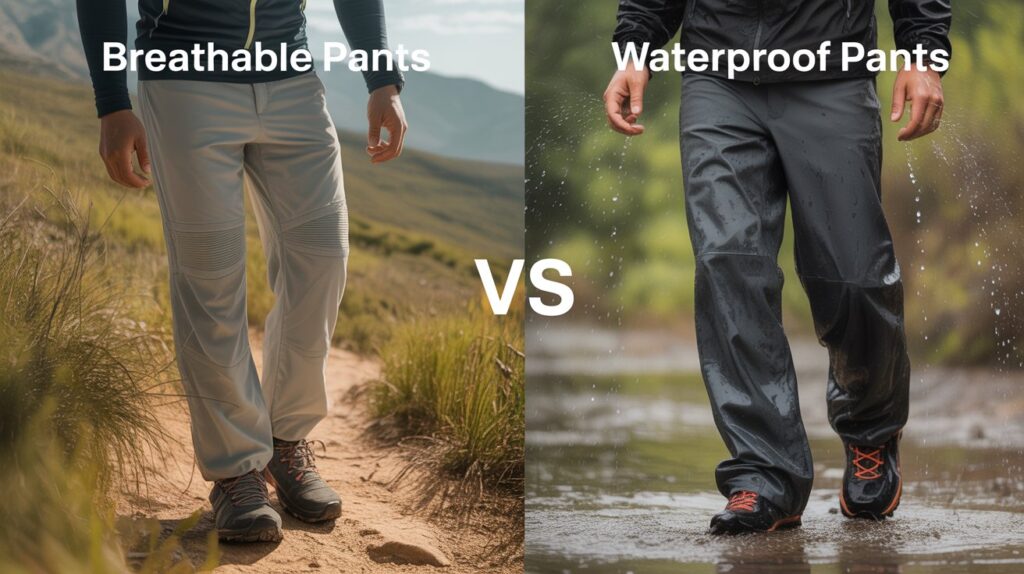
When hiking, choosing between breathable pants vs waterproof pants depends on trail conditions, weather, and the length of your hike. Both types have advantages, but they perform best in different hiking environments.
Breathable Pants for Hiking
Breathable pants are ideal for hiking in dry and warm conditions. They allow heat and sweat to escape, which helps prevent overheating during long climbs or high-energy movement. For day hikes, summer trails, and well-maintained paths, breathable pants provide better comfort and flexibility. In the breathable pants vs waterproof pants comparison, breathable pants are often preferred for lightweight hiking and faster-paced trips.
Waterproof Pants for Hiking
Waterproof pants are better suited for hikes where rain, snow, or wet terrain is expected. They protect against sudden weather changes, muddy trails, and damp vegetation. On mountain hikes, multi-day treks, or early-morning trails with heavy moisture, waterproof pants help keep your legs dry and warm. This makes them a reliable choice in the breathable pants vs waterproof pants debate for unpredictable hiking conditions.
Short Hikes vs Long Hikes
For short hikes in stable weather, breathable pants usually offer enough protection while maximizing comfort. For long hikes or backpacking trips, waterproof pants can be essential, especially if weather forecasts are uncertain or conditions vary throughout the day.
Layering and Versatility
Many hikers choose breathable pants as a base layer and carry lightweight waterproof pants to wear only when needed. This approach balances airflow and protection, offering the best of both options in the breathable pants vs waterproof pants comparison.
In summary, breathable pants are best for dry, warm hiking conditions, while waterproof pants are better for wet, cold, or unpredictable trails. The right choice depends on where and when you hike.
8. Breathable vs Waterproof Pants for Travel
When planning a trip, choosing between breathable pants vs waterproof pants can greatly affect your comfort and convenience. Travel often involves long hours of sitting, walking, and adapting to different climates, so the right pants depend on your destination and activities.
Breathable Pants for Travel
Breathable pants are usually the top choice for travel because they are lightweight, flexible, and comfortable for extended wear. They allow airflow, which helps reduce sweating during long flights, road trips, or city walking. In the breathable pants vs waterproof pants comparison, breathable pants are better suited for warm destinations, sightseeing, and everyday travel wear. They also pack easily and dry quickly, making them practical for multi-day trips.
Waterproof Pants for Travel
Waterproof pants are more useful when traveling to destinations with frequent rain, snow, or unpredictable weather. They provide protection during outdoor excursions, rainy city walks, or adventure-focused trips. In the breathable pants vs waterproof pants debate, waterproof pants are a smarter choice for travel that includes hiking, camping, or exposure to harsh weather conditions.
Urban Travel vs Outdoor Travel
For urban and business travel, breathable pants offer a cleaner look and all-day comfort. For outdoor-focused travel, such as national parks or coastal regions, waterproof pants add reliability when weather conditions change suddenly.
Packing Strategy
Many travelers prefer breathable pants as their main travel pants and carry lightweight waterproof pants as a backup. This approach offers flexibility and covers both comfort and protection in the breathable pants vs waterproof pants decision.
Overall, breathable pants are best for comfort-heavy travel, while waterproof pants are ideal for weather-heavy travel. Choosing the right option depends on climate, trip length, and planned activities.
9. Can Pants Be Both Breathable and Waterproof?
Many people wonder if it’s possible to combine the advantages of breathable pants vs waterproof pants into a single pair. The answer is yes—modern fabric technology allows pants to be both breathable and waterproof, though there are some trade-offs.
How Breathable Waterproof Pants Work
These pants use specialized membranes, coatings, or laminates that block external water while allowing moisture from sweat to escape. Popular technologies include Gore-Tex, eVent, and other breathable waterproof fabrics. Tiny pores in the material are small enough to stop water droplets but large enough to let water vapor pass through, which helps regulate temperature and prevents overheating.
Benefits of Hybrid Pants
- All-Weather Protection: You stay dry during rain or snow while still remaining comfortable during physical activity.
- Versatility: Ideal for hiking, camping, and travel where weather conditions can change quickly.
- Reduced Layering: Combining breathability and waterproofing reduces the need for multiple layers, making packing easier.
Limitations
Even the best breathable waterproof pants are usually more expensive than single-purpose pants. While they allow some airflow, they may not feel as cool and light as purely breathable pants in hot weather. Additionally, heavy or prolonged rainfall can eventually saturate the outer fabric if not properly maintained.
When to Choose Them
In the breathable pants vs waterproof pants decision, hybrid pants are perfect for outdoor enthusiasts, travelers, and workers who face unpredictable weather. They strike a balance between comfort and protection, offering a practical solution when you don’t want to compromise on either feature.
In conclusion, yes, pants can be both breathable and waterproof. They are an excellent option for those who need versatility and all-weather readiness, combining the best aspects of breathable pants vs waterproof pants into one reliable pair.
10. How to Choose the Right Pants for Your Needs
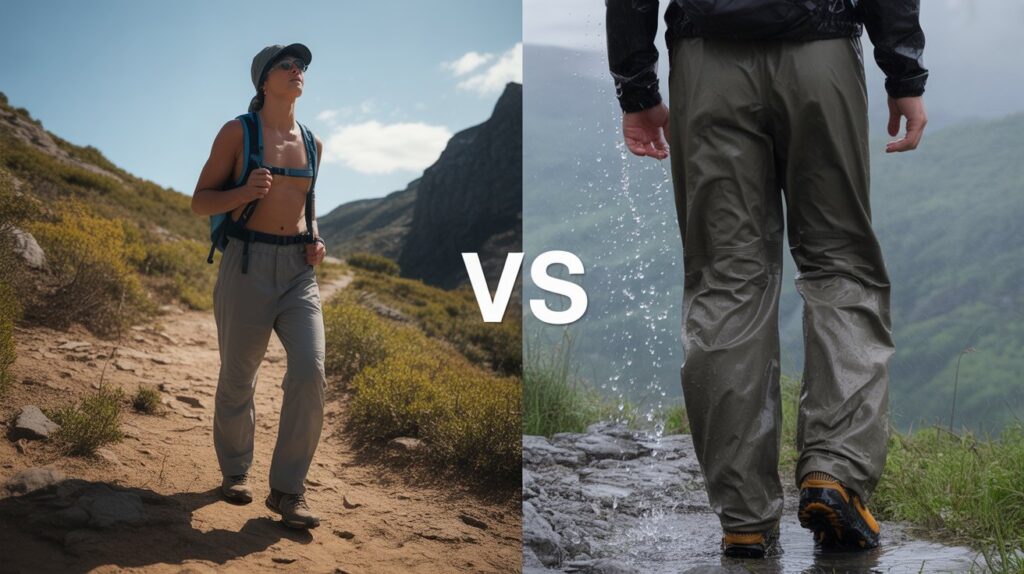
Choosing between breathable pants vs waterproof pants depends on several factors, including climate, activity type, and personal comfort preferences. Understanding these considerations ensures you select pants that perform well in your specific conditions.
1. Consider the Climate and Weather
- If you live or travel in warm, dry, or humid environments, breathable pants are usually the better choice. They allow air circulation, wick away sweat, and keep you comfortable during long hours of activity.
- If you expect rain, snow, or wet conditions, waterproof pants are essential. They protect against moisture, wind, and cold, keeping your legs dry and warm.
2. Identify Your Activity Type
- For high-movement activities like hiking, biking, or travel, breathable pants offer better flexibility and ventilation.
- For outdoor work, fishing, camping, or trekking in unpredictable weather, waterproof pants provide protection and durability.
3. Evaluate Comfort and Mobility
- Breathable pants are typically softer, lighter, and more flexible, making them suitable for all-day wear.
- Waterproof pants are often stiffer due to layered fabrics and coatings, so they may restrict movement slightly but offer superior protection.
4. Think About Layering Options
In some cases, combining pants can be effective. You can wear breathable pants as a base layer and add waterproof pants when needed. This approach works well for hikers, travelers, and outdoor workers who face varying weather conditions.
5. Consider Weight and Packability
- Breathable pants are lighter and easier to pack, ideal for travel or long treks.
- Waterproof pants are bulkier but provide necessary protection when packing for rainy or cold destinations.
6. Budget and Maintenance
- Breathable pants are often more affordable and easier to care for.
- Waterproof pants may require special cleaning and waterproofing maintenance to maintain their performance over time.
11. Pros and Cons
Pros of Breathable Pants
- Excellent ventilation keeps you cool and dry
- Comfortable and lightweight for long wear
- Flexible and allows easy movement
- Quick-drying fabric
- Ideal for warm or humid weather
Cons of Breathable Pants
- Limited water protection
- Less durable in harsh conditions
- Minimal insulation for cold weather
- May require layering in unpredictable weather
Pros of Waterproof Pants
- Provides full protection from rain, snow, and moisture
- Keeps you warm by blocking wind
- Durable and suitable for harsh outdoor conditions
- Ideal for hiking, camping, and outdoor work
- Reliable in unpredictable or wet weather
Cons of Waterproof Pants
- Less breathable, can trap heat and sweat
- Heavier and bulkier than breathable pants
- Can feel stiff and restrict movement
- Often more expensive
- May require special care to maintain waterproofing
12. Conclusion
Choosing between breathable pants vs waterproof pants ultimately depends on your activity, climate, and comfort needs. Breathable pants excel in warm, dry conditions, offering superior airflow, flexibility, and all-day comfort. They are perfect for hiking in sunny weather, traveling, or everyday wear.
Waterproof pants, on the other hand, are designed to keep you dry in rain, snow, and wet environments. They provide reliable protection for outdoor work, hiking in unpredictable weather, or winter activities, though they may be less breathable and slightly heavier.
For those who face varying conditions, hybrid options that combine breathability with waterproofing offer the best of both worlds, providing comfort and protection in a single pair.
Ultimately, understanding the differences between breathable pants vs waterproof pants helps you choose the right pair for your lifestyle, ensuring you stay comfortable, dry, and ready for any adventure.
13. FAQs
What is the main difference between breathable pants and waterproof pants?
Breathable pants prioritize airflow and comfort, keeping you cool and dry from sweat, while waterproof pants focus on blocking rain, snow, and external moisture to keep you dry in wet conditions.
Can I wear breathable pants in rainy weather?
Breathable pants are not designed for heavy rain. They may handle light drizzle, but in wet conditions, waterproof pants are a better choice to stay dry.
Are waterproof pants uncomfortable for long wear?
Some waterproof pants can feel stiffer or trap heat due to layered fabrics. Choosing lightweight or ventilated waterproof pants can improve comfort for extended use.
Can pants be both breathable and waterproof?
Yes. Modern fabrics like Gore-Tex or breathable membranes allow pants to block water while letting sweat escape, combining comfort and protection in one pair.
Which pants are better for hiking in unpredictable weather?
For unpredictable weather, a combination works best: wear breathable pants for comfort and pack lightweight waterproof pants for rain or wet conditions. This ensures both ventilation and protection.