
Introduction
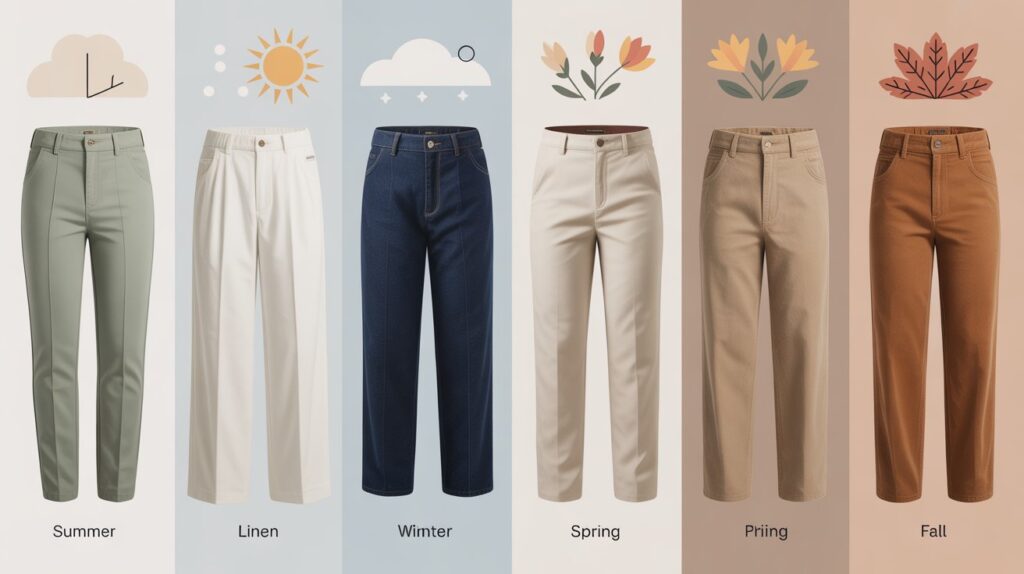
Finding the perfect pair of pants starts with choosing the right fabric. In this pants fabric guide for all seasons, we’ll break down the best materials for summer, winter, spring, and fall, as well as versatile fabrics that work year-round. By understanding fabric types, weights, and care, you can stay comfortable, stylish, and prepared no matter the season.
Table of Contents
Understanding Fabric Basics
To truly benefit from this pants fabric guide for all seasons, you first need to understand the basics of fabric construction and performance. The material of your pants directly affects comfort, breathability, durability, and how well they adapt to different weather conditions. Let’s break it down in a simple and practical way.
Natural vs. Synthetic Fabrics
Fabrics are generally divided into two main categories: natural fibers and synthetic fibers.
Natural Fabrics
Natural fabrics are made from plant or animal sources. Common examples include cotton, linen, and wool.
Key Benefits:
- Highly breathable
- Soft and comfortable on skin
- Good moisture absorption
- Eco-friendly (in many cases)
Limitations:
- Can wrinkle easily
- May shrink if not washed properly
- Sometimes less durable than synthetics
Natural fabrics are usually ideal for summer and mild weather because they allow air to circulate freely.
Synthetic Fabrics
Synthetic fabrics are man-made using chemical processes. Examples include polyester, nylon, and spandex.
Key Benefits:
- Strong and durable
- Wrinkle-resistant
- Often moisture-wicking
- Quick-drying
Limitations:
- Less breathable than natural fibers
- Can feel warmer in hot climates
- May trap odors if not properly treated
Synthetic fabrics are often blended with natural fibers to improve performance. For instance, a cotton and polyester blend offers the softness of natural fiber while adding extra strength and long-lasting wear.
Breathability and Moisture Control
One of the most important factors in this pants fabric guide for all seasons is breathability.
Breathability describes a fabric’s ability to allow air to flow through it, helping regulate body temperature and prevent overheating. In hot weather, breathable fabrics help release body heat and keep you cool. In colder weather, controlled breathability helps maintain warmth without trapping too much sweat.
Moisture control is about how a fabric handles sweat:
- Absorbing moisture (like cotton)
- Wicking moisture away from the body (like performance polyester)
For summer, choose fabrics that allow airflow and absorb sweat.
For winter, choose fabrics that manage moisture while retaining warmth.
Fabric Weight: Lightweight, Midweight & Heavyweight
Fabric weight plays a major role in seasonal comfort. It is usually measured in GSM (grams per square meter).
- Lightweight (Under 200 GSM):
Best for hot weather. Thin, airy, and breathable. - Midweight (200–300 GSM):
Suitable for spring and fall. Offers balanced comfort. - Heavyweight (300+ GSM):
Ideal for winter. Thicker fabric provides insulation and durability.
Understanding fabric weight helps you avoid buying heavy pants for summer or thin pants for winter.
Stretch and Flexibility
Modern pants often include a small percentage of elastane or spandex for stretch.
Why stretch matters:
- Improves mobility
- Increases comfort during movement
- Reduces fabric stress and tearing
Stretch fabrics are especially useful for active lifestyles and everyday wear.
Weave and Texture
Fabric performance is not only about fiber type — the weave also matters.
- Tight weaves trap heat and block wind (good for winter).
- Loose weaves allow more airflow (good for summer).
Texture also affects style and insulation. For example, brushed or textured fabrics tend to feel warmer than smooth, lightweight materials.
Durability and Maintenance
Some fabrics last longer than others. Synthetic blends often resist shrinking, fading, and wrinkling better than pure natural fabrics. However, natural fabrics may feel more comfortable for daily wear.
Before buying pants, always check:
- Fabric composition label
- Washing instructions
- Shrinkage warnings
Understanding these basics ensures you make smarter purchasing decisions.
Final Thoughts on Fabric Basics
Mastering these fundamentals is essential in this pants fabric guide for all seasons. When you understand fiber types, breathability, weight, stretch, and weave, choosing the right pants becomes much easier.
The right fabric means:
✔ Better comfort
✔ Improved durability
✔ Seasonal suitability
✔ Smarter fashion choices
Best Pants Fabrics for Summer
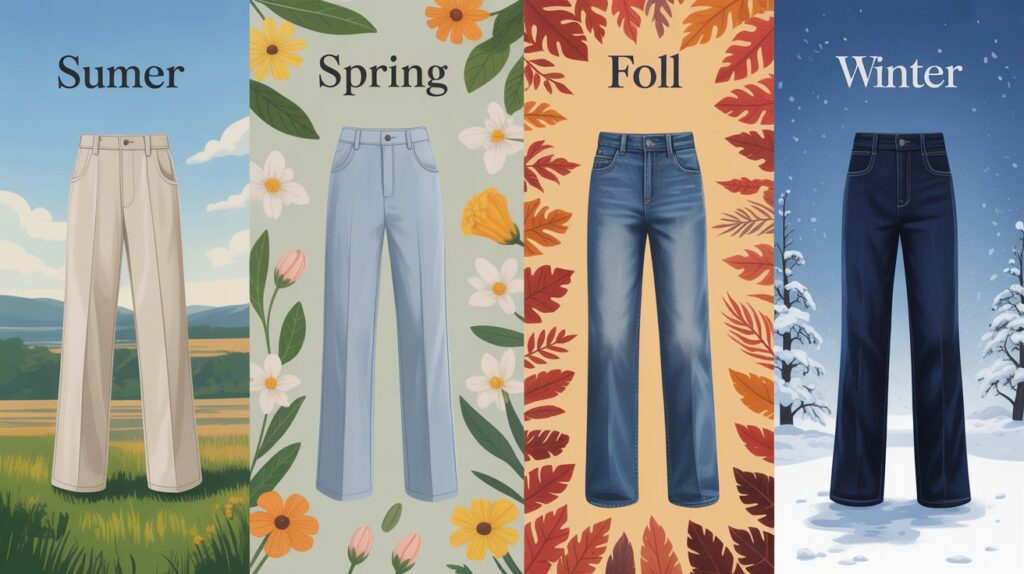
In this pants fabric guide for all seasons, summer requires special attention because high temperatures, humidity, and sweat can quickly make the wrong fabric uncomfortable. During hot weather, your priority should be breathability, moisture control, and lightweight construction. Choosing the proper material helps maintain airflow, reduces moisture buildup, and ensures lasting comfort from morning to evening.
Let’s explore the best pants fabrics for summer and why they work.
Cotton – The Everyday Summer Essential
Cotton is one of the most popular summer fabrics for a reason. It is a natural fiber that allows air to circulate easily, helping your body stay cool.
Why cotton works in summer:
- Soft and comfortable on the skin
- Absorbs sweat effectively
- Lightweight and breathable
- Suitable for daily wear
However, pure cotton can retain moisture, which may feel slightly damp in very humid climates. For better performance, many summer pants use cotton blends that improve airflow and reduce drying time.
Linen – Maximum Breathability
Linen is one of the best fabrics for extremely hot weather. It is made from flax fibers and is known for its superior airflow.
Benefits of linen:
- Excellent ventilation
- Dries quickly
- Feels light and airy
- Naturally cool to the touch
The loose weave of linen allows heat to escape easily, making it ideal for tropical or very hot climates. The only downside is that it wrinkles easily, but many people appreciate its relaxed summer look.
Chambray – Lightweight Alternative to Denim
Chambray has a denim-like appearance, yet it feels noticeably lighter and smoother against the skin. It is woven in a way that makes it breathable and comfortable in warm weather.
Why choose chambray:
- Stylish yet lightweight
- Comfortable for long hours
- Allows better airflow than heavy denim
It’s a great option if you want a denim-style appearance without the heaviness.
Lightweight Cotton Blends
Modern summer pants often use cotton blended with small amounts of polyester or elastane. These blends enhance durability and flexibility without sacrificing comfort.
Advantages of blends:
- Improved wrinkle resistance
- Faster drying
- Better shape retention
- Added stretch for movement
Blended fabrics are especially useful for people who need both comfort and performance during busy summer days.
Performance Fabrics (Moisture-Wicking Materials)
Some summer pants are made from technical fabrics designed to wick moisture away from the body. These materials pull sweat to the outer surface of the fabric, where it evaporates quickly.
Best for:
- Outdoor activities
- Travel
- Active lifestyles
- Hot and humid conditions
These fabrics help keep your skin dry and prevent overheating.
Fabric Weight Matters in Summer
In this pants fabric guide for all seasons, fabric weight is just as important as fiber type. For summer, choose lightweight fabrics (usually under 200 GSM). Heavier materials trap heat and reduce comfort.
What to Avoid in Summer
- Heavy denim
- Thick wool
- Fleece-lined fabrics
- Tight weaves that block airflow
These materials are better suited for colder seasons and can cause discomfort in hot weather.
Final Summer Fabric Tips
When selecting summer pants, always check:
- Fabric composition label
- Weight of the material
- Breathability
- Moisture management capability
Choosing the right summer fabric ensures:
Better airflow
Reduced sweating discomfort
All-day comfort
Improved overall style
Best Pants Fabrics for Winter
In this pants fabric guide for all seasons, winter fabrics are all about insulation, warmth retention, and protection from cold air. During colder months, lightweight and highly breathable fabrics are not enough. Instead, you need materials that trap body heat while still allowing limited moisture control to prevent discomfort.
The right winter fabric should provide warmth without feeling overly heavy or restrictive. Let’s explore the best options.
Wool – Natural Insulation Leader
Wool is one of the most effective winter fabrics because of its natural insulating properties. Its fibers create tiny air pockets that trap heat close to your body.
Why wool is ideal for winter:
- Excellent heat retention
- Naturally moisture-wicking
- Breathable despite being warm
- Odor-resistant
Wool pants work well in cold and dry climates. For extra softness and flexibility, wool is often blended with synthetic fibers.
Flannel – Soft and Warm Comfort
Flannel is usually made from cotton or wool that has been brushed to create a soft surface. This brushing process increases warmth by trapping more air.
Benefits of flannel:
- Soft texture
- Good insulation
- Comfortable for everyday wear
- Suitable for layering
Flannel pants are perfect for casual winter outfits and moderate cold conditions.
Corduroy – Thick and Durable
Corduroy is a ribbed fabric known for its durability and warmth. Its textured surface adds thickness, which helps reduce heat loss.
Why corduroy works in winter:
- Strong and long-lasting
- Provides moderate insulation
- Stylish seasonal texture
- Suitable for daily use
Corduroy pants offer a balance between fashion and function during fall and winter.
Fleece-Lined Fabrics – Extra Warmth
Some winter pants include a fleece lining inside. Fleece is a synthetic material designed to retain heat efficiently.
Advantages:
- Strong insulation
- Soft inner layer
- Lightweight despite warmth
- Ideal for extremely cold weather
Fleece-lined pants are especially useful for outdoor activities or freezing temperatures.
Heavyweight Denim – Cold-Weather Option
While regular denim may not be warm enough, heavyweight denim can provide better protection in winter. Thicker denim reduces airflow and helps maintain body heat.
For even better performance, some denim pants include thermal linings.
Fabric Weight and Weave in Winter
In this pants fabric guide for all seasons, fabric weight plays a critical role in cold weather. For winter, choose midweight to heavyweight fabrics (generally 300 GSM or higher).
Additionally:
- Tight weaves block cold wind
- Brushed or textured surfaces improve insulation
- Layer-friendly fabrics increase warmth
What to Avoid in Winter
- Thin cotton pants
- Lightweight summer blends
- Loose weaves that allow cold air inside
- Extremely breathable fabrics without insulation
These materials do not provide enough warmth in cold conditions.
Final Winter Fabric Tips
When choosing winter pants, focus on:
- Insulating capability
- Fabric thickness
- Wind resistance
- Comfort during layering
The right winter fabric ensures:
Proper warmth retention
Reduced heat loss
Comfortable movement
Seasonal durability
Best Pants Fabrics for Spring
In this pants fabric guide for all seasons, spring is a transitional season that requires fabrics offering a balance between warmth and breathability. The weather is generally mild, but temperatures can fluctuate throughout the day. Choosing the right fabric ensures comfort without overheating or feeling chilly.
Spring fabrics should be lightweight to midweight, soft, and flexible enough to accommodate layering if needed. Let’s explore the best pants fabrics for spring and why they work.
Stretch Cotton – Comfort and Flexibility
Stretch cotton combines the natural softness of cotton with a small amount of elastane or spandex. This combination makes pants more flexible while keeping them comfortable in mild spring temperatures.
Why stretch cotton is ideal for spring:
- Soft and breathable
- Provides slight warmth for cooler mornings
- Flexible for active movement
- Easy to maintain and machine washable
Stretch cotton pants are perfect for everyday wear, whether you are commuting, walking outdoors, or working in a casual office environment.
Twill – Lightweight and Durable
Twill is a type of weave that produces a diagonal texture, making the fabric durable yet comfortable. It is often used for casual and semi-formal pants.
Benefits of twill for spring:
- Balanced weight for moderate temperatures
- Durable and resistant to wrinkles
- Smooth texture for a polished look
- Comfortable for layered outfits
Twill pants are versatile enough for spring outings, work, and light outdoor activities.
Light Denim – Casual and Stylish
Denim is traditionally considered a winter or fall fabric, but lightweight denim works perfectly for spring. It provides structure while remaining breathable.
Why light denim works in spring:
- Medium-weight protection for changing weather
- Breathable compared to heavyweight denim
- Maintains shape and appearance
- Pairs well with jackets or light layers
Spring denim pants are great for casual style without feeling heavy or restrictive.
Blended Fabrics – Versatility and Performance
Many spring pants are made from blends of cotton, polyester, or rayon. These blends combine the best properties of each fiber to create fabrics that are soft, durable, and breathable.
Advantages of blended fabrics:
- Resist wrinkling and shrinking
- Lightweight and comfortable
- Stretch for ease of movement
- Maintain color and texture over time
Blended fabrics are ideal for people who want pants that are stylish, easy to care for, and suitable for daily wear during spring.
Fabric Weight and Comfort in Spring
In this pants fabric guide for all seasons, spring fabrics should generally be midweight (200–300 GSM). This range provides enough warmth for cool mornings while remaining breathable for warmer afternoons. Layering is often recommended, so flexible fabrics that accommodate a light jacket or sweater work best.
What to Avoid in Spring
- Heavy wool or flannel (too warm for mild weather)
- Thick winter denim (can feel stiff and hot)
- Extremely light summer fabrics (may not provide enough warmth)
- Non-breathable synthetic fabrics without moisture control
Final Spring Fabric Tips
When selecting spring pants, focus on:
- Balanced warmth and breathability
- Soft texture for all-day comfort
- Stretch and flexibility for active movement
- Fabrics that layer well with jackets or sweaters
The right spring fabric ensures:
Comfort throughout fluctuating temperatures
Easy mobility and flexibility
Style versatility for casual and semi-formal wear
Longevity and durability
Best Pants Fabrics for Fall
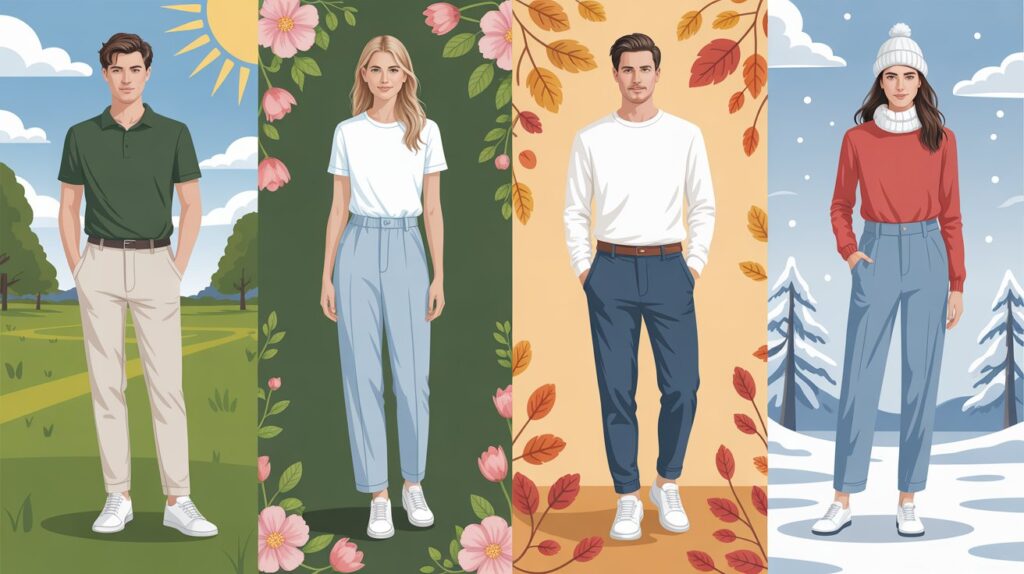
In this pants fabric guide for all seasons, fall presents unique challenges because the weather is transitional—cooler mornings and evenings with warmer afternoons. Choosing the right fabric is essential to stay comfortable and stylish throughout the day. Fall fabrics should be medium-weight, breathable, and slightly textured to provide warmth while allowing airflow.
Let’s explore the best pants fabrics for fall and why they work.
Denim – Timeless and Durable
Denim is one of the most versatile fabrics for fall. Unlike lightweight summer denim, fall denim is generally thicker and provides better insulation.
Why denim is ideal for fall:
- Medium-weight warmth
- Durable and long-lasting
- Retains shape and resists wrinkles
- Pairs well with layered outfits, such as sweaters or jackets
Denim pants are suitable for casual wear, office settings, or light outdoor activities during the cooler months.
Corduroy – Stylish and Warm
Corduroy is a ribbed fabric that offers both texture and insulation, making it perfect for fall. Its unique vertical ridges trap heat while maintaining comfort.
Benefits of corduroy for fall:
- Medium-weight warmth without heaviness
- Soft and comfortable on the skin
- Adds seasonal texture and style
- Works well with boots and layered looks
Corduroy pants are ideal for casual outings, weekend activities, and even semi-formal occasions depending on the style.
Wool Blends – Extra Insulation
Wool blended with synthetic fibers such as polyester creates medium-weight pants that are soft, warm, and durable. Wool blends are perfect for fall because they offer insulation without the heaviness of full winter wool.
Advantages of wool blends:
- Retain warmth while remaining breathable
- Resist wrinkles and shrinkage better than pure wool
- Soft texture suitable for everyday wear
- Easy to layer with sweaters or jackets
These fabrics are excellent for both office wear and casual fall outfits.
Twill – Comfortable and Practical
Twill is a sturdy, diagonal-weave fabric that balances durability with comfort. It’s a versatile choice for fall, providing enough warmth without feeling too heavy.
Why twill works in fall:
- Medium-weight and breathable
- Smooth texture with a polished appearance
- Durable for daily use
- Flexible for layering or light outdoor activities
Twill pants are practical for people who need reliable everyday wear for commuting or casual outings.
Fabric Weight and Comfort in Fall
In this pants fabric guide for all seasons, fall fabrics are generally midweight (200–300 GSM). This range ensures warmth during cooler mornings and evenings while remaining breathable during warmer afternoons. Fabrics with some texture, such as corduroy or twill, add style and additional insulation.
What to Avoid in Fall
- Lightweight summer fabrics (don’t provide enough warmth)
- Thick winter fabrics like heavy wool or fleece (may overheat in the afternoon)
- Non-breathable synthetic materials (can feel uncomfortable with temperature swings)
Final Fall Fabric Tips
When selecting fall pants, consider:
- Medium-weight fabrics for seasonal comfort
- Textured materials for style and insulation
- Breathability for temperature fluctuations
- Layering compatibility with jackets, sweaters, or long-sleeve shirts
The right fall fabric ensures:
Comfort throughout changing temperatures
Style versatility for casual and semi-formal looks
Durability for everyday wear
Ease of movement and flexibility
All-Season Versatile Fabrics
In this pants fabric guide for all seasons, not every fabric is limited to a specific season. Some fabrics are highly adaptable, providing comfort, breathability, and durability throughout the year. Choosing all-season pants fabrics is ideal for people who want a minimal wardrobe, travel frequently, or live in regions with fluctuating weather.
Let’s explore the best all-season fabrics and why they work.
Cotton-Polyester Blends – Comfort Meets Durability
Blending cotton with polyester creates a fabric that is soft and breathable like cotton, yet strong, durable, and resistant to wrinkles thanks to polyester. These fabrics adapt well to different temperatures, making them excellent for year-round wear.
Advantages:
- Soft and comfortable on the skin
- Resistant to wrinkles and shrinking
- Lightweight yet durable
- Can handle both warm and cool climates
These blends are perfect for everyday use, commuting, or casual office wear.
Midweight Twill – Balance of Warmth and Breathability
Twill is a sturdy fabric with a diagonal weave, offering durability and a polished appearance. Midweight twill is breathable enough for spring and summer, while its thickness provides moderate warmth in fall and winter.
Why midweight twill is versatile:
- Durable and long-lasting
- Smooth texture with professional appeal
- Comfortable across multiple temperatures
- Easy to maintain and resistant to creases
Twill pants are suitable for casual, business-casual, and light outdoor activities throughout the year.
Stretch Fabrics – Flexible Comfort Year-Round
Adding a small amount of elastane or spandex to cotton or blended fabrics creates stretch pants. Stretch fabrics are comfortable, allow easy movement, and adapt to layering without losing shape.
Benefits of stretch fabrics:
- Enhanced mobility and flexibility
- Maintains fit over time
- Comfortable for indoor and outdoor activities
- Works with casual, office, or travel wardrobes
Stretch fabrics are ideal for those who need functionality without compromising style.
Performance Fabrics – Moisture-Wicking and Quick-Drying
Modern performance fabrics, often used in activewear, are excellent all-season options. They are lightweight, breathable, and designed to manage moisture efficiently.
Why performance fabrics work year-round:
- Moisture-wicking keeps you dry in hot weather
- Quick-drying properties are useful in rainy or humid climates
- Durable enough for layering in cooler seasons
- Soft and lightweight for daily comfort
These fabrics are perfect for travel, outdoor activities, and versatile casual wear.
Fabric Weight and Adaptability
In this pants fabric guide for all seasons, all-season fabrics are usually midweight (200–300 GSM). This weight provides enough warmth for cooler days while remaining breathable for warmer temperatures. Lightweight blends may work for hotter climates, and slightly thicker fabrics provide added comfort in winter.
What to Look for in All-Season Pants
- Moderate thickness for year-round comfort
- Breathable and moisture-managing properties
- Durable and resistant to wrinkles
- Flexible fabrics for layering or unrestricted movement
Final Tips for Choosing All-Season Fabrics
Selecting the right all-season fabric ensures:
Comfort across changing temperatures
Versatility for casual, office, or travel wear
Durability and easy maintenance
Stylish appearance all year long
By including these fabrics in your wardrobe, you maximize the utility of each pair of pants while following this comprehensive pants fabric guide for all seasons. All-season fabrics are the perfect solution for anyone seeking practicality, comfort, and style throughout the year.
How to Choose the Right Fabric for Your Climate
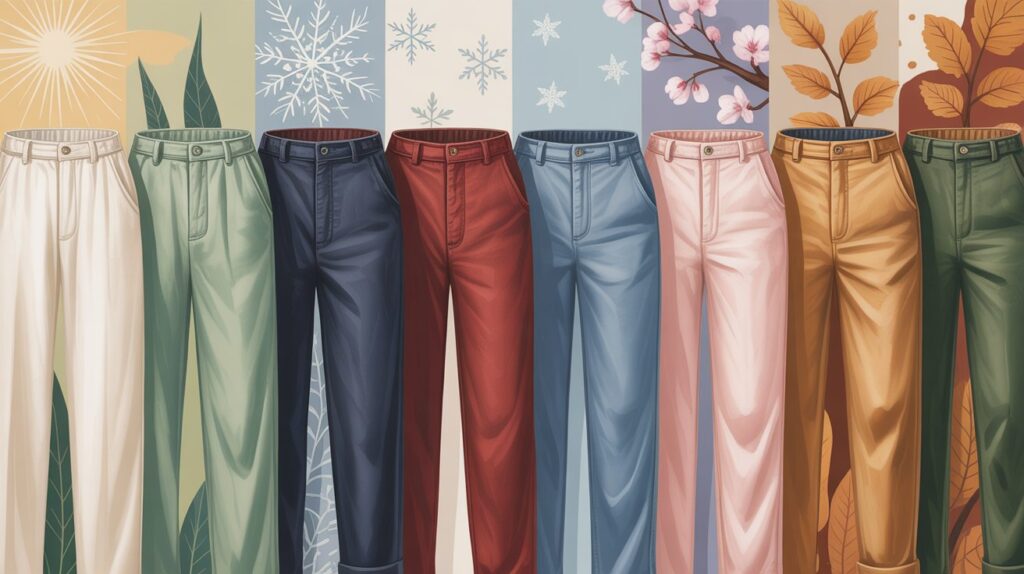
In this pants fabric guide for all seasons, understanding your local climate is key to selecting the right pants fabric. Choosing the wrong material can lead to discomfort, whether it’s overheating in summer or feeling chilled in winter. The goal is to match fabric properties—such as breathability, insulation, and moisture control—with the specific weather conditions you face.
Here’s a detailed guide to help you choose the right fabric based on climate.
Hot and Humid Climates
If you live in regions where temperatures are high and humidity is constant, your main priorities are breathability, moisture absorption, and lightweight fabrics.
Best fabrics:
- Cotton: Soft, breathable, and absorbs sweat.
- Linen: Extremely airy and quick-drying.
- Chambray: Lightweight alternative to denim with good airflow.
- Light cotton blends: Offers durability without compromising comfort.
Tips:
- Avoid heavy fabrics like wool or thick denim.
- Opt for loose or relaxed-fit pants to allow air circulation.
- Opt for lighter shades that help keep you cool by reflecting sunlight instead of trapping heat.
Cold and Dry Climates
In cold regions, the priority shifts to insulation, warmth retention, and wind resistance. Fabrics that trap air and retain body heat are ideal.
Best fabrics:
- Wool: Natural insulator that retains warmth and wicks moisture.
- Flannel: Soft, brushed surface that keeps heat in.
- Corduroy: Thick texture provides insulation and style.
- Fleece-lined blends: Excellent for outdoor activities in freezing temperatures.
Tips:
- Choose midweight to heavyweight fabrics (300 GSM or more).
- Layer pants with thermal undergarments if necessary.
- Look for fabrics with tighter weaves to block cold wind.
Moderate or Temperate Climates
For areas with mild weather year-round or fluctuating temperatures, versatile fabrics that balance warmth and breathability are best.
Best fabrics:
- Cotton-polyester blends: Soft, durable, and adaptable.
- Midweight twill: Comfortable for varying temperatures.
- Stretch fabrics: Flexible and suitable for layering.
Tips:
- Midweight fabrics (200–300 GSM) work best.
- Choose fabrics that allow layering in case of sudden temperature changes.
- Stick with neutral or versatile colors for both summer and winter styling.
Humid and Rainy Climates
For regions with frequent rain or high humidity, moisture-wicking and quick-drying fabrics are essential.
Best fabrics:
- Performance blends: Polyester or nylon with moisture-wicking properties.
- Cotton-polyester blends: Retain softness while drying faster than pure cotton.
Tips:
- Avoid heavy natural fibers that trap moisture and take long to dry.
- Look for fabrics that resist wrinkles and mildew.
- Light layers help prevent discomfort during humid weather.
Key Factors to Consider
When choosing the right fabric for your climate:
- Breathability: Keeps you cool in hot weather.
- Insulation: Retains warmth in cold weather.
- Moisture Control: Wicks sweat or dries quickly depending on humidity.
- Weight: Lightweight for summer, midweight for transitional seasons, heavyweight for winter.
- Durability: Fabrics should withstand daily wear without losing shape.
Final Tips
Selecting the right fabric ensures:
Maximum comfort regardless of weather
Longer-lasting pants due to appropriate material choice
Energy-efficient layering in extreme temperatures
Stylish yet practical wardrobe for all seasons
By applying these tips from this pants fabric guide for all seasons, you can confidently choose pants that keep you comfortable, stylish, and ready for any climate.
Fabric Care & Maintenance Tips
Proper care and maintenance are essential to extend the life of your pants and preserve their comfort, appearance, and durability. In this pants fabric guide for all seasons, understanding how to handle different fabrics ensures that your pants stay looking and feeling their best, no matter the season.
Here’s a detailed, easy-to-follow guide to fabric care.
Read and Follow Fabric Labels
The first step in caring for pants is checking the care label. Every fabric has specific instructions regarding:
- Washing temperature
- Drying method
- Ironing recommendations
- Bleaching and chemical treatments
Tip: Following these instructions prevents shrinkage, color fading, and fabric damage. For blended fabrics, always follow the most delicate fiber’s guidelines.
Washing Techniques
Different fabrics require different washing approaches:
Natural Fabrics (Cotton, Linen, Wool):
- Use cold or lukewarm water to prevent shrinkage.
- Wool and delicate fabrics may require hand washing or a gentle cycle.
- Avoid harsh detergents that can weaken fibers.
Synthetic Fabrics (Polyester, Nylon, Blends):
- Machine washable with mild detergent.
- Cold water is preferred to maintain elasticity and prevent color fading.
- Avoid high-speed spin cycles for delicate blends.
Tip: Turn pants inside out before washing to protect colors and textures.
Drying Guidelines
Proper drying helps maintain fabric shape and durability:
- Air Drying: Best for wool, flannel, corduroy, and delicate blends.
- Tumble Drying: Safe for cotton-polyester blends, but use low heat.
- Avoid Direct Sunlight: Especially for colored fabrics, as UV rays can fade colors.
Tip: For heavy fabrics like denim or corduroy, air drying helps prevent shrinkage and maintains the texture.
Ironing and Steaming
- Low to Medium Heat: Use on cotton, blends, and twill fabrics.
- High Heat: Only for heavy cotton or denim if recommended on the label.
- Steaming: Ideal for delicate fabrics like wool and linen; helps remove wrinkles without direct contact.
Tip: Always check the fabric label before ironing, and use a cloth barrier for delicate surfaces to avoid scorching.
Storage Tips
Proper storage keeps pants in shape and prevents damage:
- Hanging: Use sturdy hangers for wool, blends, and corduroy to prevent creases.
- Folding: Suitable for cotton and denim to save closet space.
- Avoid Overcrowding: Ensures airflow and prevents wrinkles or fabric stress.
- Protect from Moisture and Moths: Store in dry, ventilated areas, especially wool pants.
Stain Removal and Spot Cleaning
Quick action preserves fabric quality:
- Blot, don’t rub, spills to avoid spreading.
- Use mild detergent or specialized stain removers suitable for the fabric type.
- Test cleaning products on a hidden area first.
Tip: Avoid hot water on protein-based stains (like sweat or blood) as it can set them permanently.
Regular Maintenance
- Brush off dust and dirt from wool or corduroy pants to prevent buildup.
- Wash denim sparingly to maintain its original color and keep the fabric’s texture intact.
- Rotate pants in your wardrobe to reduce wear and tear on single pairs.
Final Thoughts on Fabric Care
Proper care is crucial for every fabric mentioned in this pants fabric guide for all seasons. Adhering to proper washing, drying, ironing, and storage practices ensures:
Pants stay comfortable and maintain their shape
Colors and textures remain vibrant
Durability and lifespan increase
You avoid unnecessary shrinkage or damage
Investing a little time in fabric care ensures your pants remain stylish and functional across all seasons.
Common Mistakes to Avoid
In this pants fabric guide for all seasons, selecting the wrong fabric or handling it improperly can lead to discomfort, reduced durability, and poor overall style. Many people unknowingly make simple mistakes that could have been avoided with proper knowledge. Here’s a detailed look at the most common errors and how to prevent them.
Ignoring Fabric Composition
One of the biggest mistakes is not checking the fabric label before buying pants. Different fibers behave differently in terms of breathability, warmth, and durability.
Why it matters:
- Cotton is breathable but may shrink.
- Wool is warm but may require special care.
- Blends have mixed properties that affect comfort and maintenance.
Tip: Always review the fabric composition to ensure it matches the season and your activity level.
Choosing Style Over Comfort
Many people prioritize appearance over the practical qualities of a fabric. While style is important, uncomfortable fabrics can ruin your day.
Common issues:
- Wearing heavy fabrics in summer causes overheating.
- Thin fabrics in winter fail to provide warmth.
- Non-stretch fabrics can restrict movement.
Tip: Balance aesthetics with comfort by choosing fabrics that suit the climate and your daily activities.
Overlooking Climate Suitability
Selecting fabrics without considering the local weather is a frequent mistake.
Examples:
- Cotton or linen in cold winters leads to chills.
- Thick wool or fleece in hot, humid areas causes excessive sweating.
Tip: Match fabric weight and properties to the climate, as recommended in this pants fabric guide for all seasons.
Neglecting Fabric Care
Even the best fabrics can degrade quickly if not cared for properly. Many people wash, dry, or store pants incorrectly.
Consequences:
- Shrinkage and color fading
- Wrinkles and loss of shape
- Shortened lifespan of pants
Tip: Follow fabric-specific care instructions for washing, drying, ironing, and storage to keep your pants in top condition.
Ignoring Fabric Stretch and Mobility
Choosing fabrics without stretch or flexibility can limit movement and comfort, especially for active or everyday wear.
Tip: Look for fabrics with a small percentage of elastane or spandex if you need flexibility for walking, sitting, or commuting.
Wearing the Same Fabric Year-Round
Some fabrics are not suited for all seasons, and wearing them year-round can cause discomfort.
Examples:
- Heavy winter fabrics in summer
- Lightweight summer fabrics in winter
Tip: Rotate your pants seasonally and choose all-season fabrics when versatility is needed.
Final Thoughts on Common Mistakes
Avoiding these common errors ensures that your pants remain comfortable, stylish, and durable. By understanding fabric properties, climate suitability, proper care, and mobility requirements, you can make informed decisions.
Following this pants fabric guide for all seasons helps you:
Choose the right fabric for comfort and durability
Maintain the appearance and quality of your pants
Avoid unnecessary wear and tear
Enjoy year-round practicality without sacrificing style
Conclusion
Choosing the right pants fabric is essential for comfort, style, and durability throughout the year. This pants fabric guide for all seasons has shown that different climates and activities require different materials, from breathable cotton and linen for summer to insulating wool and flannel for winter. Transitional seasons like spring and fall benefit from versatile fabrics like midweight twill, corduroy, or cotton blends, while all-season fabrics provide flexibility for year-round use.
By understanding fabric types, weights, stretch, and care requirements, you can make smarter wardrobe choices, avoid common mistakes, and enjoy pants that look great and feel comfortable in any season. Proper selection and maintenance ensure that your pants last longer, perform better, and adapt to your lifestyle effortlessly.
Investing time in choosing the right fabric pays off in comfort, durability, and style—making every pair of pants a practical and fashionable choice for every season.
FAQs
How do I choose the best fabric for summer pants?
For summer, prioritize lightweight and breathable fabrics such as cotton, linen, chambray, or light cotton blends. These materials allow airflow, absorb moisture, and keep you comfortable in hot and humid conditions.
Which fabrics are best for winter pants?
Warmth and insulation are key for winter. Wool, flannel, corduroy, fleece-lined fabrics, and heavyweight denim provide excellent heat retention while remaining comfortable and durable.
Can I wear the same pants fabric in multiple seasons?
Yes, all-season fabrics like cotton-polyester blends, midweight twill, stretch fabrics, and performance blends are versatile. They offer comfort, durability, and moderate breathability, making them suitable for year-round use.
How important is fabric care for pants longevity?
Proper fabric care is essential. Following washing, drying, ironing, and storage instructions prevents shrinkage, fading, and loss of shape. Even high-quality fabrics can degrade quickly if not maintained correctly.
What common mistakes should I avoid when choosing pants fabric?
Avoid ignoring fabric composition, selecting style over comfort, neglecting climate suitability, overlooking mobility needs, and wearing the same fabric in inappropriate seasons. Being mindful of these factors ensures comfort, durability, and practicality.