
Introduction
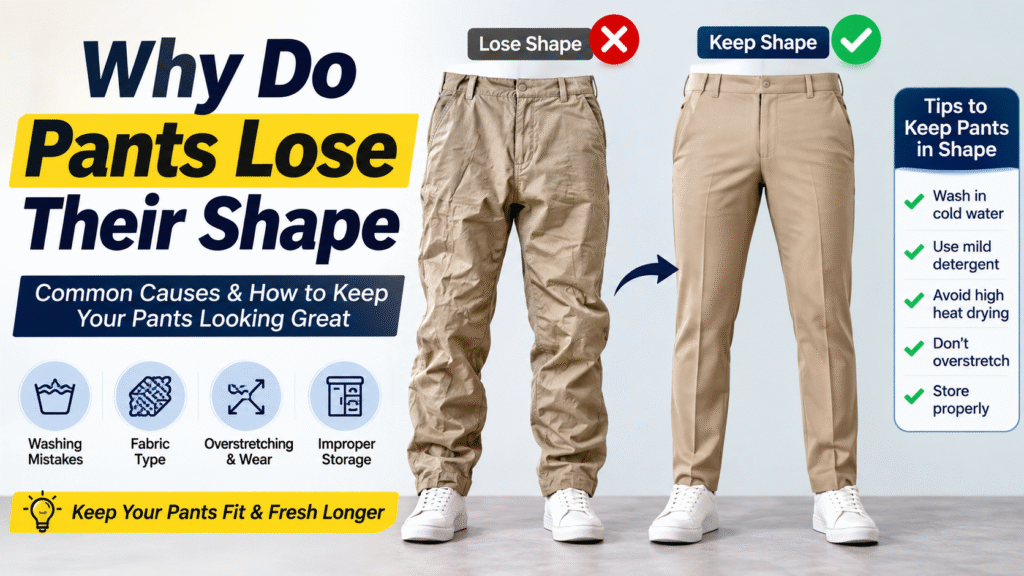
You bought a pair of pants that fit perfectly — and a few months later, the knees bag out, the waistband sags, or the fabric just looks tired. If you’ve ever wondered why do pants lose their shape, you’re not alone. It’s one of the most common complaints with everyday wear, and the good news is that most causes are preventable once you know what’s behind them.
In this guide, we’ll break down the main reasons pants lose their shape and what you can do about each one.
Table of Contents
1. Fabric Composition
Not all fabrics hold their shape the same way. Natural fibers like wool are naturally elastic and resist wrinkling, which is why wool trousers tend to hold their structure for years with proper care — you can see this comparison in more detail in our Wool vs Cotton Pants guide. Cotton, on the other hand, is comfortable but tends to lose its crispness faster, especially with frequent washing.
Stretch fabrics add another layer to this. Pants with spandex or elastane move comfortably with your body, but those elastic fibers weaken over time and with repeated washing — which is exactly why stretch pants tend to sag or lose elasticity faster than non-stretch styles. Our Stretch Pants vs Non-Stretch Pants comparison goes deeper into this trade-off between comfort and longevity.
How to prevent it: Choose fabric blends that balance stretch and structure, and understand that more stretch generally means a shorter shape-lifespan.
2. Poor Construction or Cheap Materials
Not all pants are built to last. Budget-friendly, mass-produced pants often use thinner fabric, weaker stitching, and lower-quality waistbands — all of which break down faster under regular wear. This is one of the biggest differences between tailored and off-the-rack pants; as we cover in our Tailored Pants vs Off the Rack Pants guide, budget off-the-rack options are more likely to lose shape or fade after regular washing and wearing.
How to prevent it: Check seams, stitching density, and waistband construction before buying. Slightly higher upfront cost often means significantly better shape retention.
3. Wearing the Wrong Fit
Pants that are too tight stretch out in the wrong places, while pants that are too loose lose their structure faster because the fabric isn’t supported the way it was designed to be. Wearing the wrong fit for your body is one of the most overlooked causes of premature wear — something we discuss in our Slim Fit vs Regular Fit Pants comparison, where choosing the wrong fit is shown to make pants lose their shape more quickly.
How to prevent it: Get properly fitted, and don’t be afraid to size up, size down, or get pants tailored rather than forcing a fit that isn’t right.
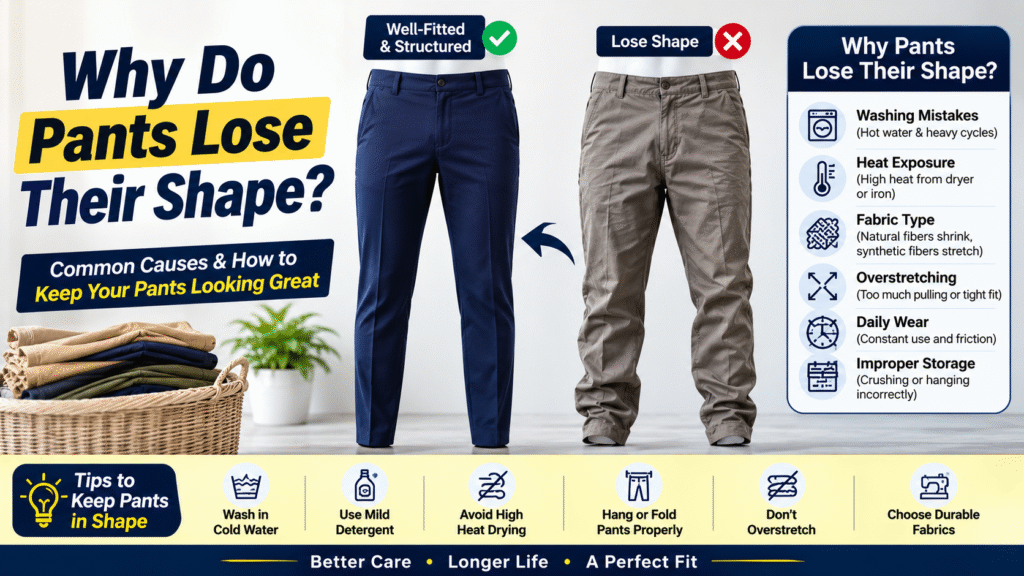
4. Improper Washing and Drying
Overwashing, high heat, and machine drying are some of the fastest ways to break down fabric fibers. Wool can shrink or felt if washed incorrectly, while stretch fabrics lose elasticity faster under high heat. Our How to Maintain the Quality of Pants guide covers fabric-specific washing advice — including why delicate fabrics should be air-dried flat and stored in breathable garment bags to avoid losing their shape.
How to prevent it: Wash less often, use cold water where possible, and air dry instead of machine drying whenever you can.
5. Improper Storage
How you store pants between wears matters more than most people think. Hanging heavy fabrics incorrectly, folding pants into tight spaces, or leaving them balled up in a drawer can all cause fibers to lose their structure over time.
How to prevent it: Hang tailored pants on clip hangers by the waistband, and fold casual pants along their natural seams to avoid creasing in the wrong places.
6. Overwear Without Recovery Time
Wearing the same pair of pants day after day without a break doesn’t give the fibers time to recover their shape between wears. This is especially true for stretch and elastic-heavy fabrics, which need time to “bounce back.”
How to prevent it: Rotate between a few pairs of pants rather than relying on one pair for daily wear, especially for stretch styles.
FAQs
Can pants that have already lost their shape be restored?
In many cases, yes — to some extent. Steaming or lightly ironing the fabric can help relax fibers back into position, and for stretch pants, a cool soak followed by reshaping while damp can sometimes bring back a portion of the original fit. However, if the elastic fibers have fully broken down or the fabric has thinned out, the recovery will only be partial.
Do more expensive pants always hold their shape better?
Not automatically — price alone isn’t a guarantee. What matters more is the fiber quality, weave density, and stitching construction behind the price tag. A mid-range pair made with a tighter weave and reinforced seams can often outlast a pricier pair that’s cut from thinner material.
How often should stretch pants be washed to protect their shape?
As infrequently as reasonably possible. Elastic fibers weaken with each wash cycle, so spacing out washes — and spot-cleaning small stains instead of a full wash — helps the spandex or elastane content last noticeably longer before it starts to sag.
Does body movement or activity level affect how fast pants lose shape?
Yes. Pants worn during activities involving frequent bending, squatting, or stretching experience more repeated fiber stress than pants worn mostly while sitting or standing. This is one reason activewear and work pants are often built with a higher stretch-fiber percentage than dress pants.
Is it better to hang or fold pants to keep their shape longer?
It depends on the fabric. Structured fabrics like wool or gabardine generally hold their shape better on a clip hanger by the waistband, since folding can create permanent crease lines. Softer, casual fabrics like cotton or jersey blends are usually fine folded, as long as they aren’t compressed tightly for long periods.
Final Thoughts
Pants lose their shape for a mix of reasons — fabric choice, construction quality, fit, and how you wash, dry, and store them. The good news is that most of these causes are within your control. Choosing quality fabric and construction upfront, getting the right fit, and taking a little extra care with washing and storage can dramatically extend how long your pants keep their original shape.
For more on choosing the right fit and fabric for your body, check out our guide on how to choose the right pants for your body type.