
Introduction
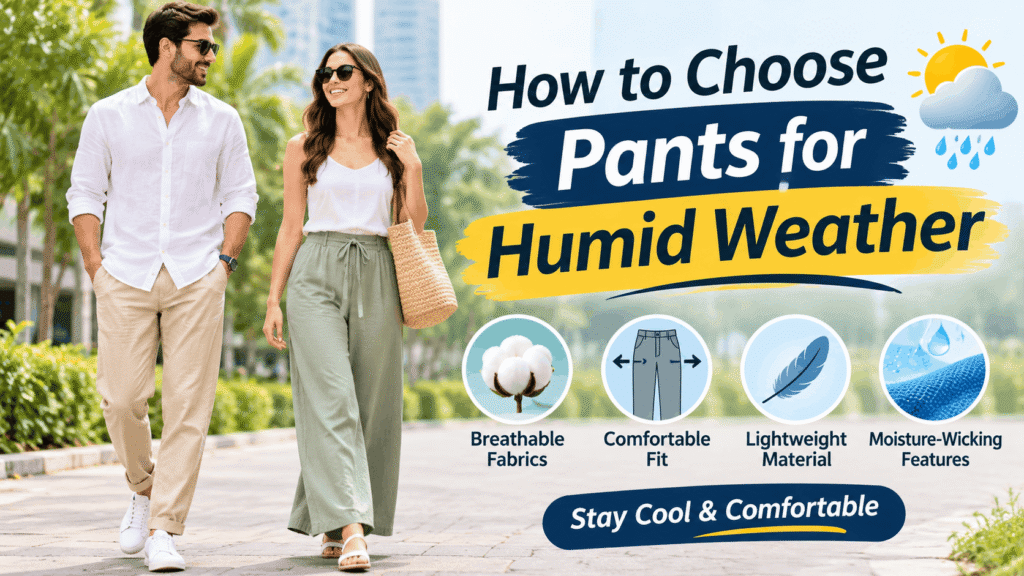
Choosing the right pants becomes especially important when the weather is hot and humid. High humidity makes it harder for sweat to evaporate, which can leave clothing feeling damp, sticky, and uncomfortable. Wearing heavy denim, tight-fitting pants, or poorly ventilated fabrics can make the problem even worse.
If you are wondering how to choose pants for humid weather, start by looking beyond appearance and price. The fabric, weave, weight, fit, waistband, and moisture-management features all affect how comfortable a pair of pants feels throughout the day.
Lightweight linen, breathable cotton, lyocell blends, and properly designed performance fabrics can be useful choices, depending on your activity and personal preferences. However, not every pair made from these materials will perform equally well.
In this guide, Fashionplora explains what to look for when buying pants for humid conditions. You will learn how different fabrics compare, which fits improve airflow, what features matter most, and how to avoid common shopping mistakes. Whether you need pants for everyday wear, office hours, traveling, or outdoor activities, these tips will help you make a more informed decision.
Table of Contents
1. Understand How Humidity Affects Pants Comfort
Humidity refers to the amount of moisture present in the air. When humidity levels are high, sweat evaporates more slowly from your skin. This makes your body feel warmer and can cause clothing to remain damp for longer.
The pants you wear can influence how comfortable you feel in these conditions.
For example, thick denim may feel heavy during a long walk, while tightly fitted synthetic pants can create an uncomfortable, clingy feeling. On the other hand, lightweight pants with an airy construction can allow better ventilation.
Before purchasing pants, consider these three important factors:
- Air circulation: Look for materials and designs that allow air to move around your legs.
- Moisture management: Choose fabrics that suit how much you sweat and how active you are.
- Comfortable movement: Pants should provide enough room to walk, sit, and move without excessive friction.
Understanding these differences makes it easier to select pants that remain comfortable throughout humid days.
2. Choose Breathable Fabrics for Humid Weather
Fabric selection is one of the most important parts of buying comfortable pants. Different materials handle airflow, sweat, and drying time differently.
Here are some common fabric options worth considering.
Linen
Linen is a popular choice for warm-weather clothing because its typical open-weave construction allows good airflow.
Its main advantages include:
- Excellent breathability in open constructions.
- Lightweight feel for warm days.
- Comfortable drape for casual outfits.
- Suitable for relaxed everyday styling.
However, linen wrinkles easily and absorbs moisture rather than actively wicking sweat away. If you spend long periods outdoors or sweat heavily, consider how quickly the particular garment dries.
If you also wear cotton clothing, you may find these tips useful for learning how to remove wrinkles from cotton pants.
Lightweight Cotton
Cotton is another practical option for everyday pants. It feels soft against the skin and is available in different weights and constructions.
For humid weather, consider lightweight cotton fabrics such as poplin, seersucker, and loosely woven cotton.
Benefits include:
- Soft and comfortable texture.
- Good breathability in suitable weaves.
- Easy styling for casual and smart-casual outfits.
- Widely available in different cuts.
One disadvantage is that cotton absorbs sweat and may take longer to dry. Heavy cotton twill and thick cotton denim are generally less comfortable in very humid conditions.
Cotton pants can sometimes feel rough or uncomfortable when they are new. If you prefer a softer texture, learn how to make cotton pants softer using suitable fabric-care methods. You can also understand why new pants feel stiff before deciding whether a particular pair is right for you.
Lyocell and TENCEL Blends
Lyocell is a regenerated cellulosic fiber commonly used in soft, lightweight clothing.
It can be a useful option if you prefer pants with a smooth texture and fluid drape.
Look for:
- Soft fabric construction.
- Lightweight material.
- Comfortable movement.
- A blend that maintains the desired shape.
Its moisture behavior depends on the fabric construction and blend. Some lightweight lyocell pants may cling when damp, so check the actual garment rather than relying only on its fiber name.
Moisture-Wicking Polyester and Nylon
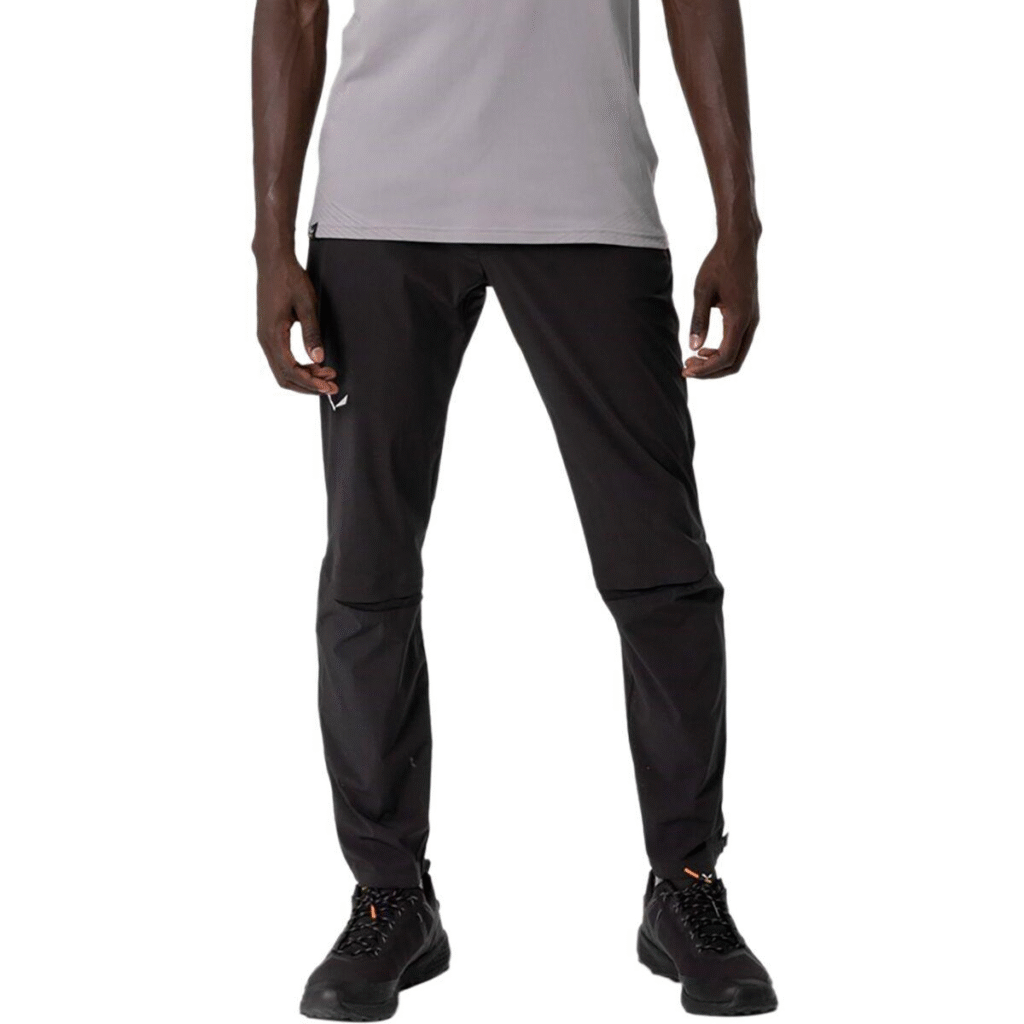
Polyester and nylon are frequently used in athletic and outdoor clothing.
When engineered with suitable moisture-wicking features, these materials can move sweat away from the skin and dry relatively quickly.
They are useful for:
- Walking and outdoor activities.
- Exercise and training.
- Travel in warm conditions.
- People who prefer easy-care clothing.
However, not all polyester and nylon pants are breathable. Dense weaves and heavy synthetic materials can trap heat. Look for lightweight construction, ventilation, and performance features.
Lightweight Cotton Blends
Cotton blends can provide a balance between everyday softness and practical performance.
Depending on their composition, some blends offer better wrinkle resistance, flexibility, or drying performance than pure cotton.
Always check the fabric percentages and garment construction before buying.
Fabric Comparison Table
| Fabric | Main Advantage | Possible Drawback |
|---|---|---|
| Linen | Excellent airflow in open weaves | Wrinkles easily |
| Lightweight cotton | Soft and breathable | Holds moisture |
| Lyocell blends | Smooth feel and fluid drape | Can cling when damp |
| Performance polyester | Moisture-wicking options | Breathability varies |
| Nylon blends | Lightweight and quick-drying options | Some versions feel less airy |
| Cotton blends | Balanced everyday comfort | Performance depends on blend |
The best option depends on your activity level, the fabric’s construction, and how much you normally sweat.
3. Pay Attention to Fabric Weight and Weave
Many shoppers focus on fabric names but overlook weight and construction. These details can make a noticeable difference in humid conditions.
Lightweight pants generally feel less bulky than heavyweight alternatives. However, thinner fabric does not automatically mean better breathability.
Check these details before purchasing:
Fabric weight: Choose pants that feel lightweight without being excessively thin or transparent.
Weave construction: Open and less densely woven fabrics generally allow more air movement than tightly constructed materials.
Fabric thickness: Avoid unnecessarily thick materials that may increase heat buildup.
Lining: Full synthetic linings can add another layer and reduce ventilation. Unlined or partially lined pants may feel more comfortable.
A useful shopping tip is to hold the fabric toward a light source. This can help you assess its weave and opacity, although it cannot prove how breathable the garment will feel when worn.
4. Select a Comfortable Fit That Allows Airflow
Fabric alone cannot guarantee comfort. The way pants fit your body also affects ventilation and movement.
When deciding how to choose pants for humid weather, avoid cuts that feel excessively tight around the thighs, knees, and calves.
Here are some useful options.
Relaxed-Fit Pants
Relaxed-fit pants provide additional room around the legs. This can help reduce fabric contact with your skin and make walking more comfortable.
They work well for everyday outfits, travel, and casual activities.
Straight-Leg Pants
Straight-leg pants offer a balanced shape without tightly hugging the lower legs.
They are a practical choice if you want something comfortable that still looks neat with casual shirts, polos, and lightweight tops.
Wide-Leg Pants
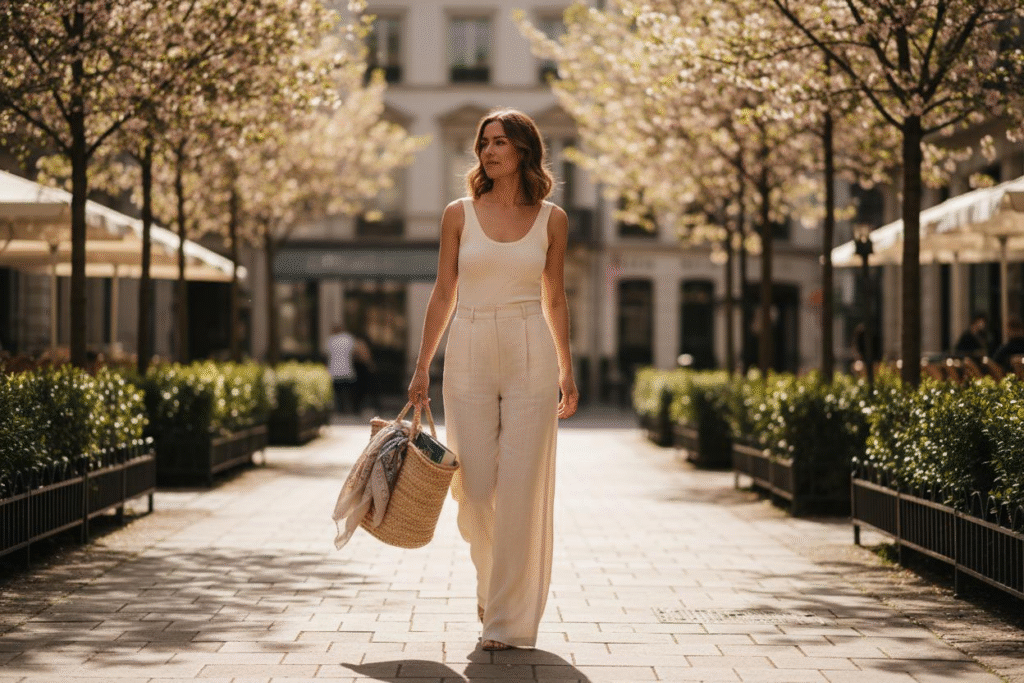
Wide-leg pants provide more room throughout the legs and can create an airy silhouette.
They are especially useful for casual summer outfits when made from lightweight, breathable fabrics.
Tapered Pants
Tapered pants have more room around the upper legs and gradually become narrower toward the ankles.
They can be a good option if you prefer a cleaner appearance. Just make sure the lower legs are not so tight that they restrict movement.
My recommendation: Choose a relaxed or straight-leg design for everyday humid-weather wear. If you prefer a more fashionable silhouette, lightweight wide-leg pants are another option.
Fabric quality and fit both influence how long pants maintain their original appearance. If your pants gradually become loose or lose their structure, understanding why pants lose their shape can help you make better clothing and care decisions.
5. Check the Waistband and Other Comfort Features
Small design details can influence how comfortable pants feel after several hours of wear.
A good pair should fit securely without creating unnecessary pressure or irritation.
Consider these features:
- Stretch waistband: Offers flexibility when sitting, walking, and moving.
- Adjustable drawstring: Helps you customize the waist fit.
- Breathable construction: Reduces unnecessary heat buildup.
- Smooth inner seams: Can help minimize rubbing against the skin.
- Lightweight pockets: Avoid unnecessarily bulky pocket construction.
- Stretch fabric: A small amount of elastane can improve mobility.
Avoid waistbands that feel too tight, particularly if you plan to wear the pants throughout the day.
6. Choose Pants According to Your Daily Activities
The most comfortable pants for humid weather depend on how you spend your time. A pair suitable for an office may not be the best choice for exercise or outdoor travel.
For Everyday Wear
Choose lightweight cotton, linen, or comfortable cotton blends.
Relaxed and straight-leg designs are practical because they provide room for movement without looking oversized.
For Office Wear
Look for lightweight cotton, suitable lyocell blends, or breathable lightweight performance fabrics.
Choose straight-leg or tailored relaxed pants that maintain a neat appearance while providing enough room to move.
Avoid heavy linings and overly tight cuts.
For Walking and Outdoor Activities
Moisture-wicking polyester or nylon pants can be useful for active days.
Prioritize:
- Quick-drying construction.
- Lightweight material.
- Comfortable stretch.
- Breathable panels or ventilation.
- A waistband that stays comfortable during movement.
For Traveling
Travel pants should balance comfort, flexibility, and easy maintenance.
Lightweight nylon blends, performance fabrics, and suitable cotton blends can be practical choices.
Consider zippered pockets, wrinkle resistance, and quick-drying features if you expect to spend long hours traveling.
For Casual Summer Outfits
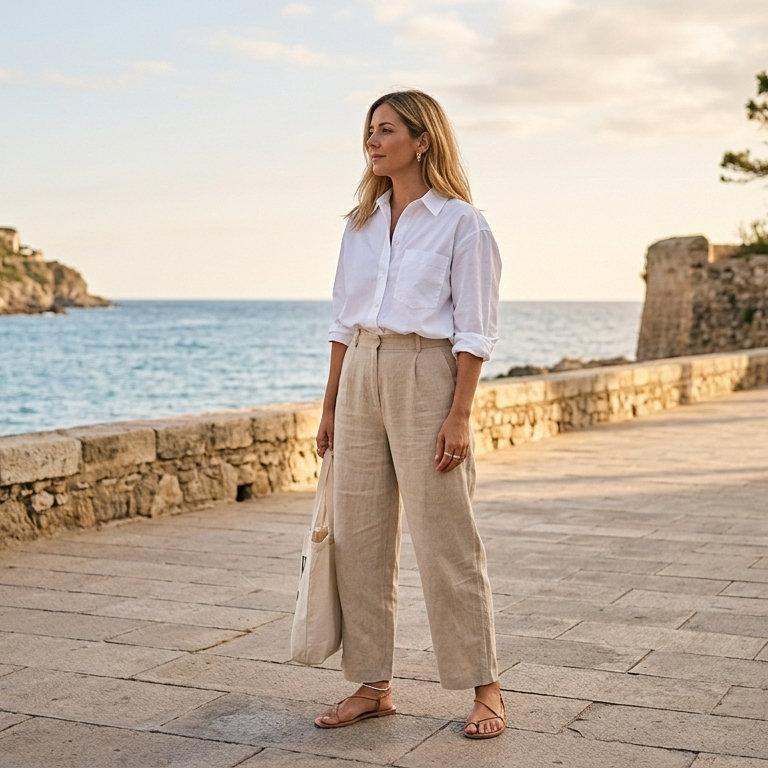
Linen and lightweight cotton pants work well for relaxed summer styling.
You can pair them with breathable T-shirts, polo shirts, casual button-downs, and comfortable footwear.
7. Select Colors That Suit Humid Conditions
Color is another detail worth considering when shopping for pants in warm weather.
Light-colored clothing generally absorbs less sunlight than dark-colored clothing, which can make it a practical choice for outdoor wear.
Consider these colors:
- Beige
- Light gray
- Cream
- Khaki
- White
- Light olive
However, color is not the only factor that determines comfort. Fabric weight, construction, airflow, and fit usually matter more.
If sweat marks are a concern, medium or darker shades and subtle patterns may help make damp patches less noticeable.
Light-colored pants are practical for sunny conditions, but proper care also helps preserve their appearance. Learn what causes pants to fade so you can avoid common washing and storage mistakes that affect fabric color.
8. Know Which Pants to Avoid in Humid Weather
Some pants may look fashionable but become uncomfortable when temperatures and humidity rise.
Here are a few options to approach carefully.
Heavy Denim
Thick denim can feel restrictive and retain moisture after heavy sweating. Lightweight denim may still work for casual use, but it is not always the most comfortable option for very humid days.
Thick Wool Pants
Heavy wool fabrics are designed to provide warmth and insulation. They are generally unnecessary for hot, humid conditions.
Lightweight tropical wool is a different category and may work for certain tailored outfits.
Poorly Ventilated Synthetic Pants
Synthetic materials are not automatically uncomfortable. However, tightly constructed polyester or nylon fabrics without suitable moisture-management features can feel hot and clammy.
Tight Skinny Pants
Very close-fitting pants reduce the space available for airflow and can increase friction during movement.
If you prefer a slim appearance, choose a lightweight fabric with enough stretch and room to move.
Heavy Lined Pants
Extra lining can add bulk and reduce ventilation. Check the inside construction before buying, especially when shopping for formal or tailored pants.
9. Read Fabric Labels Before Buying
Product descriptions and clothing labels provide useful information about material composition and care requirements.
Before purchasing, check the following:
Fiber composition: Look at the percentages of cotton, linen, polyester, nylon, lyocell, and elastane.
Care instructions: Check whether the pants require special washing or drying methods.
Fit description: Look for relaxed, straight, regular, or tapered cuts.
Moisture management: Check whether the manufacturer specifically mentions moisture-wicking or quick-drying features.
Lining information: Find out whether the pants are lined or unlined.
Fabric weight: If available, compare the weight of different options.
Do not rely entirely on marketing phrases such as cooling fabric or summer material. The actual construction and performance features matter more than the product name.
Always check the washing and drying instructions before cleaning your pants. Our guide explains how to read pants care labels so you can understand fabric-specific instructions.
If you regularly wear cotton pants, you should also learn how to prevent cotton pants from shrinking during laundry.
For more guidance on choosing materials for different seasons, read our Pants Fabric Guide for All Seasons.
You can also explore how to choose pants fabric based on climate for additional information about matching clothing materials to different weather conditions.
10. Common Mistakes to Avoid When Choosing Pants
Even when shoppers know which fabrics are suitable for summer, they can still make mistakes when selecting pants.
Here are some common problems to avoid:
- Choosing by fabric name alone: Linen, cotton, and polyester can perform differently depending on their construction.
- Ignoring fabric weight: Heavy materials can feel uncomfortable during humid days.
- Buying an overly tight fit: Restricted movement and close fabric contact can increase discomfort.
- Overlooking moisture management: Absorbent fabrics may remain damp after heavy sweating.
- Ignoring the lining: Additional layers can reduce ventilation.
- Trusting every cooling claim: Look for actual fabric details rather than relying on promotional language.
- Ignoring care instructions: Some lightweight fabrics require gentle washing and careful drying.
Taking a few minutes to check these details can help you avoid buying pants that are unsuitable for your daily routine.
Ignoring small fabric problems can eventually shorten the useful life of your clothing. If you notice a tear, learn how to repair ripped cotton pants before the damage becomes worse.
Following suitable maintenance practices can also help you keep your pants looking new for longer.
11. How to Find the Right Pants for Your Needs
Before making a final purchase, compare different pants using a simple checklist.
| What to Check | What to Look For |
|---|---|
| Fabric | Linen, lightweight cotton, or suitable performance blends |
| Weight | Lightweight without excessive transparency |
| Weave | Airy construction |
| Fit | Relaxed or comfortable straight-leg |
| Waistband | Flexible or adjustable |
| Moisture control | Wicking or quick-drying features when needed |
| Lining | Minimal or no unnecessary lining |
| Care | Washing instructions that suit your routine |
You do not need every feature in one pair. Focus on the qualities that matter most for your climate and everyday activities.
For example, someone working in an air-conditioned office may prefer lightweight tailored pants, while someone walking outdoors may benefit more from quick-drying performance material.
The goal is to find a pair that balances comfort, appearance, and practical performance.
After finding comfortable pants for humid weather, proper storage is another important part of clothing maintenance. Read our guide on how to store pants properly to help maintain their condition between wears.
Conclusion
Knowing how to choose pants for humid weather can make a noticeable difference in everyday comfort. Instead of focusing only on style or fabric names, pay attention to breathability, fabric weight, weave, fit, lining, and moisture management.
Linen and lightweight cotton are useful options for casual wear, while properly engineered polyester and nylon fabrics can be better suited to active days. Relaxed and straight-leg designs also provide a comfortable alternative to restrictive cuts.
Before buying, check the fabric label, inspect the construction, and consider where you plan to wear the pants. A well-chosen pair should support comfortable movement, suit your daily activities, and feel appropriate for the weather.
At Fashionplora, our goal is to help you make smarter clothing choices with practical fashion advice that puts comfort and style together.
FAQ
What are the best pants fabrics for humid weather?
Linen, lightweight cotton, lyocell blends, and suitable moisture-wicking polyester or nylon fabrics are useful options. The best choice depends on the fabric construction, activity level, and personal comfort preferences.
Are cotton pants good for humid weather?
Yes, lightweight cotton pants can be comfortable in humid conditions because they are soft and breathable. However, cotton absorbs sweat and may take longer to dry, so it may not be ideal for heavy sweating or intense outdoor activities.
Is linen better than cotton for humid weather?
Linen often provides better airflow because of its typical open-weave construction. Cotton can offer a softer feel and easier everyday care. Both can work well when the fabric is lightweight and appropriately constructed.
Are polyester pants comfortable in humid weather?
Some polyester pants are suitable for humid weather, particularly those designed with moisture-wicking and quick-drying features. However, tightly woven or poorly ventilated polyester can trap heat and feel uncomfortable.
Should I wear loose or tight pants in humid weather?
Relaxed and straight-leg pants are generally comfortable choices because they provide more room for movement and airflow. Avoid extremely tight designs that create unnecessary friction or restrict movement.
What color pants are best for hot and humid weather?
Light colors such as beige, white, cream, and light gray are practical for outdoor conditions because they generally absorb less sunlight than dark colors. Fabric construction and fit remain important factors.
Are jeans suitable for humid weather?
Lightweight jeans can be worn in humid conditions, but thick denim is often less comfortable because it can feel heavy and retain moisture. If you prefer jeans, consider lighter denim with a comfortable fit.
What should I look for when buying summer pants?
Look for lightweight construction, breathable fabrics, a comfortable fit, minimal lining, and suitable moisture-management features. Also check the care label and fabric composition before purchasing