

Introduction
Building a stylish wardrobe does not mean filling your closet with dozens of different clothing items. Sometimes, a few well-chosen pairs of pants are enough to create outfits for work, weekends, casual outings, and different seasons. The important thing is knowing which styles you actually need and how to make them work together.
Learning how to build a men’s pants wardrobe starts with understanding your lifestyle, personal preferences, and daily activities. A man who works in an office may need more chinos and dress pants, while someone with an active routine might prefer jeans, joggers, and comfortable performance pants.
Instead of buying every style you see online, focus on versatile designs, comfortable fabrics, and colors that match most of your existing clothes. This approach can help you save money, reduce unnecessary shopping, and make everyday outfit decisions easier.
In this guide, we will explore the essential pants every man should consider, how many pairs are practical, which colors and fabrics work best, and how to create a collection that suits your everyday life.
Table of Contents
1. Understand What Your Lifestyle Requires
Before purchasing anything, think about where you spend most of your time. Your pants collection should support your routine rather than follow a checklist that may not suit you.
For example, someone working five days a week in an office will have different clothing needs from someone who works remotely or spends most of the day outdoors.
Consider these common situations:
- Office and professional settings: Dress pants, tailored trousers, and smart chinos are useful choices.
- Everyday casual wear: Jeans and cotton chinos can handle shopping, meeting friends, and regular outings.
- Outdoor activities: Cargo pants and lightweight performance pants provide practical features for active days.
- Home and relaxation: Joggers and comfortable knit pants are suitable for relaxed settings.
- Travel: Stretch chinos, lightweight trousers, and quick-drying pants can make long journeys more comfortable.
Write down the occasions you dress for most often. This simple exercise helps you identify which styles deserve space in your closet.
2. Start With These Essential Pants for Men
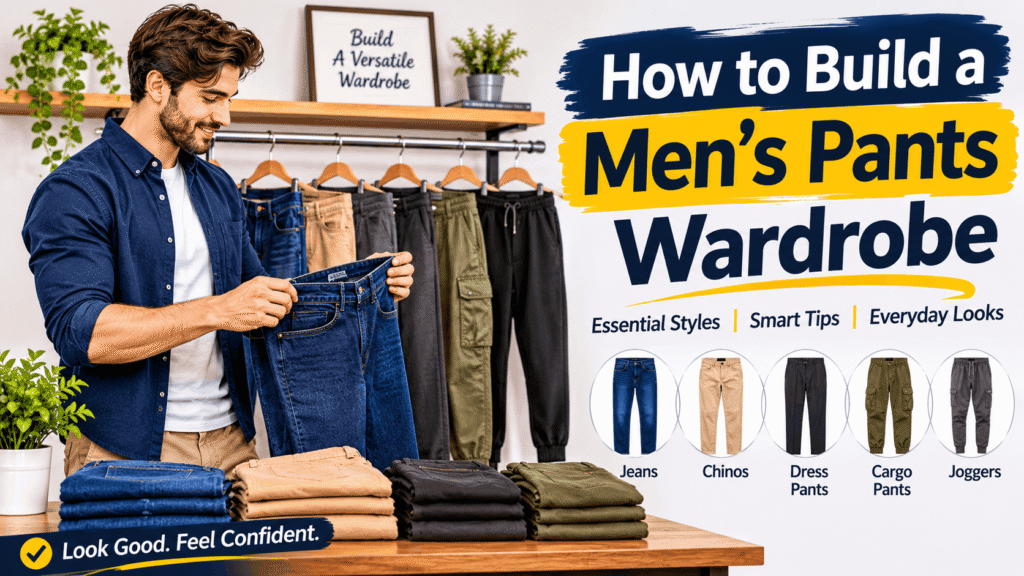
A versatile men’s pants collection should include a mixture of casual, smart, comfortable, and seasonal options. You do not need every style immediately. Start with the categories that match your routine and expand when you identify a genuine need.
1. Dark-Wash Jeans for Everyday Wear
Dark-wash jeans are one of the most useful starting points for a man’s wardrobe. Their simple appearance makes them easy to combine with T-shirts, polo shirts, sweaters, and casual button-down shirts.
Choose dark indigo or a clean black wash if you want maximum styling flexibility. Straight-leg and slim-straight designs are practical starting points because they can work with different types of footwear.
How to wear them:
- Pair dark jeans with a white T-shirt and sneakers.
- Wear them with a casual button-down shirt for a dinner outing.
- Add a sweater and boots for cooler weather.
Avoid heavily distressed designs if you want your first pair to work across more situations.
2. Neutral Chinos for Smart-Casual Outfits
Chinos fill the space between casual jeans and formal dress pants. They are especially useful when you want to look more polished without wearing a full business outfit.
Cotton twill is a common material for chinos. Some designs also include a small amount of stretch for additional movement.
For your first pair, consider:
- Khaki or beige for a lighter appearance.
- Navy for easy everyday styling.
- Olive for a slightly different neutral option.
Chinos look good with polo shirts, Oxford shirts, lightweight sweaters, loafers, and clean sneakers.
If you work in a business-casual environment, this category deserves a place near the top of your shopping list.
3. Dress Pants for Professional Occasions
Every man’s routine is different, but having at least one suitable pair of dress pants can be helpful for meetings, formal dinners, interviews, and special occasions.
Charcoal, navy, and black are practical colors because they coordinate with many dress shirts and formal shoes.
When selecting dress pants, pay attention to:
- A comfortable waistband.
- A clean fit around the seat and thighs.
- An appropriate leg opening.
- Fabric that drapes neatly.
- A length that works with your formal footwear.
Wool and wool-blend fabrics are traditional options, while suitable synthetic and blended fabrics can provide easier maintenance at different price points.
Do not choose an extremely tight fit just because it looks fashionable. Comfortable movement and a clean silhouette matter more.
4. Comfortable Joggers for Relaxed Days
Joggers are useful when comfort is your priority. They work well for relaxing at home, running errands, casual walks, and certain travel situations.
Look for a pair with:
- A comfortable elastic waistband.
- A suitable amount of stretch.
- A practical pocket arrangement.
- A leg shape that matches your preference.
- Fabric appropriate for your local weather.
Black, charcoal, and navy are particularly easy to coordinate with basic T-shirts and sweatshirts.
For a more polished casual appearance, choose structured joggers rather than oversized designs that look like sleepwear.
5. Cargo Pants for Practical Everyday Use
Cargo pants are a useful addition if you prefer functional clothing with extra storage. Their additional pockets can help when you carry small everyday items or spend time outdoors.
Modern cargo designs are available in different silhouettes, from relaxed straight legs to more streamlined tapered styles.
Olive, black, beige, and brown are practical colors.
Pair them with plain T-shirts, casual shirts, and sneakers or boots. For a balanced outfit, avoid combining excessively bulky cargo pants with an equally oversized top.
6. Lightweight Pants for Warm Weather
A good wardrobe should account for seasonal changes. Heavy denim and thick fabrics may become uncomfortable when temperatures rise.
Lightweight cotton, linen blends, and appropriately constructed performance fabrics can provide useful alternatives.
For summer, consider:
- Linen-blend pants for relaxed outfits.
- Lightweight cotton trousers for everyday wear.
- Breathable chinos for smart-casual occasions.
- Quick-drying performance pants for outdoor activities.
You can explore our guide to choosing pants for humid weather for more information about fabric weight, breathability, and comfortable fits.
7. Warm Pants for Colder Weather
Cold-weather clothing requires a different approach. Thicker materials can help provide warmth, especially when you spend time outside.
Consider corduroy, flannel, fleece-lined pants, or suitable insulated work pants according to your activities.
For casual winter outfits, darker corduroy and heavier cotton designs can work well with sweaters, jackets, and boots.
If you prefer a softer option for relaxing, our guide to comfortable fleece pants for men offers additional ideas.
3. How Many Pairs of Pants Should a Man Own?
There is no universal number that works for every man. Your ideal collection depends on how frequently you wear pants, how often you do laundry, your workplace dress code, and whether you need separate clothing for exercise or outdoor activities.
For someone who wants a practical starting point, five to eight pairs can provide a useful rotation.
Here is an example of how to organize that collection:
| Pants Style | Suggested Quantity | Main Purpose |
|---|---|---|
| Dark-wash jeans | 1–2 | Everyday casual wear |
| Chinos | 1–2 | Smart-casual outfits |
| Dress pants | 1 | Professional occasions |
| Joggers | 1 | Relaxed and casual wear |
| Cargo or utility pants | 1 | Practical everyday use |
| Seasonal pants | 1 | Warm or cold weather |
This is a flexible example, not a strict shopping requirement. If you rarely attend formal events, you may not need several dress pants. Similarly, someone who exercises regularly may want additional athletic options.
The best collection is the one that gives you enough variety without filling your closet with clothes you rarely wear.
4. Choose Colors That Are Easy to Mix and Match
Color selection can make a significant difference when building a smaller wardrobe. If most of your pants work with your existing shirts and shoes, you can create more outfits without buying additional clothing.
Start with a few dependable neutral colors.
Navy
Navy pants are suitable for smart-casual and everyday outfits. They work particularly well with white, gray, light blue, and beige tops.
Black
Black is a practical choice for casual wear and certain professional settings. It pairs easily with neutral shirts, sweaters, and jackets.
Khaki and Beige
These lighter shades are useful for daytime outfits and warmer seasons. They look good with navy, white, olive, brown, and black tops.
Charcoal Gray
Charcoal offers a polished appearance without being as visually strong as black. It is especially useful for dress pants and office outfits.
Olive Green
Olive is a versatile alternative to traditional neutral colors. It pairs well with white, black, gray, cream, and navy.
A useful rule: Build your main collection around three or four colors you regularly wear. Add brighter or more unusual shades only when they complement your existing clothing.
5. Select Fabrics According to the Season and Purpose
The material of your pants affects comfort, appearance, durability, and maintenance. Two pairs with similar designs can feel completely different because of their fabric construction.
Here are some common materials to consider:
| Fabric | Best Use | Main Advantage |
|---|---|---|
| Cotton | Everyday wear | Soft feel and versatility |
| Denim | Casual outfits | Durable construction |
| Linen | Warm weather | Airy feel in suitable weaves |
| Wool blends | Dress and tailored wear | Refined appearance and drape |
| Polyester blends | Active and travel wear | Easy-care and quick-drying options |
| Fleece | Cold weather and relaxation | Soft, warm interior |
Remember that the fiber name alone does not determine performance. Fabric weight, weave, lining, and blend percentages also matter.
For example, lightweight cotton can be comfortable during warm weather, while thick cotton denim may feel too heavy on particularly hot days.
If you want to compare warm-weather materials in more detail, read our article about summer linen pants for men.
6. Find the Right Fit for Your Body and Style
Even an expensive pair of pants can look uncomfortable if the fit is wrong. Before deciding on a style, consider your waist, seat, thighs, leg shape, and preferred length.
These are the main fits worth understanding:
Slim Fit
Slim-fit pants follow the shape of your legs more closely. They create a streamlined appearance but should not restrict movement.
Straight Fit
Straight-leg pants maintain a relatively consistent width from the thighs toward the ankles. They are a dependable choice for everyday outfits.
Relaxed Fit
Relaxed pants provide more room around the hips and thighs. They can be especially comfortable for walking, sitting, and daily activities.
Tapered Fit
Tapered pants have more room around the upper legs and become narrower toward the ankles. They work well if you want a modern silhouette without an excessively tight lower leg.
Before purchasing, try sitting, walking, and bending your knees. Check whether the waistband stays comfortable and whether the fabric pulls across the thighs or seat.
Also, pay attention to inseam length. Pants that are too long can bunch around your shoes, while excessively short designs may not suit your intended outfit.
7. Build Your Pants Collection Gradually on a Budget
You do not need to purchase your entire wardrobe in one shopping trip. Building it gradually allows you to understand which styles you wear most often.
Follow this practical buying order:
Step 1: Start With Everyday Jeans
Choose one comfortable pair in a versatile dark wash. This gives you a dependable option for regular casual outfits.
Step 2: Add Neutral Chinos
A navy, beige, or khaki pair can expand your outfit choices without requiring an entirely different wardrobe.
Step 3: Purchase Dress Pants if Needed
If your work or social schedule includes formal occasions, add one pair in charcoal or navy.
Step 4: Add Comfortable Casual Pants
Consider joggers, jersey knit pants, or another relaxed option based on how you spend your free time. You can also explore our guide to jersey knit pants for men.
Step 5: Fill Seasonal Gaps
Only add linen, fleece-lined, corduroy, or other seasonal styles when your climate and daily routine make them useful.
Step 6: Review Before Buying More
Look at your existing collection. If you already have three pairs that serve the same purpose, purchasing another similar design may not improve your wardrobe.
Prioritize fit, construction, and versatility instead of buying something simply because it is discounted.
8. Create More Outfits With Fewer Pants
A useful wardrobe is not just about owning different styles. It is also about knowing how to combine them.
Here are some simple combinations:
| Pants | Top | Footwear | Occasion |
|---|---|---|---|
| Dark jeans | White T-shirt | White sneakers | Everyday casual |
| Beige chinos | Navy polo | Loafers | Smart casual |
| Charcoal dress pants | Light blue shirt | Oxford shoes | Office or formal |
| Olive cargo pants | Black T-shirt | Casual sneakers | Weekend outings |
| Black joggers | Gray sweatshirt | Athletic shoes | Relaxed wear |
| Linen-blend pants | Lightweight shirt | Casual loafers | Summer outings |
You can also create variety by changing your shirts, footwear, and outerwear rather than purchasing another pair of pants for every occasion.
Keep your combinations simple when starting out. Once you understand which colors and silhouettes work well together, experimenting with different styles becomes easier.
9. Common Mistakes to Avoid When Building a Men’s Pants Wardrobe
Some shopping habits can make your collection less practical. Avoid these common mistakes:
- Buying too many similar styles: Several nearly identical jeans or chinos may not add much variety.
- Ignoring your daily routine: Do not spend money on formal pants if you rarely need them.
- Choosing fashion over comfort: Pants should allow you to sit, walk, and move naturally.
- Buying difficult-to-match colors: Unusual shades can limit outfit combinations if your other clothing is mostly neutral.
- Ignoring seasonal requirements: Heavy winter fabrics may not work well during hot weather.
- Overlooking fabric quality: Check the material, stitching, waistband, and care instructions before purchasing.
- Following trends without considering your preferences: A popular fit may not be the right choice for your body or lifestyle.
- Neglecting maintenance: Appropriate washing, drying, and storage help preserve your clothing.
A smaller collection of comfortable and versatile pants can be more useful than a closet full of styles that rarely leave the hanger.
10. How to Maintain Your Pants Collection
Once you have built a useful wardrobe, taking care of your clothing can help it remain in good condition.
Follow these simple habits:
- Read the care label before washing.
- Separate dark and light-colored garments when appropriate.
- Avoid unnecessary washing when the pants are still clean.
- Follow the recommended water temperature.
- Use suitable drying methods for each fabric.
- Store pants neatly to reduce unnecessary wrinkles.
- Repair small tears or loose seams before they become larger problems.
Different materials require different care routines. For example, cotton may shrink under excessive heat, while some synthetic fabrics need lower drying temperatures.
Good maintenance helps you get more use from the pants you already own.
Conclusion
Learning how to build a men’s pants wardrobe is about choosing clothing that fits your lifestyle, not following a fixed shopping list. A practical collection can start with dark jeans, neutral chinos, suitable dress pants, and comfortable casual options. From there, you can add seasonal and activity-specific styles whenever you genuinely need them.
Pay attention to fit, fabric, color, and versatility before making a purchase. Choose pants that work with the shirts and shoes you already own, and avoid buying multiple styles that serve exactly the same purpose.
You do not need an oversized closet to dress well. With thoughtful choices and proper care, a manageable pants collection can cover most everyday situations while keeping your style comfortable and consistent.
At Fashionplora, our goal is to help you make smarter pants choices with practical advice that balances comfort, function, and personal style.
FAQs
How many pairs of pants should a man own?
Five to eight pairs can be a practical starting point for many men. The right number depends on work requirements, lifestyle, weather, laundry habits, and personal preferences.
What pants should every man have in his wardrobe?
Dark-wash jeans, neutral chinos, and suitable dress pants are useful foundations. Joggers, cargo pants, and seasonal options can be added according to individual needs.
What is the most versatile color for men’s pants?
Navy is one of the most versatile choices because it works with many shirt colors and can suit casual and smart-casual outfits. Black, charcoal, beige, and olive are also useful options.
Are jeans enough for a man’s wardrobe?
Jeans can cover many casual situations, but they may not be suitable for every workplace, formal event, or warm-weather activity. Adding chinos and dress pants provides more flexibility.
Should men choose slim-fit or straight-leg pants?
Both can work well. Slim-fit pants create a closer silhouette, while straight-leg pants offer a more traditional shape and additional room through the lower leg. Choose the fit that feels comfortable and suits your style.
What fabric is best for everyday men’s pants?
Cotton, denim, and suitable cotton blends are popular everyday options. The best material depends on the weather, intended activity, fabric weight, and preferred level of comfort.
What pants are best for a business-casual wardrobe?
Chinos and tailored trousers are useful choices for many business-casual settings. Check your workplace dress code before deciding whether dark jeans are also acceptable.
How can I build a men’s pants wardrobe on a small budget?
Start with one pair of dark jeans and one pair of neutral chinos. Add dress pants or comfortable casual styles according to your needs, then fill seasonal gaps gradually. Prioritize fit and quality over quantity.