Introduction
How to choose the right pants for body type is a question everyone asks at some point, whether shopping for themselves or their kids. The right pair of pants can enhance your natural shape, provide comfort, and boost confidence. In this guide, we’ll break down body types, fits, rises, fabrics, and styling tips to help men, women, boys, and girls find pants that truly flatter their unique silhouette.
Table of Contents
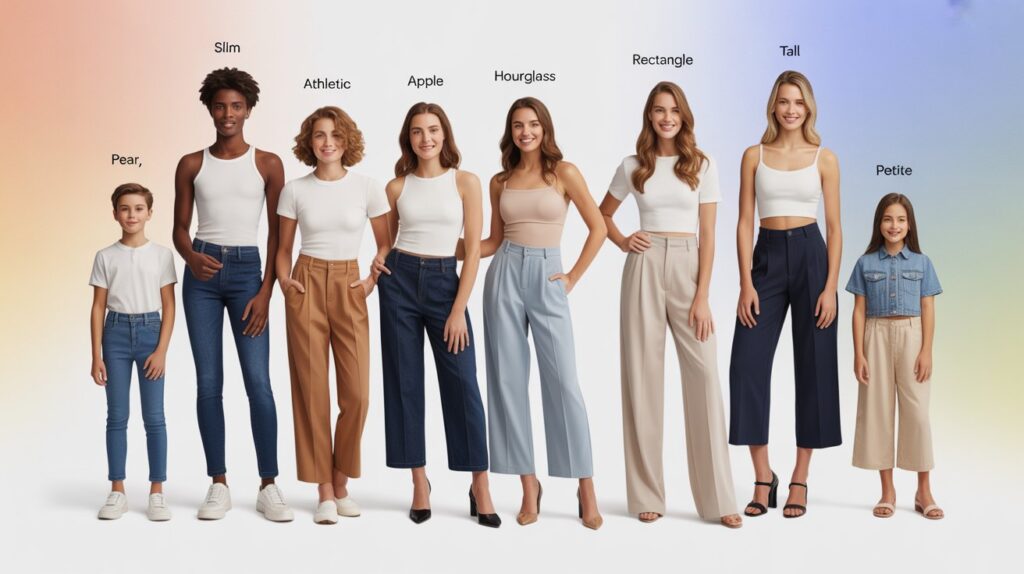
Understanding Body Types (All Genders & Ages)
Before you can truly master how to choose the right pants for body type, you need to clearly understand what body type means. Body type refers to your natural body structure — including your bone frame, shoulder width, waist shape, hip proportion, height, and muscle distribution. It applies to men, women, boys, and girls of all ages.
Everyone’s body is unique, but most people fall into common shape categories. Knowing your category helps you select pants that create balance, improve comfort, and enhance confidence.
Let’s break down the most common body types in a simple and practical way.
Slim Body Type
A slim body type usually has:
- Narrow shoulders and hips
- Less muscle mass
- Straight body lines
- Minimal curves
This body type is common among teenagers, young adults, and naturally lean individuals.
Why it matters:
Slim builds can sometimes look overwhelmed by overly loose or bulky pants. The goal is to create shape and avoid looking too thin.
Athletic Body Type
An athletic body type often features:
- Broad shoulders
- Defined chest or upper body
- Muscular thighs or legs
- Narrower waist
This is common in active men, women, and sporty teens.
Why it matters:
Athletic builds may struggle with tight fits around thighs or hips. Pants must allow room for movement while maintaining a clean shape.
Pear Shape
Pear-shaped bodies typically have:
- Wider hips
- Thicker thighs
- Smaller or narrower upper body
This shape is common among women and girls but can also appear in males.
Why it matters:
The focus should be on balancing the lower body with the upper body. Pants should streamline the hips without clinging too tightly.
Apple Shape
Apple-shaped bodies usually have:
- Broader midsection
- Less defined waistline
- Slimmer legs
- Fuller upper body
This body type appears in both adults and children.
Why it matters:
Comfort around the waist is essential. The right pants help create structure without feeling tight around the stomach area.
Hourglass Shape
The hourglass shape includes:
- Balanced shoulders and hips
- Clearly defined waist
- Natural curves
This body type is most commonly associated with women but can describe proportional builds in general.
Why it matters:
The goal is to maintain natural balance. Pants should highlight the waist without disrupting proportion.
Rectangle Body Type
A rectangle body type features:
- Similar shoulder and hip width
- Straight waistline
- Minimal curves
Common among men, boys, and some women.
Why it matters:
This shape benefits from styles that create dimension and structure. The right pants can add shape and visual interest.
Tall Body Type
Tall individuals may have:
- Longer legs
- Extended torso
- Difficulty finding correct inseam length
This applies to all genders and age groups.
Why it matters:
Proportion is key. Pants must balance leg length without appearing too short or awkward.
Petite or Short Body Type
Petite or shorter builds often have:
- Shorter legs relative to torso
- Compact frame
- Need for proper length adjustments
This is common in both adults and children.
Why it matters:
Incorrect length can make legs appear shorter. Proper fit creates a longer, more balanced appearance.
Why Understanding Body Type Is Important
When learning how to choose the right pants for body type, you are not trying to change your body. You are simply working with your natural structure.
The right pants can:
- Improve overall balance
- Enhance comfort
- Create cleaner proportions
- Boost self-confidence
- Reduce sizing mistakes
Remember, body type is not about size — it’s about proportion. A slim person and a plus-size person can share the same shape category. What matters most is understanding how fabric, fit, and cut interact with your natural build.
How to Choose the Right Pants for Each Body Type
Now that you understand different body shapes, the next step is learning how to choose the right pants for body type in a practical way. The key is balance. The right pants should improve proportion, provide comfort, and highlight your natural structure without feeling forced or uncomfortable.
Below is a detailed guide for selecting pants based on common body types across men, women, boys, and girls.
Slim Body Type
Body Features:
- Narrow frame
- Less muscle mass
- Straight body lines
How to Choose the Right Pants:
- Go for slim-fit or straight-leg pants to add shape without looking oversized.
- Choose mid-rise styles to create structure around the waist.
- Slightly textured fabrics (like structured denim or twill) add visual weight.
- Avoid overly skinny styles that exaggerate thinness.
- Avoid very loose or baggy pants that hide your frame.
Goal: Add dimension and create a balanced silhouette.
Athletic Body Type
Body Features:
- Broad shoulders
- Muscular thighs
- Defined upper body
How to Choose the Right Pants:
- Select athletic-fit or relaxed-tapered pants that provide thigh room.
- Stretch fabrics are essential for comfort and movement.
- Mid-rise pants usually provide better balance.
- Avoid overly tight skinny fits that restrict movement.
- Look for contoured waistbands to prevent gaping.
Goal: Maintain shape while allowing comfort and flexibility.
Pear Shape
Body Features:
- Wider hips and thighs
- Narrower upper body
How to Choose the Right Pants:
- Choose high-rise or mid-rise pants to smooth the waistline.
- Straight-leg or bootcut styles help balance hip width.
- Darker colors on the lower body create a slimming effect.
- Avoid excessive pocket details around hips.
- Structured fabrics work better than thin, clingy materials.
Goal: Balance lower body proportions and create a smooth outline.
Apple Shape
Body Features:
- Fuller midsection
- Slimmer legs
- Less defined waist
How to Choose the Right Pants:
- Look for mid-rise pants that sit comfortably below the stomach.
- Straight-leg or slightly flared styles create proportion.
- Elastic or flexible waistbands increase comfort.
- Avoid low-rise styles that cut into the waist.
- Avoid overly tight waist fits.
Goal: Provide comfort around the midsection while elongating the legs.
Hourglass Shape
Body Features:
- Balanced shoulders and hips
- Defined waist
How to Choose the Right Pants:
- High-rise pants highlight natural waist definition.
- Contoured waistbands prevent gaps at the back.
- Skinny, straight, or wide-leg styles all work if waist fit is correct.
- Stretch fabrics enhance comfort and shape.
- Avoid low-rise styles that hide the waistline.
Goal: Maintain natural curves without disturbing balance.
Rectangle Body Type
Body Features:
- Similar shoulder and hip width
- Minimal waist definition
How to Choose the Right Pants:
- Wide-leg or flared pants add visual dimension.
- Pleats or structured designs create shape.
- High-waisted paper bag designs for women and girls help create the appearance of a more defined and curvier silhouette.
- Tapered pants work well for men and boys to create structure.
- Avoid shapeless straight cuts that emphasize flatness.
Goal: Create the appearance of curves or definition.
Tall Body Type
Body Features:
- Longer legs
- Extended frame
How to Choose the Right Pants:
- Focus on correct inseam length.
- Mid-rise and high-rise styles maintain proportion.
- Cuffed hems or cropped styles can add balance.
- Avoid pants that are too short, as they exaggerate height.
- Structured fits prevent a lanky appearance.
Goal: Maintain proportion and avoid overly elongated look.
Petite or Short Body Type
Body Features:
- Shorter legs
- Compact frame
How to Choose the Right Pants:
- High-rise pants help elongate the legs.
- Straight-leg or slim-fit styles create vertical lines.
- Cropped styles should end above the ankle, not mid-calf.
- Avoid overly wide-leg pants that overwhelm the frame.
- Proper tailoring makes a big difference.
Goal: Create the illusion of longer legs and balanced proportions.
Final Tip: Focus on Proportion, Not Trends
When learning how to choose the right pants for body type, remember that trends change, but proportion never goes out of style. The right pants should:
- Fit comfortably at the waist
- Provide room where your body needs it
- Create visual balance
- Match your daily lifestyle
Choosing pants is not about hiding your body — it’s about working with it. When fit, fabric, and cut align with your natural structure, your overall look instantly improves for men, women, boys, and girls alike.
Choosing the Right Fit
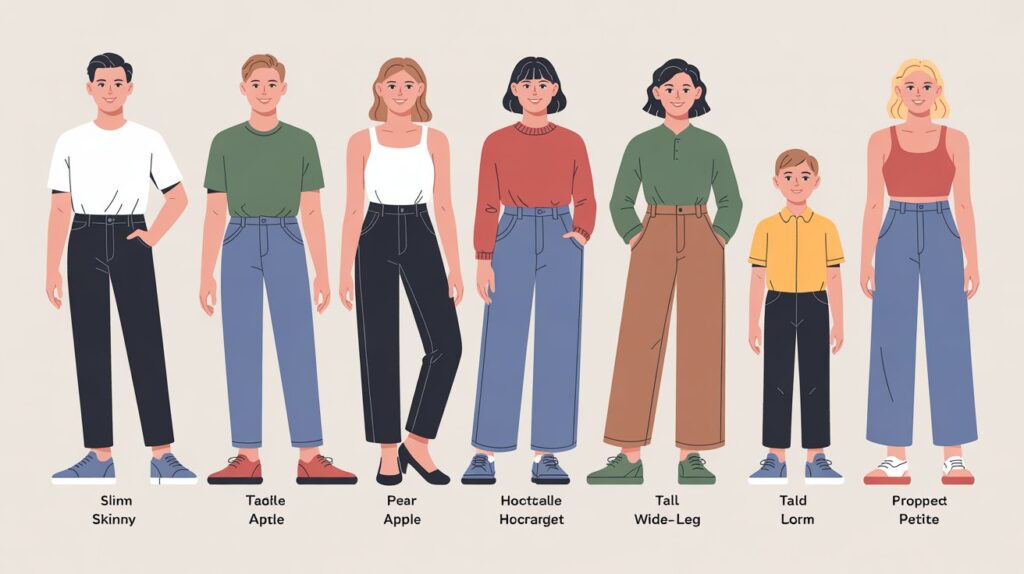
When learning how to choose the right pants for body type, understanding fit is just as important as knowing your body shape. “Fit” refers to how the pants sit on your waist, hips, thighs, and legs. Even the best fabric or style will not look good if the fit is wrong.
The correct fit should feel comfortable, allow natural movement, and create balanced proportions from top to bottom. Below is a clear breakdown of the most common pant fits and how to choose the right one.
Skinny Fit
What it is:
Skinny-fit pants are very close to the body from waist to ankle. They follow the natural leg shape and create a sleek look.
Best for:
- Slim body types
- Rectangle shapes
- Petite frames
Things to consider:
- Stretch fabric is essential for comfort.
- If you have muscular thighs, skinny fits may feel restrictive.
- Avoid overly tight sizing that creates pulling or wrinkles.
When to avoid:
If you have an athletic or pear shape with fuller thighs, extremely tight fits may exaggerate proportions.
Slim Fit
What it is:
Slim-fit pants are slightly tailored but not tight. They taper gently toward the ankle.
Best for:
- Slim and athletic builds
- Most average body types
- Teens and young adults
Why it works:
Slim fit provides structure without clinging too much. It creates a modern, clean silhouette.
Tip:
Make sure there is enough room in the thigh area. If the fabric pulls when you sit, go one size up.
Straight-Leg Fit
What it is:
Straight-leg pants have the same width from thigh to ankle. They don’t taper or flare.
Best for:
- Pear shapes
- Apple shapes
- Athletic builds
- Balanced body types
Why it works:
This fit creates vertical lines, which help balance wider hips or broader shoulders.
Important detail:
Straight-leg styles are timeless and work well for both casual and formal outfits.
Relaxed Fit
What it is:
Relaxed-fit pants offer more room in the seat and thighs. They are not tight and feel comfortable.
Best for:
- Athletic builds
- Oval or apple shapes
- Growing kids and teens
Benefits:
- Greater comfort
- Easier movement
- Less restriction around thighs
Be careful:
Too much looseness can look oversized. The waistband should still sit properly without sagging.
Wide-Leg Fit
What it is:
Wide-leg pants are loose from hip to ankle. They create volume and flow.
Best for:
- Rectangle body types
- Tall individuals
- Those wanting to add shape
Why it works:
This fit adds dimension and can balance narrow shoulders or slim builds.
Avoid if:
You have a petite frame and the pants are overly long or bulky.
Tapered Fit
What it is:
Tapered pants are roomier at the top and narrower at the ankle.
Best for:
- Athletic builds
- Men and boys with muscular thighs
- People who want structure without tightness
Why it works:
It creates a sharp, modern appearance while allowing upper-leg comfort.
How to Check If the Fit Is Right
No matter the style, here are simple checks to confirm proper fit:
- The waistband should sit comfortably without digging in.
- The pants should allow you to move comfortably, whether you’re sitting down or walking around.
- There should be no pulling lines across the hips or thighs.
- The length should not bunch excessively at the ankle.
- The pants should complement your natural proportions.
Final Advice on Fit
Understanding fit is a major part of mastering how to choose the right pants for body type. The goal is not to follow trends but to create balance. A good fit:
- Enhances your body’s natural shape
- Improves posture and appearance
- Increases confidence
- Provides daily comfort
When the fit is right, everything else — fabric, color, and style — automatically looks better.
Selecting the Right Rise
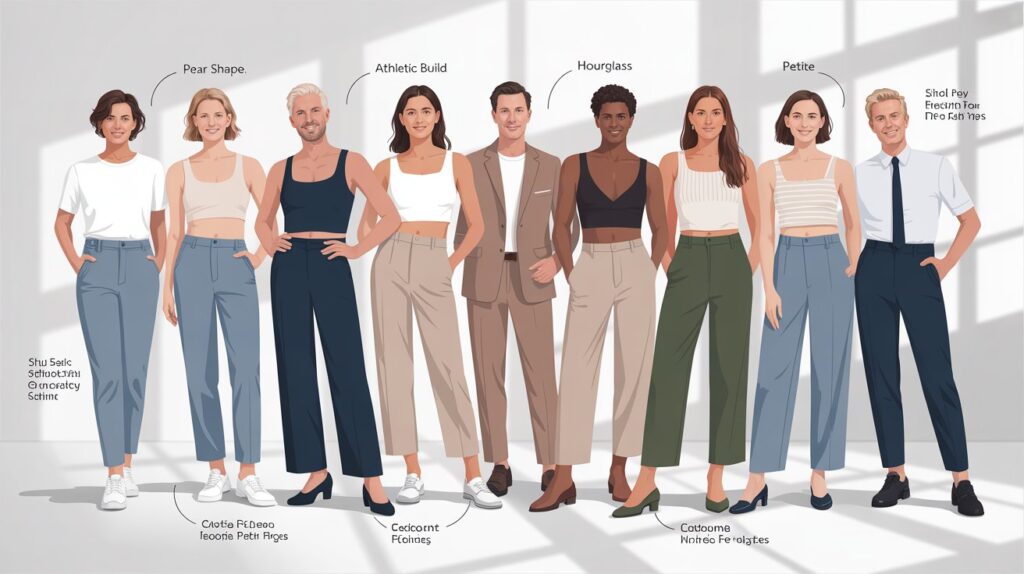
When understanding how to choose the right pants for body type, rise is one of the most important yet often overlooked factors. The rise is the measurement between the crotch seam and the upper edge of the waistband. In simple terms, it determines where the pants sit on your waist.
The right rise can improve comfort, enhance body proportions, and create a more balanced appearance for men, women, boys, and girls.
There are three main types of rise: low-rise, mid-rise, and high-rise.
Low-Rise Pants
Where they sit:
Low-rise pants rest below the natural waist, usually on the hips.
Best for:
- Slim body types
- Rectangle shapes
- People with shorter torsos
Advantages:
- Creates a modern, casual look
- Can visually lengthen the torso
Things to consider:
Low-rise styles may feel uncomfortable for individuals with a fuller midsection. They can also create imbalance if your upper body is already long.
Avoid if:
You have an apple shape or prefer more waist support.
Mid-Rise Pants
Where they sit:
Mid-rise pants sit just below or at the natural waistline.
Best for:
- Most body types
- Athletic builds
- Pear shapes
- Apple shapes
- Teens and growing kids
Why it works:
Mid-rise is the most versatile option. It offers balanced support while avoiding a position that feels excessively high or too low on the waist. It also helps maintain balanced proportions.
Comfort factor:
Mid-rise pants are usually more comfortable for daily wear and long hours.
High-Rise Pants
Where they sit:
High-rise pants are designed to rest on or slightly above your natural waistline.
Best for:
- Hourglass shapes
- Pear shapes
- Petite individuals
- Those wanting waist definition
Advantages:
- Enhances waistline
- Creates longer leg appearance
- Provides more stomach coverage
Things to consider:
High-rise styles should fit properly at the waist to avoid tightness. Proper sizing is important to prevent discomfort.
How to Choose the Best Rise for Your Body Type
To master how to choose the right pants for body type, consider these practical tips:
- If you want to elongate your legs, choose high-rise styles.
- If you want balanced proportions, mid-rise is usually safest.
- If you have a short torso, low-rise may create better visual balance.
- If you prefer extra support around the waist, avoid low-rise options.
Rise affects how your upper and lower body connect visually. The wrong rise can make your torso look too long or too short. The correct rise creates harmony.
Why Rise Matters More Than You Think
Many people focus only on fit and forget about rise. However, even perfectly fitted pants can look unbalanced if the rise is incorrect. The right rise:
- Improves posture appearance
- Prevents waistband discomfort
- Reduces gaping at the back
- Enhances natural body shape
- Increases overall confidence
When selecting pants, always check where the waistband sits before making a decision. Understanding rise is a key step in learning how to choose the right pants for body type effectively and confidently
Choosing the Right Fabric
When learning how to choose the right pants for body type, selecting the right fabric is just as important as fit, rise, and style. Fabric affects comfort, durability, movement, and the overall look of the pants. Different fabrics interact with your body in unique ways, so understanding which materials work best for your body type can make a significant difference.
Here’s a detailed guide to help you choose the right fabric for any body type, gender, or age group.
Cotton and Cotton Blends
Overview:
Cotton is breathable, soft, and comfortable for daily wear. Cotton blends often include a small percentage of elastane or polyester for stretch and durability.
Best for:
- Slim and athletic body types for flexibility
- Kids and teens who need comfort for active movement
- Casual and semi-formal pants
Why it works:
Cotton fabrics drape naturally without clinging excessively, creating a balanced silhouette. The addition of stretch allows freedom of movement and prevents tightness around hips, thighs, or knees.
Tips:
- Look for cotton blends with 2–5% elastane for a comfortable stretch.
- Avoid 100% stiff cotton for pear-shaped or muscular builds, as it can feel restrictive.
Denim
Overview:
Denim is durable, structured, and versatile. It can range from rigid to stretch denim.
Best for:
- This applies to a wide range of body shapes, such as pear, apple, and rectangle types.
- Daily wear, outdoor activities, or casual outings
Why it works:
- Structured denim creates a defined shape while supporting curves or angles.
- Stretch denim adapts to muscular or slim builds without sagging.
Tips:
- For pear or hourglass shapes, mid to high-rise denim smooths the hips.
- Slim or skinny jeans with stretch are ideal for athletic or slim body types.
Linen
Overview:
Linen is a light and airy fabric, perfect for keeping cool in warmer weather.
Best for:
- Slim, rectangle, or petite body types
- Adults and children who need airy, cool clothing
Why it works:
Linen drapes loosely, providing comfort without constricting movement. It creates a relaxed look that suits tall or straight frames.
Tips:
- Linen wrinkles easily, so choose blends with cotton or synthetic fibers for durability.
- Wide-leg linen pants complement rectangle or slim builds by adding volume.
Wool and Wool Blends
Overview:
Wool is warm, structured, and often used for formal or office wear. Wool blends combine wool with polyester or elastane for durability and stretch.
Best for:
- Hourglass and pear shapes needing structured silhouettes
- Men and women wearing dress pants or office attire
Why it works:
Wool holds its shape, creating a clean, tailored appearance. Stretch blends allow mobility and prevent sagging at the hips or knees.
Tips:
- Avoid 100% stiff wool for petite frames, as it can overwhelm the figure.
- Dark-colored wool enhances slimming effects for apple and pear body types.
Stretch Fabrics (Elastane, Spandex, Lycra)
Overview:
These fabrics provide elasticity and flexibility. They are often blended with cotton, denim, or polyester.
Best for:
- Athletic builds needing thigh room
- Slim builds that need contouring
- Kids and teens for active movement
Why it works:
Stretch fabrics allow natural movement while keeping pants close to the body. They prevent tight spots at the waist, thighs, and knees.
Tips:
- Look for 2–5% stretch in casual or semi-formal pants.
- Too much stretch (over 10%) can make pants look baggy or shapeless.
How Fabric Influences Fit and Appearance
- Flow and drape: Heavy fabrics like wool create structured silhouettes, while lighter fabrics like linen provide a relaxed look.
- Comfort: Stretch and breathable fabrics reduce restriction, especially around hips and thighs.
- Proportion: Fabrics that hold their shape enhance body lines, while soft fabrics can soften angles or curves.
Final Advice
Choosing the right fabric is essential in learning how to choose the right pants for body type. The fabric you select affects comfort, style, and visual balance. For men, women, boys, and girls, a careful combination of fabric, fit, and rise ensures pants that not only look good but feel great for everyday wear.
Length, Inseam & Tailoring Guide
When learning how to choose the right pants for body type, understanding pant length, inseam, and tailoring is crucial. Even pants with the perfect fit, rise, and fabric can look off if the length is incorrect. Proper length not only enhances proportion but also ensures comfort and style for men, women, boys, and girls.
Here’s a detailed guide to help you select the right length and inseam, and when tailoring is necessary.
Understanding Pant Length
What it is:
Pant length refers to how far the pants extend from the waist to the hem at the ankle. It plays a vital role in proportion and overall appearance.
General Rules:
- For full-length pants, the hem should lightly touch the top of your shoes without pooling excessively.
- Cropped pants should end above the ankle for a modern, casual look.
- Wide-leg or flared pants can be slightly longer but should not drag on the ground.
Why it matters:
Incorrect pant length can make legs appear shorter or longer than they are. Proper length creates balance and complements your body type.
Measuring Inseam
What it is:
The inseam is the measurement from the crotch seam down to the bottom of the pant leg. This measurement determines the correct leg length.
How to measure:
- Stand straight against a wall.
- Measure from the crotch to the desired pant end (top of shoes for full-length).
- Compare the measurement with the pants before purchasing.
Tips by body type:
- Tall individuals: Ensure inseam is long enough to prevent a cropped or awkward fit.
- Petite or short builds: Slightly shorter inseams create the illusion of longer legs.
- Kids and teens: Allow growth room but avoid pants that are too baggy or too long.
Importance of Tailoring
Even when pants fit in the waist and hips, small adjustments can make a big difference. Tailoring ensures that your pants look professionally fitted and proportionate.
Common tailoring adjustments:
- Hemming: Shortening pants for perfect length.
- Tapering: Adjusting the leg width for slim, straight, or tapered styles.
- Waist adjustments: Taking in or letting out the waistband for comfort.
Why it helps:
- Improves overall silhouette
- Prevents bunching or sagging at the ankles
- Ensures proportionate appearance across all body types
Tips for Choosing the Right Length
- Straight or slim-fit pants: Hem should meet the top of shoes without excess fabric.
- Wide-leg or flared pants: Allow a slight break at the shoe for flow, but avoid dragging.
- Cropped pants: End 1–2 inches above the ankle for adults, slightly shorter for kids.
- Bootcut or bell-bottoms: The hem should cover part of the shoe but not touch the floor.
Quick Tip: Always wear the type of shoes you plan to pair with the pants while checking length. This ensures accuracy.
Why Length and Inseam Matter for Body Type
Correct pant length and inseam help:
- Create balanced proportions for tall, petite, slim, or broad builds
- Avoid the illusion of shorter or longer legs
- Enhance natural body lines
- Improve confidence and overall appearance
Final Advice
Mastering how to choose the right pants for body type isn’t just about waist, fit, or fabric—it’s also about length and inseam. Proper tailoring ensures that pants sit perfectly, enhancing your body’s natural proportions and providing comfort. Whether it’s for men, women, boys, or girls, paying attention to length and inseam can make a significant difference in style and confidence.
Common Mistakes to Avoid
When learning how to choose the right pants for body type, it’s just as important to know what to avoid as it is to know what works. Many people make simple mistakes that can throw off proportions, reduce comfort, or make even the most expensive pants look poorly fitted. Understanding these pitfalls ensures that your pants complement your body, whether you’re a man, woman, boy, or girl.
Here’s a detailed guide to the most common mistakes and how to prevent them.
Ignoring Body Proportions
Mistake: Buying pants without considering your body shape or proportions.
Why it matters: Pants that are too tight, too loose, or the wrong style can exaggerate unwanted areas or make your body appear unbalanced.
How to avoid:
- Identify your body type first (pear, apple, hourglass, rectangle, slim, or athletic).
- Choose pants styles that complement your natural structure rather than hiding or forcing it.
Choosing the Wrong Rise
Mistake: Selecting low, mid, or high-rise pants without considering how it interacts with your waist or torso.
Why it matters: Incorrect rise can make the torso look too long or short, cause discomfort, or create gaping at the waistband.
How to avoid:
- Low-rise suits slim or short-torsoed individuals.
- Mid-rise works for most body types.
- High-rise is ideal for pear or hourglass shapes and petite frames.
Ignoring Fit
Mistake: Focusing only on style or color and ignoring whether pants fit properly around the waist, hips, thighs, and legs.
Why it matters: Poor fit can cause discomfort, restrict movement, and make the pants look unflattering.
How to avoid:
- Test pants while sitting, walking, and bending.
- Ensure the waistband sits comfortably and the fabric doesn’t pull at key areas.
- Consider tailoring if small adjustments are needed.
Overlooking Fabric Choice
Mistake: Choosing pants made from inappropriate fabrics for your body type or activity level.
Why it matters: Certain fabrics can cling, stretch excessively, or lack structure, throwing off proportion or comfort.
How to avoid:
- Slim and athletic builds benefit from stretch fabrics.
- Pear and hourglass shapes look better in structured fabrics like denim or wool blends.
- Linen and cotton blends are ideal for casual or warm-weather wear.
Wrong Pant Length
Mistake: Wearing pants that are too short, too long, or have improper inseam.
Why it matters: Incorrect length can make legs appear shorter or longer than they are and disrupt overall balance.
How to avoid:
- Measure inseam accurately before buying.
- Keep in mind shoe type when checking length.
- Consider tailoring for perfect proportion.
Following Trends Blindly
Mistake: Buying pants solely based on trends without considering if they suit your body type.
Why it matters: Trendy styles may not flatter your proportions, leading to discomfort or an unbalanced look.
How to avoid:
- Prioritize fit, rise, length, and fabric over fleeting trends.
- Select trends that enhance your natural body shape.
Skipping Tailoring
Mistake: Assuming off-the-rack pants will always fit perfectly.
Why it matters: Minor adjustments in hem, waist, or taper can make a huge difference in appearance.
How to avoid:
- Have a trusted tailor adjust pants when necessary.
- Small alterations can improve comfort, proportion, and confidence.
Final Advice
Avoiding these common mistakes is a key step in mastering how to choose the right pants for body type. Proper consideration of proportions, fit, rise, fabric, length, and subtle tailoring ensures pants look flattering, feel comfortable, and enhance your natural silhouette. By paying attention to these details, men, women, boys, and girls can confidently select pants that combine style, comfort, and balance.
Quick Reference Style Chart
For anyone learning how to choose the right pants for body type, having a simple reference chart can make selecting the perfect pants much easier. This chart condenses the key points of fit, rise, fabric, and style for each body type, helping men, women, boys, and girls quickly identify which pants will work best for them.
Below is a detailed, easy-to-follow guide.
Slim Body Type
- Recommended Fit: Slim-fit, straight-leg
- Ideal Rise: Mid-rise or low-rise
- Best Fabric: Stretch cotton, lightweight denim
- Tips: Avoid overly loose or baggy pants; choose fabrics with slight structure to add shape.
Athletic Body Type
- Recommended Fit: Athletic-fit, tapered, or relaxed-fit
- Ideal Rise: Mid-rise
- Best Fabric: Stretch fabrics, denim blends
- Tips: Ensure extra room around thighs; avoid overly skinny pants that restrict movement.
Pear Shape
- Recommended Fit: Bootcut, straight-leg, or slightly flared
- Ideal Rise: Mid-rise to high-rise
- Best Fabric: Structured cotton, denim, wool blends
- Tips: Darker colors on the lower body create balance; avoid clingy fabrics.
Apple Shape
- Recommended Fit: Straight-leg or slightly flared
- Ideal Rise: Mid-rise
- Best Fabric: Cotton blends, stretch fabrics
- Tips: Comfortable waistbands are essential; avoid low-rise styles that dig into the midsection.
Hourglass Shape
- Recommended Fit: Contoured, straight-leg, or slim-fit
- Ideal Rise: High-rise
- Best Fabric: Stretch fabrics, structured denim
- Tips: Highlight the waist with high-rise pants; ensure the hips fit comfortably without gaping.
Rectangle Body Type
- Recommended Fit: Wide-leg, tapered, or pleated
- Ideal Rise: Mid-rise
- Best Fabric: Structured fabrics, cotton blends, linen blends
- Tips: Use pants with volume or pleats to create curves; avoid shapeless straight cuts.
Tall Body Type
- Recommended Fit: Straight-leg, slim-fit, or slightly tapered
- Ideal Rise: Mid-rise or high-rise
- Best Fabric: Medium-weight fabrics like denim or wool blends
- Tips: Ensure proper inseam; avoid pants that appear too short or baggy.
Petite or Short Body Type
- Recommended Fit: Slim-fit, straight-leg, or tapered
- Ideal Rise: High-rise
- Best Fabric: Light to medium-weight fabrics
- Tips: Proper hem and inseam are crucial; cropped pants should end just above the ankle for balance.
How to Use This Chart
This chart provides an easy reference to help you pick pants that flatter your unique body shape.
- Identify your body type first.
- Match the fit, rise, and fabric recommendations.
- Consider subtle tailoring if needed for perfect proportion.
By following these guidelines, you can confidently choose pants that fit, flatter, and enhance your natural silhouette, whether you’re a man, woman, boy, or girl.
Conclusion
Mastering how to choose the right pants for body type is about more than just following trends—it’s about understanding your body, selecting the right fit, rise, fabric, and length, and making choices that enhance comfort and style. Whether you are a man, woman, boy, or girl, the perfect pair of pants can boost confidence, improve proportion, and elevate your overall appearance.
Remember:
- Identify your body type first.
- Choose pants that complement your natural shape rather than hiding it.
- Pay attention to fit, rise, fabric, and length.
- Don’t hesitate to tailor for the best possible fit.
By applying these principles, you’ll ensure every pair of pants you wear feels comfortable, looks flattering, and reflects your personal style. With the right knowledge, selecting pants is no longer a guess—it’s a confident, informed choice that works for all genders and ages.
Your ideal pants are out there, and now you have the tools to find them.
FAQs
How do I determine my body type before choosing pants?
To identify your body type, observe your shoulder width, waist definition, hip proportion, and overall frame. Compare your measurements to common categories like slim, athletic, pear, apple, hourglass, rectangle, tall, or petite. Knowing your body type helps you select pants that enhance your natural proportions.
What is the most versatile rise for pants for all body types?
Mid-rise pants are the most adaptable rise for a wide range of body types. They sit at or just below the natural waist, providing comfort and balanced proportions without feeling too high or too low. Mid-rise pants work well for men, women, boys, and girls in everyday wear.
Which fabric is best for creating a flattering silhouette?
Structured fabrics like cotton blends, stretch denim, and wool blends are ideal for enhancing body shape. They provide support where needed, maintain form, and prevent pants from clinging or sagging. Lightweight fabrics like linen are better for relaxed, casual styles or warm weather.
How do I know if my pant length is correct?
The correct pant length should lightly touch the top of your shoes for full-length pants, or fall just above the ankle for cropped styles. Always consider shoe type and your inseam measurement. Tailoring may be necessary to achieve a perfect fit, especially for tall or petite individuals.
Can tailoring make off-the-rack pants fit my body type better?
Yes! Tailoring can adjust the hem, waist, or leg width to match your body proportions. Even minor alterations can improve comfort, create balance, and enhance the overall look. Proper tailoring is especially helpful for unique body shapes, ensuring pants flatter your natural silhouette.