
Introduction
Knowing how to measure pants size is essential for finding pants that fit perfectly and feel comfortable. Whether you’re shopping online or buying from a store, accurate measurements help you avoid sizing mistakes, ensure a flattering fit, and make confident clothing choices. In this guide, we’ll walk you step-by-step through everything you need to measure your pants correctly, including waist, hips, inseam, rise, and leg opening.
Table of Contents
Why Measuring Pants Size Correctly Matters
Measuring pants size correctly is essential for anyone who wants clothes that fit well and feel comfortable. Many people overlook this step, assuming that sizes are universal, but that is far from the truth. Brands often have different sizing standards, and even small discrepancies in measurement can lead to pants that are too tight, too loose, or uncomfortable in certain areas. This is why knowing how to measure pants size accurately is so important.
1. Ensures the Perfect Fit
A proper measurement guarantees that your pants fit your body shape. Pants that are too tight can restrict movement and cause discomfort, while pants that are too loose can look sloppy and unflattering. By measuring accurately, you can choose pants that sit correctly on your waist, hips, and thighs, providing a clean and comfortable fit.
2. Reduces Returns and Exchanges
Online shopping has made clothing more convenient, but it has also increased the chances of ordering the wrong size. By understanding how to measure pants size, you can confidently pick the right size before making a purchase, minimizing the need for returns or exchanges. Doing so helps you avoid unnecessary hassle, wasted effort, and extra expenses over time.
3. Helps When Comparing Brands
Not all brands follow the same sizing standards. A size 32 in one brand may feel different from a size 32 in another. When you know your exact measurements, you can compare them with different brand size charts and choose the right size every time. This ensures consistency in your wardrobe, regardless of the brand.
4. Improves Comfort and Mobility
Correct measurements help you select pants that allow freedom of movement. Whether it’s for casual wear, work, or sports, pants that fit well won’t pinch, ride up, or feel restrictive. Comfort is one of the main reasons to learn how to measure pants size, as even small errors can affect your overall mobility.
5. Provides a Better Overall Appearance
Clothing that fits well enhances your look and boosts confidence. Pants that are properly sized sit neatly on your body, maintain their shape, and look tailored rather than baggy or ill-fitting. Accurate measurements ensure that your style and presentation are always on point.
What You Need to Measure Pants Size
Before you learn how to measure pants size, it’s important to gather the right tools and prepare properly. Using the correct equipment ensures that your measurements are accurate, which is essential for finding pants that fit perfectly. Here’s what you need:
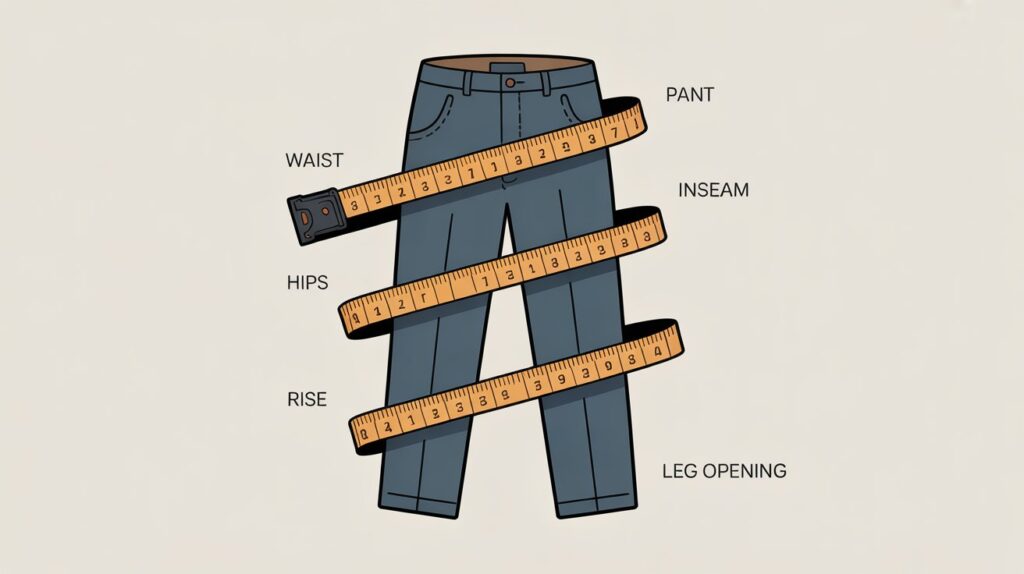
1. Flexible Measuring Tape
A flexible, soft measuring tape is the most important tool for measuring pants. Unlike stiff rulers, a soft measuring tape easily follows the natural curves of your waist and hips, ensuring accurate measurements. Look for a tape marked in both inches and centimeters, so you can measure according to your preference or the sizing standard you need.
2. Flat Surface
Measuring pants on a flat, even surface ensures accuracy. Lay the pants on a table or floor, smoothing out any wrinkles or folds. This prevents distorted measurements, especially for areas like the waist, hips, and inseam. A flat surface provides a stable base to get exact numbers.
3. Well-Fitting Pair of Pants (Optional but Recommended)
If you already own pants that fit you perfectly, use them as a reference. Measuring a well-fitting pair is often easier than measuring your body, as it shows the exact dimensions for comfort and style. Compare these measurements with new pants to find the perfect fit.
4. Pen and Paper (or a Notes App)
Recording your measurements immediately helps avoid mistakes. Write down each measurement for waist, hips, inseam, and rise. This record is handy when shopping online, comparing brands, or converting between inches and centimeters.
5. Assistance
While measuring alone is possible, having someone help can improve accuracy. A helper can ensure the tape is straight and snug without pulling too tight or leaving it too loose, especially for areas like the hips or inseam.
Tip: Accuracy matters more than speed. Taking the time to use the right tools and follow proper steps makes a significant difference in fit. Knowing how to measure pants size with the correct tools ensures that your pants are comfortable, flattering, and suited to your body shape.
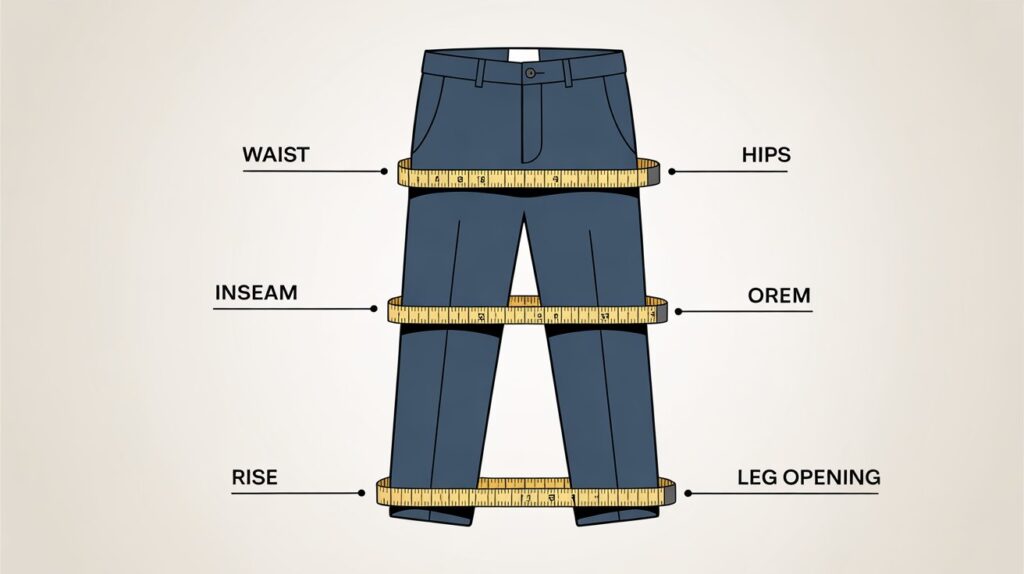
Key Parts of Pants You Need to Measure
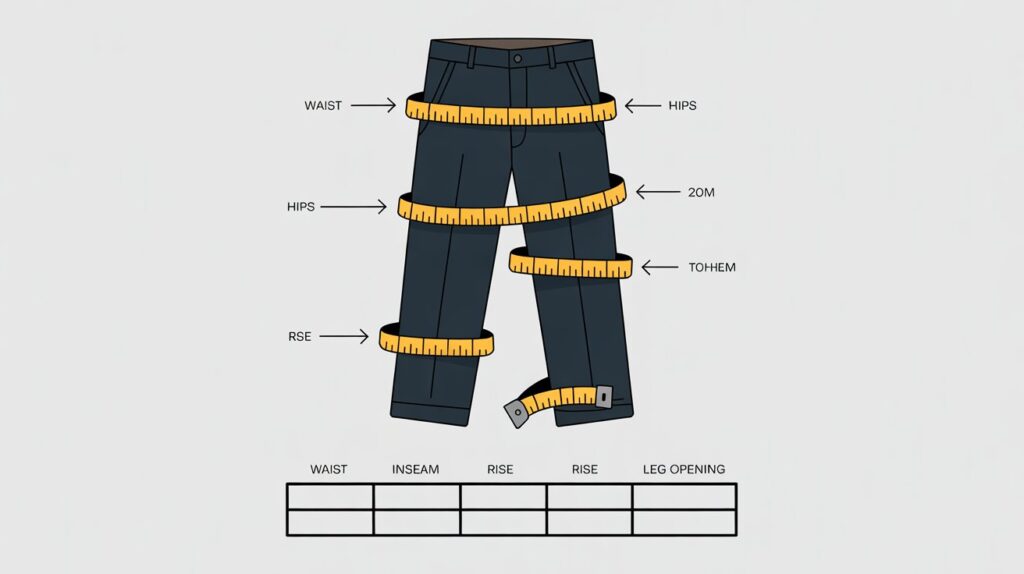
Understanding how to measure pants size requires knowing the main parts of the pants that affect fit and comfort. Each area has its own significance, and accurate measurements ensure your pants sit properly and look flattering. Here are the key parts you should focus on:
1. Waist
The waist is the most critical measurement when determining pants size. It is the area around the narrowest part of your torso or where your pants naturally sit. To measure accurately, use a flexible measuring tape and wrap it snugly around the waist, without pulling too tight. This measurement helps you select pants that are comfortable and prevent slipping or tightness.
2. Hips
The hip measurement is essential for pants that fit well around the lower body. Measure the fullest part of your hips, ensuring the tape goes around evenly and horizontally. This is especially important for slim-fit, straight-leg, or tailored pants, as incorrect hip measurements can make pants feel tight or baggy.
3. Inseam
The inseam measures the length from the crotch area down to the hem of the pant leg. It determines the length of your pants and affects how they fall over your shoes. Accurate inseam measurements prevent pants from being too short or dragging on the ground. Lay the pants flat and measure along the inner seam for precision.
4. Rise
The rise indicates the length from the crotch seam up to where the waistband sits on your waist. This measurement affects where the pants sit on your waist—low-rise, mid-rise, or high-rise. A proper rise ensures comfort, prevents bunching, and contributes to a flattering fit for your body type.
5. Leg Opening
The leg opening is the circumference of the bottom hem of the pant leg. This measurement influences the overall style and look, whether you prefer slim, tapered, or wide-leg pants. Properly measuring the leg opening helps ensure balance and proportion with your shoes and overall outfit.
Tip: When learning how to measure pants size, take each measurement carefully and record them. This ensures that every part of the pants fits your body correctly, making your wardrobe more comfortable, stylish, and well-fitting.
How to Measure Pants Size Using a Tape Measure
Learning how to measure pants size using a tape measure is essential for achieving the perfect fit. Whether you’re shopping online or tailoring your pants, accurate measurements prevent discomfort, ill-fitting clothing, and sizing mistakes. Here’s a step-by-step guide to measuring pants properly:
1. Measure the Waist
- Lay your pants flat on a table or floor.
- Smooth out any wrinkles and ensure the waistband is buttoned or zipped.
- Place the tape measure at one end of the waistband and stretch it straight across to the other end.
- Multiply this measurement by two to determine the total waist size.
This gives you the exact size your waist can comfortably accommodate.
2. Measure the Hips
- Find the widest part of the pants, usually a few inches below the waistband.
- Wrap the tape measure horizontally around this area, ensuring it stays straight and parallel to the floor.
- Record the measurement for reference when choosing fitted or tailored pants.
3. Measure the Inseam
- Turn the pants inside out for easier access if needed.
- Place the tape measure at the crotch seam and extend it down to the bottom hem of the pant leg.
- This length determines where the pants will fall on your shoes, making it critical for both comfort and style.
4. Measure the Rise
- Start from the crotch seam and measure up to the top of the waistband.
- The rise measurement helps determine where the pants will sit on your waist—low, mid, or high-rise.
- This is important for ensuring comfort and preventing pants from sitting too low or too high.
5. Measure the Leg Opening
- Measure across the bottom hem of one pant leg and then double the number to get the full circumference.
- This helps you understand the style and fit of the pants, whether you prefer slim, straight, or wide-leg designs.
Tips for Accuracy:
- Ensure the tape sits comfortably around the fabric—tight enough to stay in place but not so tight that it alters the measurement
- Always measure on a flat, smooth surface.
- Record all measurements for future reference, especially when comparing different brands.
By following these steps, you can confidently know how to measure pants size using a tape measure, ensuring a perfect fit every time. Accurate measurements save time, reduce guesswork, and improve overall comfort and appearance.
How to Measure Pants Size in Inches
Understanding how to measure pants size in inches is crucial, especially if you are shopping in the US or following brands that use the imperial system. Using inches allows you to match your measurements accurately to standard sizing charts and ensures a comfortable and precise fit. Here’s a step-by-step guide:
1. Measure the Waist in Inches
- Lay your pants flat on a table or smooth surface.
- Align the tape measure from one side of the waistband to the other.
- Record the measurement in inches, then double it to get the full waist size.
- This measurement ensures that the pants sit comfortably around your natural waist without being too tight or loose.
2. Measure the Hips in Inches
- Identify the widest part of the pants, usually a few inches below the waistband.
- Wrap the tape horizontally across this area and record the number in inches.
- Accurate hip measurements are important for tailored or slim-fit pants to prevent tightness or sagging.
3. Measure the Inseam in Inches
- Place the tape measure at the crotch seam and extend it down to the bottom hem.
- Measure in inches to ensure the pant length matches your leg size and falls correctly over shoes.
- This measurement helps avoid pants that are too short or drag on the ground.
4. Measure the Rise in Inches
- Start from the crotch seam and measure up to the top of the waistband.
- Recording the rise in inches helps determine if the pants sit low, mid, or high on the waist.
- Correct rise measurement improves comfort and ensures a flattering fit.
5. Measure the Leg Opening in Inches
- Measure across the bottom hem of one pant leg and double the number to get the full circumference.
- Knowing the leg opening in inches helps you choose the right style, whether slim, straight, or wide-leg.
Tips for Measuring in Inches:
- Use a flexible tape measure for accuracy.
- Always lay the pants flat on a smooth surface.
- Keep the tape snug but avoid stretching it.
- Record all measurements for reference when shopping or comparing sizes across brands.
By following these steps, you can confidently know how to measure pants size in inches, ensuring your pants fit perfectly, look polished, and feel comfortable. Measuring in inches is especially helpful when following US sizing charts or shopping from brands that provide measurements in imperial units.
How to Measure Pants Size in CM
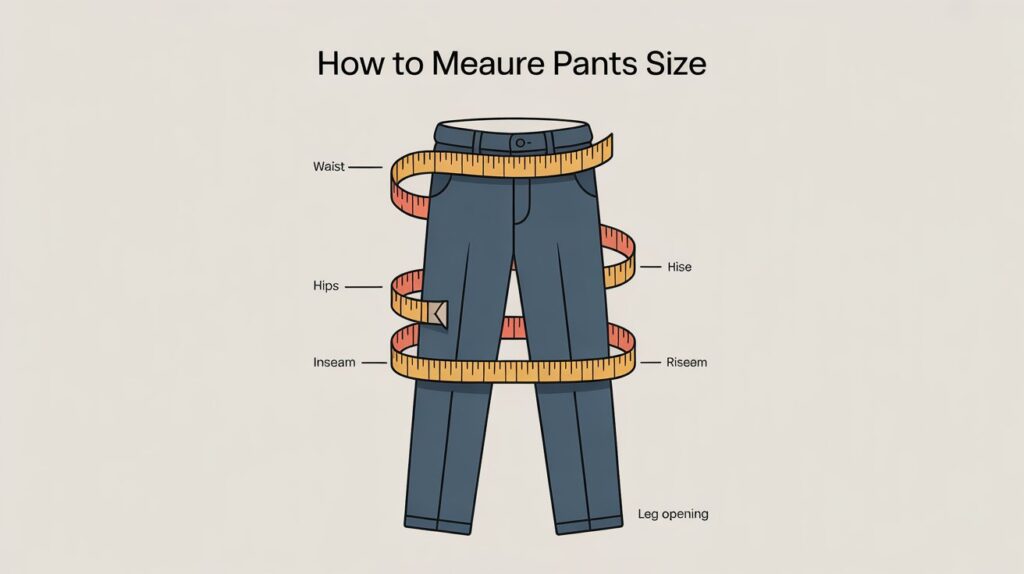
Knowing how to measure pants size in CM is essential for international shopping, metric sizing, or when using brands that provide measurements in centimeters. Measuring in centimeters allows for more precise and detailed sizing, making it easier to achieve a perfect fit. Here’s a clear step-by-step guide:
1. Measure the Waist in CM
- Lay the pants flat on a smooth, even surface.
- Position a flexible measuring tape from one end of the waistband to the other.
- Record the number in centimeters, then multiply by two to get the full waist circumference.
- Accurate waist measurement in centimeters ensures the pants sit comfortably without being tight or loose.
2. Measure the Hips in CM
- Identify the widest part of the pants, usually just below the waistband.
- Wrap the tape measure around this area horizontally, keeping it level and straight.
- Record the measurement in centimeters for precise fitting, especially for slim or tailored pants.
3. Measure the Inseam in CM
- Place the tape at the crotch seam and measure down to the bottom hem.
- Recording the inseam in centimeters helps ensure the pant length matches your legs and falls correctly over your footwear.
- Using centimeters allows for smaller increments, making it easier to get an exact fit.
4. Measure the Rise in CM
- Start from the crotch seam and measure up to the top of the waistband.
- Recording the rise in centimeters indicates where the pants will sit—low, mid, or high-rise.
- Proper rise measurement improves comfort and gives a flattering overall appearance.
5. Measure the Leg Opening in CM
- Measure the width of the bottom hem of one pant leg.
- Double the number to get the full circumference in centimeters.
- Knowing the leg opening in CM ensures you pick the right style, whether you prefer tapered, straight, or wide-leg pants.
Tips for Measuring in Centimeters:
- Always use a flexible tape measure for precision.
- Lay the pants flat and smooth out any wrinkles before measuring.
- Keep the tape snug but avoid stretching it.
- Record all measurements carefully for future reference or when comparing international sizing charts.
By following these steps, you can confidently understand how to measure pants size in CM. Using centimeters provides greater accuracy and helps you find pants that fit perfectly, whether for casual, professional, or tailored styles.
Pants Size Conversion Chart (Inches to CM)
When learning how to measure pants size, understanding the relationship between inches and centimeters is crucial, especially for international shopping or when comparing different sizing standards. A pants size conversion chart makes it easy to switch between imperial and metric measurements, ensuring a perfect fit no matter where you shop.
Why a Conversion Chart is Important
Different countries and brands use varying measurement systems. For example, the US commonly uses inches, while most European and Asian brands use centimeters. Without proper conversion, you could end up with pants that are too tight, too loose, or the wrong length. Using a conversion chart helps you match your measurements accurately, saving time and avoiding sizing mistakes.
How to Use a Pants Size Conversion Chart
- Measure your pants in either inches or centimeters using a tape measure.
- Locate your measurement on the chart.
- Find the corresponding size in the other unit (inches ↔ centimeters).
- Use this information to select pants that fit correctly across different brands or regions.
Common Conversion Reference
| Inches (Waist / Inseam) | Centimeters (Waist / Inseam) |
|---|---|
| 28 in | 71 cm |
| 30 in | 76 cm |
| 32 in | 81 cm |
| 34 in | 86 cm |
| 36 in | 91 cm |
| 38 in | 97 cm |
| 40 in | 102 cm |
Tip: To convert inches to centimeters manually, multiply the measurement in inches by 2.54. To convert centimeters to inches, divide the number of centimeters by 2.54.
Benefits of Using a Conversion Chart
- Ensures accurate sizing across international brands
- Helps with online shopping where only one unit is provided
- Reduces returns and exchanges due to incorrect sizing
- Saves time and provides confidence in choosing the right fit
Using a pants size conversion chart (inches to CM) makes it easy to bridge the gap between measurement systems. Whether you’re buying pants online or in-store, this tool ensures that your measurements match the sizing standard of the brand, guaranteeing comfort, style, and proper fit.
Body Measurement vs Pants Measurement
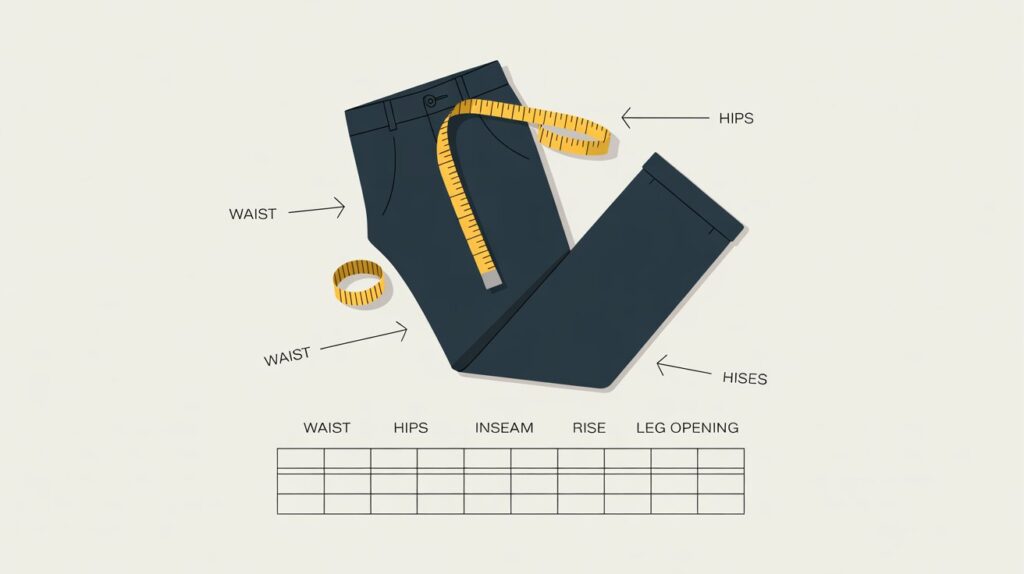
When learning how to measure pants size, it’s important to understand the difference between body measurement and pants measurement. Both methods are useful, but they serve different purposes and can affect the way your pants fit. Choosing the right approach ensures comfort, proper fit, and avoids common sizing mistakes.
1. Body Measurement
Body measurement involves taking measurements directly from your body, such as your waist, hips, inseam, and rise. This method is useful when:
- You do not have a well-fitting pair of pants to reference.
- You are buying pants online or from a brand with no size chart.
- You want a custom or tailored fit.
How it works:
- Use a flexible measuring tape to measure your waist at the narrowest point, hips at the widest point, and legs from crotch to ankle for inseam.
- Measure the rise from the crotch to where you want the waistband to sit.
- Record all measurements accurately.
Advantages:
- Provides exact sizing based on your body shape
- Useful for custom or made-to-measure pants
- Reduces errors when converting sizes between brands or countries
2. Pants Measurement
Pants measurement involves measuring an existing pair of pants that fits you well. This method is practical when:
- You already own pants that feel comfortable and fit perfectly.
- You want to order the same size in a new pair or different brand.
- You want a quick reference without measuring your body.
How it works:
- Lay your pants flat and measure the waist, hips, inseam, rise, and leg opening using a tape measure.
- Compare these measurements with the sizing chart of the brand you want to buy from.
Advantages:
- Quick and convenient if you have a well-fitting pair of pants
- Reduces guesswork in sizing
- Helps match the style and fit of your current favorite pants
Key Differences
| Aspect | Body Measurement | Pants Measurement |
|---|---|---|
| Reference | Your body | Existing pants |
| Best for | Custom fit or first-time purchases | Reordering or matching styles |
| Accuracy | Exact fit if done correctly | Depends on the fit of the reference pants |
| Ease of Use | Slightly more effort required | Quick and convenient |
Both body measurement and pants measurement are valuable methods when learning how to measure pants size. For the most accurate results, use body measurements when starting from scratch or buying international brands. Use pants measurement when you have a favorite pair and want to replicate its fit. Understanding the difference helps you choose the right approach, ensuring your pants are comfortable, flattering, and perfectly sized.
Common Mistakes to Avoid When Measuring Pants Size
Learning how to measure pants size is essential for achieving the perfect fit, but even small mistakes can lead to inaccurate measurements and ill-fitting pants. Avoiding common errors ensures comfort, style, and confidence in your clothing choices. Here are the most frequent mistakes and how to prevent them:
1. Measuring Over Thick Clothing
One common mistake is measuring over bulky clothing, like sweaters or jackets. This can add extra inches to your measurements and result in pants that are too loose. Always measure directly over a thin layer of clothing or, ideally, on bare skin to get accurate results.
2. Pulling the Tape Too Tight or Too Loose
Keeping the tape measure either too tight or too loose is another frequent error. A tape pulled too tight can give a smaller measurement, making pants feel restrictive, while a loose tape can result in baggy pants. The tape should rest snugly against your body or the pants without stretching or sagging.
3. Ignoring the Rise Measurement
Many people focus only on the waist, hips, and inseam and forget to measure the rise. Ignoring the rise can lead to pants that sit too high or too low, causing discomfort and poor appearance. Always include the rise in your measurements to ensure a proper fit.
4. Not Measuring Multiple Times
Taking a measurement only once can lead to mistakes, especially if the tape is slightly crooked or the pants are not perfectly flat. Measure each area at least twice to confirm accuracy. Recording consistent numbers ensures reliable results when selecting new pants.
5. Using an Inflexible or Damaged Tape Measure
A stiff or worn-out tape measure can give inaccurate measurements because it doesn’t conform to curves properly. Always use a flexible, soft tape measure in good condition to follow the natural contours of your body or pants.
6. Forgetting to Note the Units
Mixing up inches and centimeters can cause major sizing errors. Always check whether your measurements are in inches or centimeters and record them consistently. If you are using a conversion chart, make sure you convert correctly before making a purchase.
7. Measuring Pants That Don’t Fit Well
Using a pair of pants that are already too tight or too loose as a reference can lead to repeating the same mistakes. Always use pants that fit comfortably and reflect the style you prefer.
Tips for Accurate Measurement:
- Measure on a flat, even surface.
- Take your time and double-check each measurement.
- Record measurements immediately to avoid forgetting numbers.
- Include waist, hips, inseam, rise, and leg opening for a complete size profile.
By avoiding these common mistakes, you can confidently learn how to measure pants size and ensure that your pants fit perfectly every time. Accurate measurements save you from discomfort, returns, and ill-fitting clothing, making shopping and tailoring far easier.
Conclusion
Measuring pants size correctly is the key to finding pants that fit comfortably, look flattering, and feel just right. By understanding how to measure pants size and paying attention to the waist, hips, inseam, rise, and leg opening, you can make informed choices whether shopping online, in-store, or ordering custom pants.
Using the right tools, like a flexible tape measure, and avoiding common mistakes ensures that your measurements are accurate and reliable. Additionally, knowing how to convert between inches and centimeters or using a pants size conversion chart helps when comparing brands internationally.
Whether you choose to measure your body or a favorite pair of pants, taking the time to measure properly saves you from discomfort, sizing errors, and unnecessary returns. Accurate measurements not only provide a better fit but also give you confidence in every outfit you wear.
Start measuring today, and enjoy pants that feel tailored just for you—because the right fit truly makes all the difference.
FAQs
What is the most accurate way to measure pants size?
The most accurate way is to use a flexible tape measure and either measure your body directly or measure a well-fitting pair of pants. Ensure the tape is snug but not tight, and record all measurements for waist, hips, inseam, rise, and leg opening.
Should I measure my body or an existing pair of pants?
Both methods are effective. Body measurements are ideal for custom or first-time purchases, while measuring an existing pair of well-fitting pants is faster and helps replicate a favorite style. Choosing the right method depends on convenience and accuracy.
How often should I re-measure my pants size?
It’s a good idea to re-measure your pants size whenever your body shape changes significantly or before ordering pants from a new brand. Sizes can vary across brands, so checking your measurements ensures a consistent fit every time.
Can I measure pants size without a tape measure?
While a flexible tape measure is the most accurate tool, you can use a piece of string or ribbon and then measure it against a ruler. However, using a proper tape measure is recommended for precise results.
Why do my pants fit differently even with the same size?
Pants fit differently across brands due to variations in sizing standards, cut, and style. Accurate measurements in inches or centimeters help you choose the right size and style, reducing inconsistencies in fit.