

Introduction
How to measure pants waist at home is an essential skill if you want to get the perfect fit while shopping for pants. Many people struggle with wrong sizing, especially when buying online, which often leads to discomfort and unnecessary returns. In this guide, you will learn simple and accurate methods to measure your pants waist at home, avoid common mistakes, and choose the right size with confidence.
Table of Contents
Why Measuring Pants Waist Correctly Matters
Understanding how to measure pants waist at home is more important than most people think. A small mistake in measurement can lead to uncomfortable pants, poor fit, and wasted money—especially when shopping online.
First, accurate waist measurement ensures a comfortable fit. Pants that are too tight can feel restrictive and uncomfortable, while loose pants may slip down or require constant adjustment. When you measure correctly, you get a size that sits perfectly on your waist without needing a belt all the time.
Second, it helps you avoid sizing confusion. Different brands often use slightly different sizing standards. A “34-inch” waist in one brand might not fit the same in another. Knowing how to measure pants waist at home gives you a reliable reference point, so you can compare your measurement with any brand’s size chart confidently.
Another important reason is saving time and money. Incorrect sizing often leads to returns or exchanges, which can be frustrating and sometimes costly. When you measure your waist properly, you reduce the chances of ordering the wrong size and avoid unnecessary hassle.
It also plays a big role in improving your overall appearance. Well-fitted pants enhance your body shape and give a cleaner, more polished look. On the other hand, poorly fitted pants can make even expensive outfits look untidy.
Lastly, accurate measurement is essential for online shopping. Since you can’t try pants before buying, your measurements become your best guide. Knowing exactly how to measure pants waist at home allows you to shop with confidence and choose the right size every time.
In short, taking a few minutes to measure your waist correctly can make a big difference in comfort, style, and overall satisfaction with your pants.
Tools You Need to Measure Pants Waist at Home
Before learning how to measure pants waist at home, it’s important to have the right tools. Using proper tools makes your measurement more accurate and helps you avoid sizing mistakes.
The key tool you need is a soft, flexible measuring tape for accurate results. This is the same type used in tailoring. It easily wraps around your waist or lays flat across your pants without bending or giving incorrect readings. A soft tape measure gives precise results compared to rigid tools like rulers.
Next, you’ll need a flat surface, such as a table, bed, or clean floor. This is especially useful when measuring a pair of pants. A flat surface helps you spread the pants evenly, remove wrinkles, and measure the waistband correctly without distortion.
Another helpful item is a well-fitting pair of pants. If you already own pants that fit you perfectly, you can use them as a reference. Measuring these pants gives you a reliable waist size that you can use when buying new ones.
If a measuring tape isn’t available, you can use a piece of string or cord as a substitute. Wrap it around your waist, mark the point where it meets, and then measure that length using a ruler. While this method is not as precise as a measuring tape, it can still give a close estimate.
Lastly, having a mirror can be useful when measuring your body. It helps you ensure that the tape is straight and not twisted, which is important for getting an accurate reading.
In short, learning how to measure pants waist at home becomes much easier and more reliable when you use the right tools. Even simple items, when used correctly, can help you get an accurate measurement and choose the perfect fit.
Method 1 – Measure Waist Using Your Pants
One of the easiest and most reliable ways to learn how to measure pants waist at home is by using a pair of pants that already fits you well. This method gives you a practical and accurate measurement because you’re working with something you know feels comfortable.
Start by choosing pants that fit you perfectly—not too tight and not too loose. Lay them flat on a clean, even surface like a table or bed. Make sure the pants are fully buttoned or zipped, and smooth out any wrinkles, especially around the waistband. Wrinkles or folds can affect the accuracy of your measurement.
Next, align the waistband properly. Ensure the front and back of the waistband are even and not twisted. This step is important because uneven alignment can give you a wrong reading.
Now, use a measuring tape to measure straight across the waistband from one side to the other. Do not curve the tape—keep it flat and straight for the most accurate result. Once you get this number, simply double it to find the full waist size. For example, if the flat measurement is 17 inches, your waist size is 34 inches.
This method works well because it reflects how the pants actually sit on your body. It also helps you compare sizes when shopping online, as you can match your measurement with brand size charts.
Overall, if you’re trying to understand how to measure pants waist at home in a simple and practical way, using your existing pants is one of the best methods to get consistent and accurate results.
Method 2 – Measure Your Body Waist
Another effective way to understand how to measure pants waist at home is by measuring your actual body waist. This method is especially useful if you don’t have a well-fitting pair of pants or if your body size has recently changed.
Start by standing in a relaxed position. Avoid sucking in your stomach or tightening your body, as this can give you an inaccurate measurement. Your posture should be natural so the result reflects your true waist size.
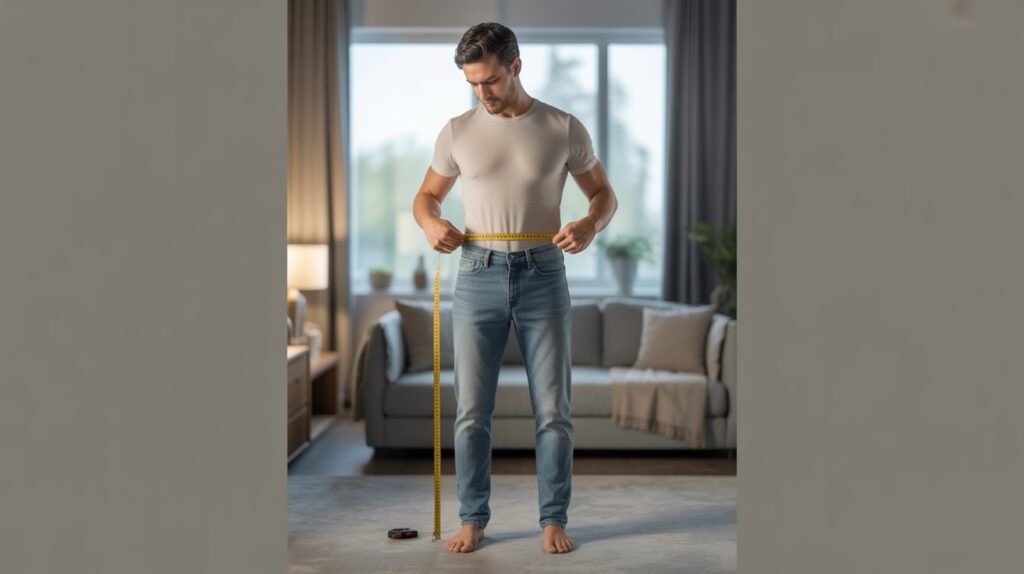
Next, locate your natural waistline. This is usually the narrowest part of your torso, slightly above your belly button. If you’re unsure, you can bend slightly to one side—the crease that forms is typically where your natural waist sits.
Wrap a flexible measuring tape around your waist at this point. Make sure the tape is level all the way around and not twisted. It should feel snug against your body but not tight. You should be able to slip one finger between the tape and your skin for comfort.
Once the tape is in place, note the measurement where it overlaps. This number is your actual waist size. For better accuracy, it’s a good idea to measure twice and take the average if there’s any difference.
This method is important because it gives you a direct measurement of your body, which you can compare with different brand size charts. It also helps when buying new styles of pants where the fit may vary.
In summary, if you want a more personalized and precise approach to how to measure pants waist at home, measuring your body waist is a reliable method that ensures a better overall fit.
Common Mistakes to Avoid
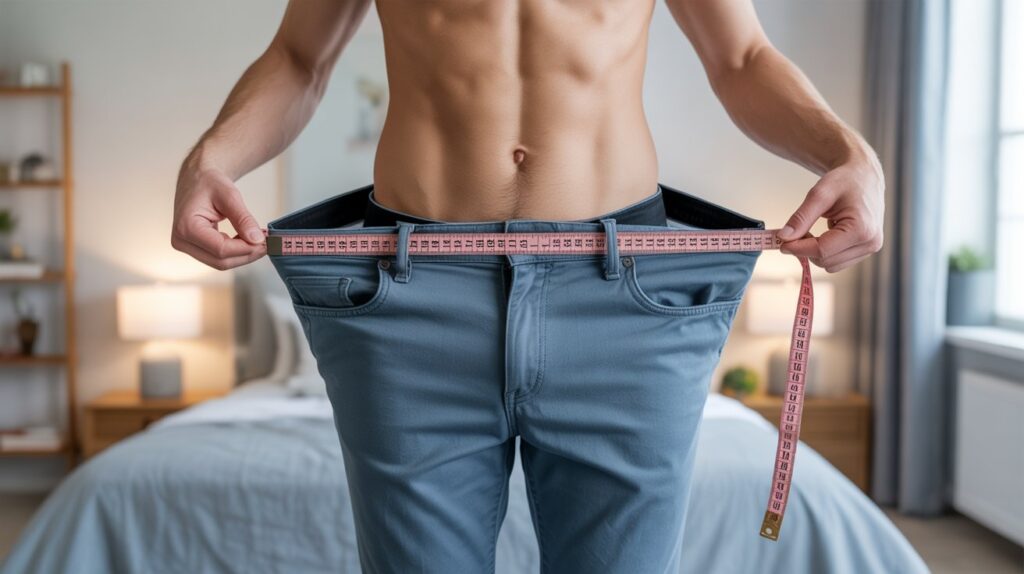
When learning how to measure pants waist at home, small mistakes can lead to inaccurate results and the wrong fit. Avoiding these common errors will help you get a more precise measurement and choose the right size every time.
One of the most frequent mistakes is measuring wrinkled or stretched pants. If the fabric is not laid flat or is pulled out of shape, the measurement will not reflect the true waist size. Always smooth out the waistband before measuring.
Another common issue is pulling the measuring tape too tight or leaving it too loose. A tight tape can reduce your actual size, while a loose tape can add extra inches. The tape should sit comfortably—snug but not restrictive.
Many people also forget to double the measurement when using the flat-lay method. Measuring across the waistband only gives you half the size, so skipping this step will result in an incorrect waist number.
Measuring at the wrong waist position is another mistake, especially when measuring your body. Some pants sit higher or lower on the waist, so it’s important to measure where you normally wear your pants to get an accurate fit.
Lastly, relying on assumptions instead of actual measurements can lead to poor sizing. Guessing your waist size or using old measurements may not reflect your current body shape.
In short, understanding how to measure pants waist at home is not just about the steps—it’s also about avoiding these common mistakes. Paying attention to small details can make a big difference in getting the perfect fit.
Pants Waist Size vs Actual Waist Measurement
Understanding the difference between pants waist size and actual waist measurement is an important part of learning how to measure pants waist at home correctly. Many people get confused because these two numbers are often not the same, even though they seem similar.
Your actual waist measurement is the size of your body taken with a measuring tape around your natural waistline. This is your real physical measurement and represents your body size without any clothing adjustments. It is the most accurate number to use as a reference when shopping for pants.
On the other hand, pants waist size refers to the labeled size on clothing, such as 30, 32, or 34 inches. This number does not always match your body measurement exactly. Different brands design pants with slight variations in fit, fabric stretch, and cut style, which can affect how the size fits in reality.
For example, a person with a 32-inch waist may find that a size 32 from one brand fits perfectly, while another brand’s size 32 feels tighter or looser. This is why knowing how to measure pants waist at home is so important—it gives you a consistent reference point to compare across different brands.
It’s also important to understand that some pants are designed to sit lower or higher on the waist. Low-rise pants may feel larger at the waist, while high-rise pants may feel more fitted even with the same labeled size.
In simple terms, your body waist measurement is the true size, while pants waist size is just a label that can vary. Knowing the difference helps you make smarter decisions and reduces the chances of buying the wrong size.
Pro Tips for Perfect Pants Fit
Getting the right fit is not just about size—it’s about accuracy and attention to detail. When you understand how to measure pants waist at home, you can use a few smart tips to make sure your pants always fit perfectly and feel comfortable.
First, always measure more than once. Taking your waist measurement two or three times helps confirm accuracy and reduces the chance of small errors. Even a half-inch difference can affect how pants fit.
Second, always compare your measurement with the brand’s size chart. Different brands design their pants differently, so relying only on your usual size can lead to mistakes. Your waist measurement is the most reliable guide.
Another important tip is to consider fabric type. Some materials, like denim or cotton, have little to no stretch, while others may stretch over time. Knowing this helps you decide whether to size up or stay exact.
You should also pay attention to the rise of the pants (low, mid, or high rise). The same waist size can feel different depending on where the pants sit on your body. This is why proper measurement using how to measure pants waist at home techniques is so important.
Lastly, don’t ignore other measurements like inseam and thigh fit. A perfect waist size won’t matter if the legs are too tight or too long. Checking all measurements together ensures a balanced and comfortable fit.
In short, achieving the perfect pants fit is about combining accurate measurement with smart shopping habits. When you apply these pro tips, you can confidently choose pants that look good and feel even better.
Conclusion
Learning how to measure pants waist at home is a simple but very important skill that can save you from poor fit, discomfort, and unnecessary returns. Whether you measure using a well-fitting pair of pants or directly on your body, accuracy is the key to getting the right size.
By using the correct tools, avoiding common mistakes, and understanding the difference between body waist and pants size, you can make much smarter clothing choices. It also becomes much easier to shop online with confidence when you already know your exact measurements.
In the end, taking just a few minutes to measure your waist properly ensures better comfort, improved style, and a perfect fit every time you buy pants.
FAQs
What is the easiest way to learn how to measure pants waist at home?
The easiest way is to use a well-fitting pair of pants. Lay them flat, measure across the waistband, and double the number to get your waist size.
Can I measure my waist without a measuring tape?
Yes, you can use a string or cord to wrap around your waist, mark the length, and then measure it with a ruler. However, a measuring tape is more accurate.
Should I measure my waist over clothes or directly on the body?
For best accuracy, measure directly on your body or use pants that already fit well. Measuring over bulky clothes can give incorrect results.
Why is my pants size different from my waist measurement?
Pants sizes vary by brand, fabric, and style. That’s why knowing how to measure pants waist at home helps you choose the correct size more reliably.
How often should I measure my waist for pants?
It’s a good idea to recheck your waist size every few months or before buying new pants, especially if your body weight or shape has changed.