
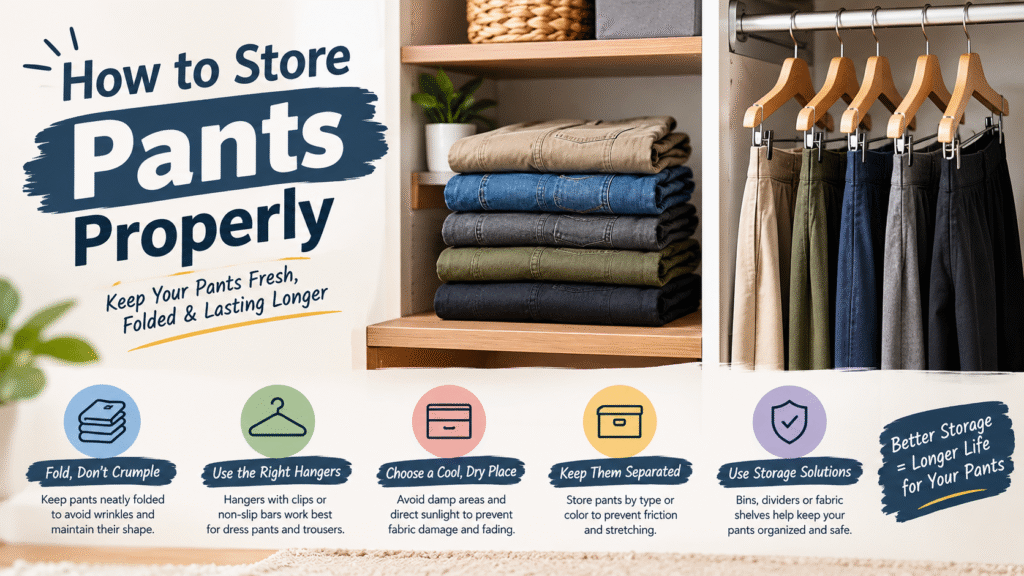
Introduction
Knowing how to store pants properly is just as important as picking the right fit, the right fabric, and the right style — because all of that effort can go to waste if your pants aren’t stored correctly. Improper storage is one of the most overlooked reasons pants lose their shape, develop stubborn creases, or start smelling musty in the closet. In fact, storage habits play a big role in why pants lose their shape over time, even when they’re washed correctly.
The good news is that storing pants properly doesn’t require special equipment or a huge closet. It just takes the right method for the right fabric. In this guide, we’ll walk you through how to store pants so they stay wrinkle-free, keep their shape, and last for years — whether you’re dealing with dress pants, jeans, wool trousers, or everyday casual wear.
Table of Contents
Why Proper Pants Storage Matters
Before jumping into the methods, it helps to understand what’s actually at stake. Poor storage can lead to:
- Permanent creases in the wrong places, especially at the knees and seat
- Stretched-out waistbands from being crammed on overcrowded racks
- Fabric damage like felting in wool or cracking in leather
- Musty odors from trapped moisture and lack of airflow
- Faster fading, particularly for dark denim and dyed fabrics
If you’re also trying to maintain the overall quality of your pants, storage is just as important as washing and drying. A pair of pants that’s washed carefully but shoved into a packed drawer will still wear out faster than one that’s stored with a bit of thought.
Make Sure Pants Are Clean and Completely Dry
Never store pants that are even slightly damp or have been worn since their last wash. Trapped moisture leads to mildew, musty smells, and can even attract fabric-eating insects like moths in wool blends. Similarly, storing dirty pants lets oils, sweat, and stains set into the fibers, making them harder to remove later.
Quick checklist before storage:
- Fully dry (no damp spots, especially around pockets and hems)
- Free of visible stains or residue
- Free of deodorant, food, or dirt marks that could set in over time
Hanging vs. Folding: Which Should You Choose?
The right storage method depends largely on the fabric and style of the pants.
When to Hang Pants
Hanging is generally the better option for:
- Dress pants and suit trousers
- Wool or wool-blend pants
- Anything with a crease you want to preserve
Use a hanger with a clamp or a bar specifically designed for pants — this keeps them folded along the original crease line and prevents new, unwanted creases from forming. Hanging also allows air to circulate, which is especially important for wool. As covered in our guide on wool vs. cotton pants, wool needs breathable storage and should never be kept in a cramped, airtight space.
When to Fold Pants
Folding works well for:
- Jeans and denim
- Casual cotton pants
- Athletic or stretch-fabric pants
- Sweatpants and joggers
Fold along the natural seams rather than creating new fold lines, and avoid stacking too many pairs on top of each other — heavy stacks compress fabric and cause deep, hard-to-remove creases at the fold points.
Storage Tips by Fabric Type
Different fabrics have different needs. Here’s how to store the most common types:
Denim/Jeans: Fold and store in a drawer, or hang on a clamp hanger if you want to avoid crease lines altogether. Keep dark denim away from direct sunlight to prevent fading.
Wool and Wool-Blend Trousers: Always hang, ideally with cedar blocks or lavender sachets nearby to deter moths. Avoid plastic dry-cleaning bags for long-term storage since they trap moisture — a breathable garment bag is a better choice.
Cotton Pants: Fold or hang depending on your space, but avoid placing heavy items on top if folded, since this flattens the fabric structure.
Leather and Faux Leather Pants: These need their own dedicated care approach — breathable cloth garment bags, no direct heat, and no cramped hanging spaces. Our full breakdown on leather vs. faux leather pants covers this in more detail.
Dress Pants and Office Wear: Hang in a spacious closet or breathable garment bag to avoid unnecessary folds, especially if you’re rotating them for office wear like trousers vs. jeans.
Long-Term Storage Tips (Off-Season Pants)
If you’re packing away seasonal pants — like wool trousers in summer or lightweight cottons in winter — a few extra steps will keep them in top shape:
- Wash before storing. Never put away pants that haven’t been freshly cleaned.
- Use breathable garment bags, not sealed plastic, to prevent moisture buildup.
- Add natural moth deterrents like cedar blocks or lavender sachets for wool items.
- Store in a cool, dry, dark space — avoid attics or basements prone to humidity swings.
- Check periodically, especially for wool, to catch any early signs of moths or mildew.
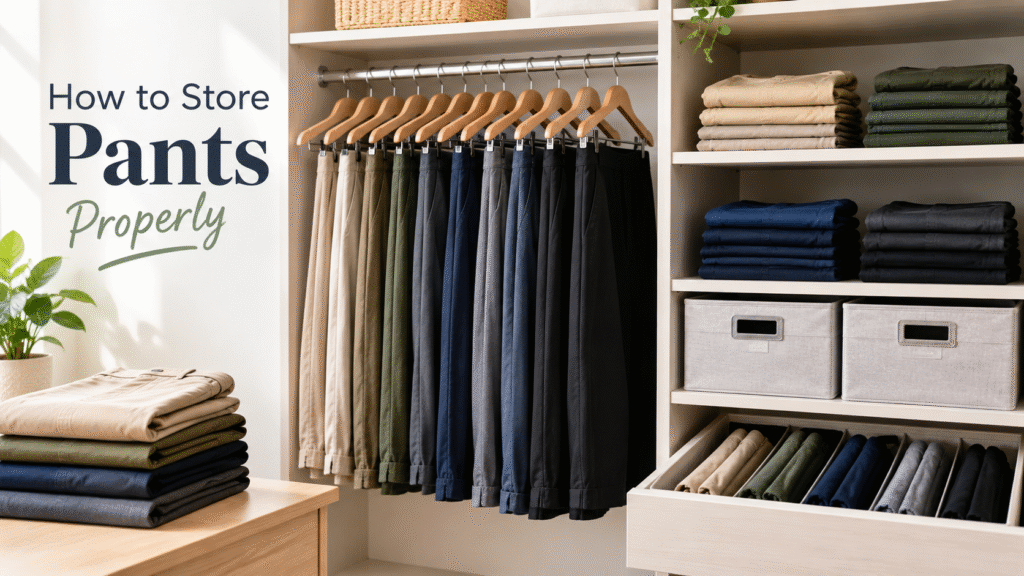
Everyday Storage Habits That Make a Difference
Beyond the big-picture methods, small daily habits also protect your pants:
- Don’t overcrowd your closet. Pants need airflow — packed-tight racks encourage wrinkles and prevent moisture from evaporating.
- Rotate your pants. Wearing the same pair repeatedly without a break, as noted in tips for comfortable everyday pants, speeds up wear at stress points like the knees and seat.
- Use quality hangers. Wire hangers can create sharp crease marks or misshape waistbands — wooden or padded hangers distribute weight more evenly, a tip that also applies well to slim fit and regular fit pants.
- Keep pockets empty. Items left in pockets can stretch fabric or create odd bulges over time.
Common Storage Mistakes to Avoid
- Storing pants while still slightly damp
- Cramming too many pairs onto one hanger or shelf
- Using sealed plastic bags for long-term storage
- Ignoring fabric-specific needs (treating wool the same as cotton, for example)
- Leaving pants in direct sunlight, which fades color over time
- Forgetting to empty pockets before folding or hanging
FAQs
How long can I store pants without wearing them?
Pants can be stored indefinitely if kept clean, dry, and in a breathable space. For seasonal storage, check wool items every few months for moths or moisture.
Is it better to hang or fold pants?
It depends on the fabric. Dress pants and wool trousers should be hung to preserve creases and allow airflow, while jeans, cotton casuals, and stretch fabrics are usually fine folded in a drawer.
Can I store pants in plastic bags?
No, sealed plastic traps moisture and can lead to mildew or musty odors. Use a breathable garment bag instead, especially for long-term or off-season storage.
How do I stop wool pants from getting moth holes in storage?
Store them clean, hang them in a breathable garment bag, and add cedar blocks or lavender sachets nearby, since moths are drawn to natural fibers and food residue.
Why do my pants get wrinkled even when I hang them?
Overcrowding is usually the cause — packing too many pants onto one rod prevents airflow and creates pressure creases. Using proper pants hangers and leaving space between items helps prevent this.
Final Thoughts
Storing pants properly isn’t complicated, but it does require paying attention to fabric type, available space, and a few simple habits. Whether you hang your dress pants to preserve a crisp crease or fold your jeans to save drawer space, the goal is the same: protect the fabric, prevent unnecessary wrinkles, and extend the life of your wardrobe.
Pair good storage habits with proper washing and drying, and your pants will stay in great shape for years rather than months. For more ways to protect your collection, check out our full guide on maintaining the quality of your pants.
Recommended Product for Better Pants Storage
1. Stainless Steel Anti-Slip Pants Hanger (Multi-Bar Organizer)
A space-saving stainless steel hanger with anti-slip bars that holds multiple pairs of pants without creasing — perfect for keeping trousers organized and wrinkle-free in a tight closet.
2. MORALVE Space-Saving Pants Hangers
Sturdy, space-saving hangers designed to keep pants neatly separated and crease-free, making it easy to grab the right pair without digging through a crowded rod.