

Introduction
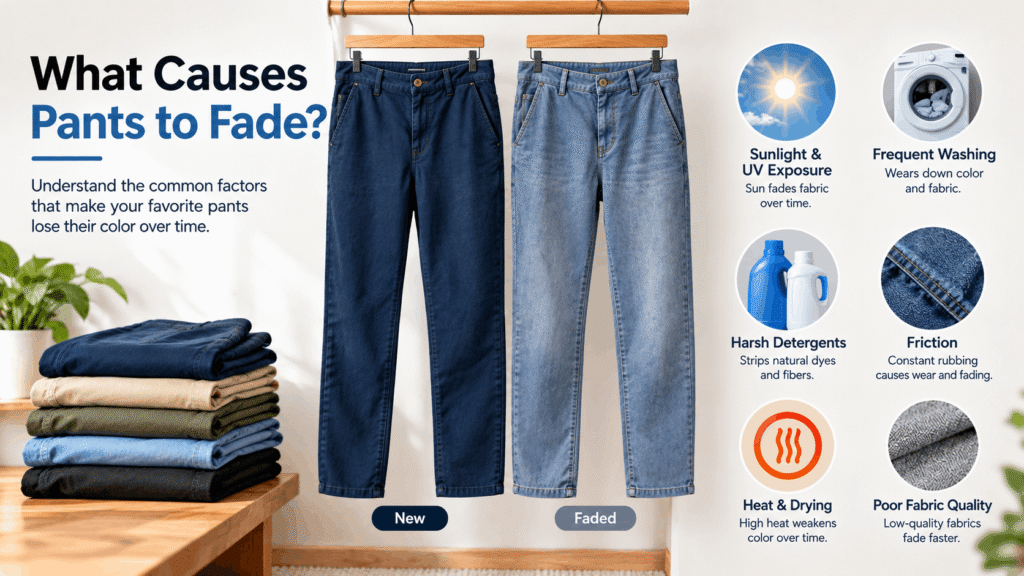
What causes pants to fade? You bought a pair of pants you loved — sharp black dress pants, deep indigo jeans, or a rich olive chino — and a few months later they look washed out, dull, or patchy. It’s one of the most common complaints we hear, and it’s rarely about buying “bad” pants. Fading is almost always caused by a combination of everyday habits and fabric science working against the dye.
Here’s what’s actually happening, broken down by cause, plus what to change if you want your pants to hold their color longer.
1. Sun and UV Exposure
Sunlight is one of the biggest culprits, and it’s not just about wearing pants outdoors. UV rays break down the chemical bonds that hold dye molecules to fabric fibers — a process called photodegradation. This happens just as easily on your clothesline or a sunny drying rack as it does while you’re wearing them. Dark colors (black, navy, deep green) show this fastest because they contain more dye to begin with, so the contrast is more noticeable as it fades.
Fix: Dry pants inside-out, away from direct sun, or use a covered drying area.
Table of Contents
2. Hot Water Washing
Heat opens up fabric fibers, which makes it easier for dye molecules to slip out and wash away. Every hot wash is essentially giving the color an exit route. This is especially damaging for dyes that sit on the surface of the fiber rather than penetrating it — which is exactly how denim’s indigo dye works.
Fix: Wash pants in cold water. It cleans just as effectively for most everyday dirt and won’t strip color the way hot water does.
3. Harsh Detergents and Bleach
Many mainstream detergents contain optical brighteners and strong surfactants that are great at lifting stains but rough on dye. Bleach is the extreme version of this — even a small splash can visibly lighten a spot on colored pants.
Fix: Use a color-safe or “dark wash” detergent, and keep bleach far away from anything that isn’t white.
4. Friction and Wear
This is the one most people never think about: fabric rubbing against fabric (or against a car seat, a bag strap, or your own thighs when you walk) physically wears away the surface layer of dye over time. It’s why jeans famously fade first at the thighs, knees, and back pockets — the high-contact zones.
Fix: Wash pants inside-out to protect the outer surface, and avoid overloading the washer, which increases friction between garments during the cycle.
5. Fabric Type
Not all pants fade the same way. Natural fibers — cotton, linen, wool — absorb dye differently than synthetic ones and tend to lose color faster with washing and sun exposure. Denim fades in a category of its own because indigo dye coats the surface of the yarn rather than soaking into it, so it’s designed to fade gradually with wear (some people want that look). Wool dress pants and linen pants, on the other hand, are usually meant to hold a consistent color, so fading there reads as damage, not style.
If you’re deciding between fabrics and want something more fade-resistant for everyday wear, it’s worth comparing how different materials perform — our guide on choosing the best formal wool pants goes into how wool holds up with proper care.
6. Overdrying and Dryer Heat
Similar to hot water, high heat in the dryer continues to work on the dye after the wash cycle is done. It also increases friction as pants tumble against other clothing, compounding the fading effect.
Fix: Use a low-heat or air-dry setting, and pull pants out while still slightly damp when possible.
7. Frequency of Washing
Simply put: the more often pants go through a wash-and-dry cycle, the faster they’ll fade, since each cycle chips away a little more dye. Pants that get washed after every single wear (workwear, chef pants, gym pants) will visibly fade faster than pants you wear a few times between washes.
Fix: Spot-clean minor marks instead of doing a full wash when you can, and only wash pants when they actually need it.
How to Keep Pants From Fading — Quick Recap
- Wash in cold water, inside-out
- Skip the dryer or use low heat
- Avoid bleach and opt for color-safe detergent
- Dry away from direct sunlight
- Wash less frequently — spot clean instead
- Choose fabric weights and finishes suited to how often you’ll wear and wash them
FAQs
Does fading mean my pants are poor quality?
Not necessarily. Fading is a natural result of dye chemistry meeting sunlight, heat, and friction. Even well-made pants will fade with enough exposure — it’s about slowing the process, not eliminating it entirely.
Do all pants fade at the same rate?
No. Dark colors, natural fibers, and denim fade faster than synthetics and lighter shades, simply because there’s more dye to lose or because the dye sits on the fiber’s surface rather than inside it.
Is fading reversible?
Mild fading can sometimes be improved with fabric dye or color restorers, but the safest approach is prevention — once a dye bond breaks down, it’s gone for good.
Why do my pants fade faster in some spots than others?
Uneven fading almost always comes down to friction and sun exposure hitting certain areas more than others. Thighs, knees, and back pockets rub against seat belts, car seats, and your own legs constantly, which wears the dye off faster there. If pants hang or dry with one side facing a window, that side will also fade more from UV exposure than the shaded side.
Can washing pants with other clothes cause fading?
Yes, in two ways. First, mixing dark pants with lighter items increases friction and can transfer dye, dulling both. Second, washing dark pants with anything that still has residual detergent or bleach on it (even trace amounts) can accelerate color loss. Washing similarly colored, similarly weighted items together minimizes both risks.
Conclusion
Fading isn’t a sign you bought the wrong pants — it’s the predictable result of sunlight, heat, friction, and washing habits working on dye over time. The good news is that most of the damage comes from a handful of fixable habits: hot water, high dryer heat, harsh detergent, and too-frequent washing. Adjust those, and almost any pair of pants — denim, wool, linen, or cotton — will hold its color noticeably longer. Think of it less as “stopping” fading and more as slowing it down enough that you get years out of a pair instead of months.