
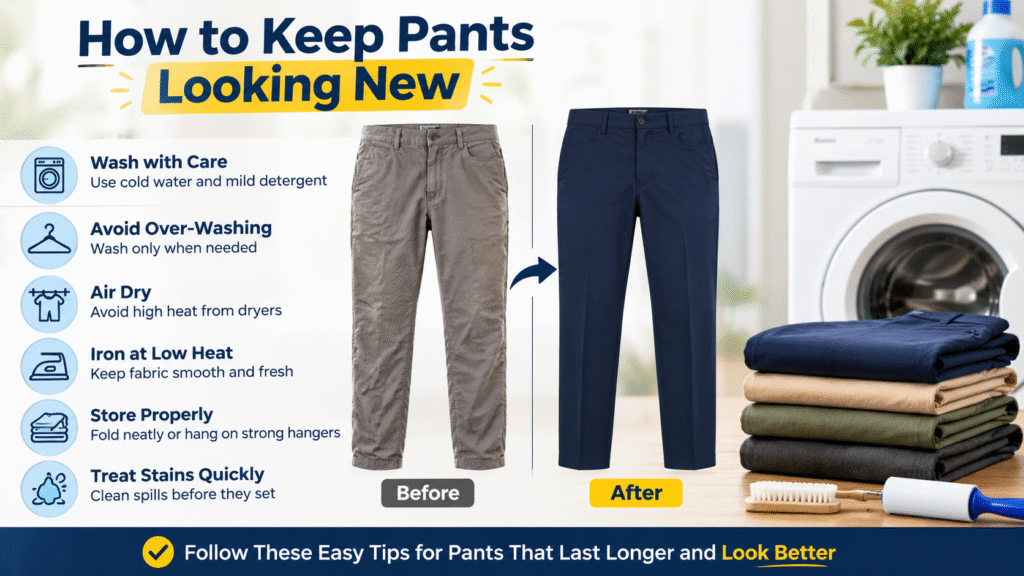
Introduction
How to keep pants looking new comes down to a handful of simple habits repeated consistently, not expensive products or complicated routines. Most pants don’t get ruined overnight — they wear out gradually from the wrong wash cycle, the wrong hanger, or one too many overworn days between washes. The good news is that a little know-how at each stage — washing, drying, ironing, and storing — can add months or even years to the life of your favorite pair. This guide walks through every step so your pants stay crisp, colorful, and fresh far longer than the average pair in your closet.
Table of Contents
Check the Care Label First
Before you do anything else, look inside the waistband for the care label. This is the single most reliable way to know how to keep pants looking new because different fabrics respond very differently to heat, water, and detergent.
- Cotton and cotton blends are generally durable and machine-washable, but they can shrink in hot water.
- Wool and wool blends often need gentle hand-washing or dry cleaning to avoid felting.
- Polyester and synthetic blends hold their shape well but can be prone to pilling if washed too roughly.
If you’re unsure how a fabric will react, do a quick spot test with water and a small amount of detergent on an inside seam before washing the whole garment. For a closer look at how specific materials perform day to day, see our guides on cotton-polyester blend pants for everyday wear and why cotton pants feel so comfortable.
Wash Pants the Right Way
Washing is where most pants either get a longer life or start heading toward the donation pile. Following a handful of key guidelines can make all the difference:
- Sort by color before washing. Dark and bright colors can bleed onto lighter fabrics, dulling both over time.
- Turn pants inside out. This protects the outer surface from friction against the drum and other clothes.
- Use cold water and a gentle cycle. Cold water helps prevent shrinking and keeps colors from fading.
- Use a mild detergent and avoid overloading the machine, which causes excess rubbing and pilling.
Fading is one of the most common complaints, especially with darker pants. If that’s a recurring issue for you, our in-depth guide on how to keep black pants from fading covers extra steps specifically for dark fabrics.
Dry Pants Properly to Prevent Shrinking and Stretching
Drying is just as important as washing when it comes to how to keep pants looking new. High heat is the biggest culprit behind shrinking, stiffening, and loss of shape.
- Air-dry when possible. Lay pants flat or hang them to dry rather than tumble drying on high heat.
- Use low heat settings if you must machine dry, and remove pants while still slightly damp to finish air-drying.
- Avoid over-drying, which weakens fibers and makes fabric feel rough over time.
Pants that stretch out of shape are often a drying and storage issue rather than a sizing one. If you’ve noticed your pants losing their fit after wear, our article on why pants stretch out after wearing breaks down the causes and fixes in detail.
Iron and Press for a Crisp, New Look
A proper press instantly makes pants look newer and more put-together. To iron pants the right way:
- Turn pants inside out to protect pockets, seams, and any embellishments.
- Iron the waistband and pocket area first while it’s easier to access.
- Lay the pants flat to press the legs, aligning the seams so creases fall in the right place.
- Use a pressing cloth on delicate fabrics to avoid shine or scorch marks.
A quick pass with a handheld steamer between washes can also remove minor wrinkles without a full ironing session.
Store Pants Correctly
How you store pants between wears matters just as much as how you wash them.
- Use the right hangers. Wide, contoured wood or plastic hangers support the fabric without creating creases. Wire hangers should be avoided since they can leave marks and distort the waistband.
- Fold thick fabrics like jeans or corduroy instead of hanging them, since hanging heavy fabric for long periods can stretch it out.
- Store in a cool, dark space. Direct sunlight and heat exposure fade colors and weaken fibers over time.
- Give pants a rest between wears. Rotating your pants allows the fabric to recover its shape rather than being stretched out day after day.
Remove Lint, Pet Hair, and Stains Promptly
Small maintenance habits keep pants looking fresh between full washes:
- Use a lint roller or fabric brush to remove lint and pet hair before it sets into the fibers.
- Treat stains as soon as possible rather than waiting for laundry day, since set-in stains are much harder to fully remove.
- Spot-clean minor marks instead of washing the whole garment every time, which reduces overall wear on the fabric.
For step-by-step methods, check out our detailed guides on how to remove lint from pants and how to remove pet hair from pants.
Rotate Your Pants and Avoid Overwearing
Wearing the same pair of pants repeatedly without a break doesn’t allow the fabric fibers to recover between wears. This accelerates stretching, thinning at stress points like the knees and seat, and general fatigue in the material. Building a small rotation — even just two or three pairs for regular use — spreads out wear and keeps every pair looking newer for longer.
Know When It’s Time to Replace, Not Repair
Even with the best care, pants eventually reach the end of their useful life. Knowing the difference between a pair that just needs a little TLC and one that’s genuinely worn out can save you money and closet space. Our guides on how long should men’s pants last and 15 signs of good quality pants can help you evaluate your current pants and make smarter choices when it’s time to buy new ones.
FAQs
How often should I wash my pants to keep them looking new?
Most pants, especially jeans and cotton trousers, don’t need washing after every wear. Washing every 3–5 wears (unless visibly dirty or sweaty) helps reduce fading, shrinking, and fiber breakdown, keeping pants looking newer for longer.
Does washing pants in cold water really make a difference?
Yes. Cold water helps prevent colors from bleeding or fading and reduces the risk of shrinking, especially for dark or dyed fabrics. It’s also gentler on delicate fibers than hot water.
Is it better to hang or fold pants? It depends on the fabric.
Lightweight and dress pants generally do well on wide, contoured hangers to prevent creasing, while heavier fabrics like denim or corduroy are better off folded to avoid stretching at the waistband from prolonged hanging.
Why do my pants lose their shape after a few wears?
usually caused by a combination of over wearing without rotation, high-heat drying, and improper storage. Letting fabric rest between wears and avoiding high heat in the dryer both help pants hold their shape longer.
Can I make old pants look new again, or should I replace them?
Simple fixes like proper washing, ironing, and lint removal can refresh pants that just look a little tired. However, if the fabric is thinning, stretched out permanently, or the seams are failing, replacement is usually a better option than repair.
Conclusion
Learning how to keep pants looking new isn’t about one big trick — it’s about consistency across washing, drying, ironing, and storage. Check the care label, wash and dry with care, store pants properly, and handle small issues like lint and stains right away. Follow these habits and your pants will stay in great shape for far longer than the average pair.
Looking for more care tips and buying advice? Browse our full Pants Guide for more in-depth articles.