
Introduction
How to remove lint from pants is a laundry problem almost everyone runs into sooner or later. One minute your pants look sharp, and the next they’re covered in fuzzy little fibers that make even a fresh outfit look unkempt. The good news is that lint is easy to deal with once you know the right tools and techniques — and even easier to prevent with a few small adjustments to your washing and drying habits. This guide walks through the fastest ways to remove lint from pants, fabric-specific tips, and habits that keep lint from building up in the first place.
Table of Contents
Why Do Pants Attract Lint?
Lint forms when loose fibers work their way out of fabric through friction, heat, and wear. Some fabrics are “shedders” — they release fibers easily, like cotton, fleece, and terry cloth. Others are “attractors” — they grab onto loose fibers floating around in the wash or dryer, like corduroy, wool, knits, and synthetic blends. When shedders and attractors end up in the same laundry load, the attractors usually come out covered in fuzz. Static cling makes the problem worse, since it causes loose fibers to stick to fabric instead of falling away.
Quick Methods to Get Rid of Lint on Pants
1. Lint Roller
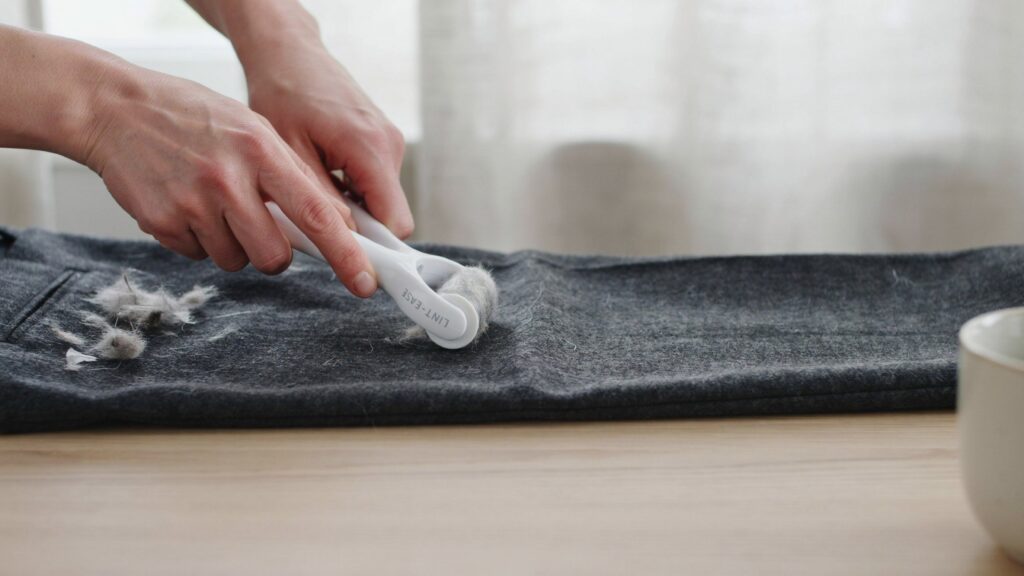
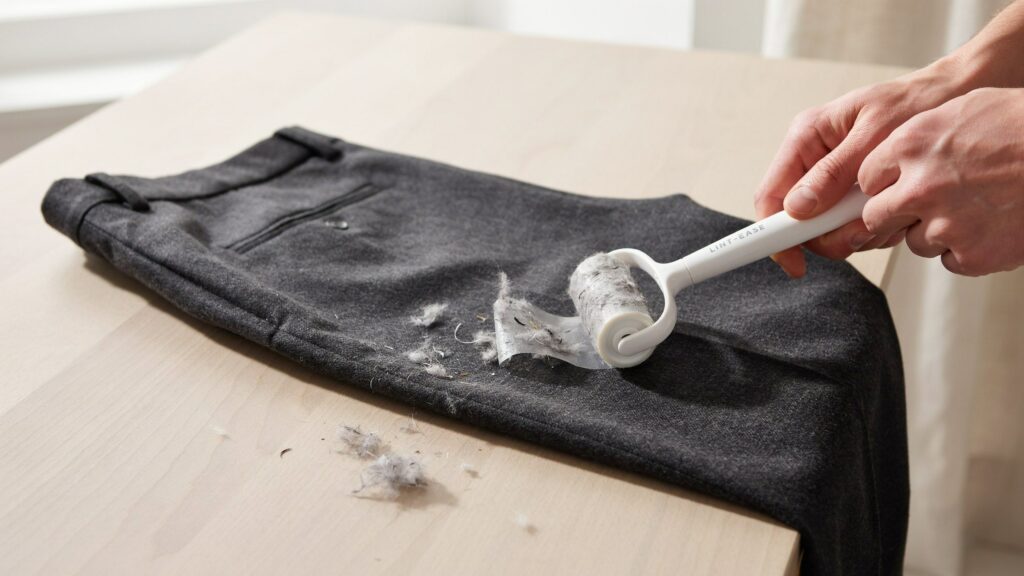
A lint roller is still the quickest fix for light lint. Roll it firmly over the fabric in short strokes, working in one direction. Keep a roller near the door for a quick touch-up before you head out.
2. Masking Tape or Packing Tape
No lint roller on hand? Wrap a strip of tape around your hand, sticky side out, and pat it over the fabric. This works especially well on pockets, cuffs, and seams where lint tends to collect.
3. Damp Rubber Gloves
Put on a pair of rubber gloves, dampen them slightly, and run your hands over the pants in one direction. The friction lifts lint off almost instantly, and it works well on larger areas like the legs of trousers or jeans.
4. Dryer Sheet Trick
Dampen a dryer sheet just slightly — not soaking wet — and wipe it over the fabric. The antistatic coating helps loosen lint and pulls it away in one pass.Finish by wiping the area with a dry cloth to clear away leftover residue.
5. Fabric Shaver or Sweater Stone
For pants with pilling (small fabric balls, not just loose lint), a fabric shaver or sweater stone works better than a roller. Glide it gently over the surface to shave off both pills and stray fibers without damaging the weave.
6. Vacuum With a Soft Brush Attachment
For heavier lint buildup, a vacuum with a soft upholstery brush can lift fuzz out of textured fabric. Test it on an inconspicuous spot first, and keep the suction light so you don’t stretch or damage the material.
How to Remove Lint From Specific Fabrics
- Corduroy pants: The ridges trap lint easily. A fabric shaver or a lightly dampened dryer sheet works better here than a standard roller, since it can reach into the grooves.
- Wool pants: Use a soft-bristled clothes brush in gentle, downward strokes rather than tape, which can pull at delicate wool fibers.
- Dark or black pants: Lint shows up more on dark fabric, so it’s worth doing a quick roller pass before every wear, not just before washing.
Simple Habits to Stop Lint Before It Starts
Removing lint is easy — keeping it from coming back in the first place saves even more time.
- Sort laundry by fabric type. Wash shedders (towels, fleece, cotton) separately from attractors (corduroy, wool, knits) so loose fibers don’t transfer.
- Turn pants inside out before washing. This reduces friction on the outer surface, which is where lint is most visible.
- Clean the dryer’s lint trap before every load. A clogged trap sends more lint back onto your clothes instead of catching it.
- Use a lower heat setting or air-dry. Heat increases friction and fiber breakdown, both of which create more lint.
- Add a dryer sheet or wool dryer balls. Both help cut static, which is a major reason lint clings to fabric in the first place.
- Don’t overload the washer or dryer. Clothes need room to move freely — a packed load creates more friction and more lint.
FAQs
Is it normal for new pants to have more lint than older ones?
Yes. New pants often shed excess loose fibers left over from manufacturing during the first few washes. This usually settles down after 3–4 washes.
Do lint rollers stop working over time?
Once the adhesive sheet is covered in fuzz, it loses its stickiness. Peel off the used layer to reveal a fresh sticky sheet underneath, or replace the roller if all sheets are used.
Can I use a lint roller on wet pants?
It’s best to remove lint from dry fabric. Rollers and tape work by adhesion, and moisture weakens their grip, so wait until the pants are dry for the best results.
Does washing pants with a mesh laundry bag help with lint?
Not directly for lint, but a mesh bag can reduce friction against zippers and rough fabrics in the same load, which indirectly cuts down on lint transfer.
Is dryer lint a fire hazard?
Yes. A clogged lint trap is one of the leading causes of dryer fires, so clearing it before every load isn’t just about cleaner clothes — it’s a safety habit too.
Can fabric softener replace a dryer sheet for lint control?
Liquid fabric softener added during the wash cycle can reduce static and lint in a similar way to dryer sheets, though dryer sheets tend to work faster for a quick touch-up.
Conclusion
Lint is one of those small annoyances that’s completely manageable once you know what causes it and which tools work best for your fabric. Keep a lint roller or a strip of tape on hand for quick fixes, and build a few prevention habits — sorting laundry, cleaning the dryer trap, and washing on lower heat — into your routine. A little consistency goes a long way toward keeping your pants looking fresh wear after wear.