
Introduction
How Long Should Men’s Pants Last is a common question for anyone looking to get the most value from their wardrobe. While the lifespan of men’s pants depends on factors such as fabric quality, construction, frequency of wear, and proper care, a well-made pair can often last for several years. In this guide, you’ll learn the average lifespan of different types of men’s pants, what affects their durability, signs it’s time to replace them, and practical tips to help your pants stay in excellent condition for as long as possible.
Table of Contents
How Long Should Men’s Pants Last? (Quick Answer)
How Long Should Men’s Pants Last? The quick answer is that most men’s pants last 2 to 5 years with regular use and proper care. However, how long do men’s pants last depends on several factors, including the fabric, construction quality, how often you wear them, and how well you maintain them. The average lifespan of men’s pants varies because a pair worn once a week will naturally last much longer than one worn every day.
In general, the men’s pants lifespan can be broken down by use. Casual jeans and chinos often last 3 to 5 years, while dress pants can remain in excellent condition for 4 to 7 years if they are only worn for work or special occasions. On the other hand, work pants, joggers, and sweatpants that experience heavy daily use may need to be replaced after 1 to 3 years. This is why many people ask how often should you replace men’s pants or when should men replace their pants—the answer depends more on wear and condition than on age alone.
Different styles also have different expected lifespans. If you’re wondering how long do dress pants last, quality wool or polyester-blend dress pants generally outlast lightweight casual styles. Similarly, how long do chinos last depends on the fabric weight and frequency of use, while how long do men’s jeans last is often determined by the quality of the denim and how they’re washed. Heavy-duty cargo styles also differ, so how long do cargo pants last is usually longer than lightweight cotton pants designed for casual wear.
Another important factor is the type of activities you do while wearing them. Pants used for manual labor, construction, or outdoor adventures wear out much faster than office trousers. That means how long do work pants last, how long do joggers last, how long do sweatpants last, and how long do hiking pants last can vary widely depending on daily stress, abrasion, and washing frequency.
If you invest in durable men’s pants made from premium materials, you can expect them to last significantly longer. In fact, the longest lasting men’s pants are usually made from heavyweight denim, tightly woven cotton canvas, wool, or performance fabrics designed for durability. Choosing the best durable pants for men and following a good pants durability guide can greatly improve men’s pants durability over time.
Knowing the signs your pants need replacing is just as important as knowing their expected lifespan. Thin fabric, fading, stretched knees, broken seams, or damaged zippers are clear indicators of when to replace pants. Instead of replacing them too soon, learning how to make men’s pants last longer through proper pants care can save money and keep your wardrobe looking fresh.
Simple habits like washing men’s pants correctly, using the best way to wash men’s pants, and understanding whether does washing shorten pants lifespan or does drying damage pants can make a noticeable difference. In many cases, air drying vs machine drying pants shows that air drying causes less fabric stress and helps extend the life of men’s pants.
Finally, fabric choice has a major impact on longevity. Fabric durability for pants varies considerably, with heavyweight denim, canvas, and wool ranking among the most durable pants fabric options. The cotton pants lifespan, denim pants lifespan, wool dress pants lifespan, polyester pants durability, and stretch pants durability all differ based on construction and care. Investing in quality men’s trousers, premium men’s pants, or other high-quality men’s pants often provides better everyday pants durability and answers the question of how many years should pants last with longer-lasting performance.
By understanding the common reasons pants wear out, learning preventing pants from wearing out strategies, and following practical pants maintenance tips, you can increase pants lifespan, improve maintaining men’s pants, and choose the best pants for long-term use. In the following sections, we’ll explore exactly how often should pants be replaced and the factors that determine why men’s pants wear out quickly.
Average Lifespan of Different Types of Men’s Pants
If you’re wondering How Long Should Men’s Pants Last, the answer depends largely on the type of pants you own. Different materials, construction methods, and intended uses all affect how long do men’s pants last. While the average lifespan of men’s pants ranges from 2 to 5 years, some styles can last much longer with proper care, while others wear out more quickly due to heavy daily use.
Below is a breakdown of the expected men’s pants lifespan for the most common types of men’s pants.
Jeans
A quality pair of jeans typically lasts 3 to 5 years, making them one of the most durable men’s pants you can own. If you’re asking how long do men’s jeans last, the answer depends on the denim weight, stitching quality, and how often they’re worn.
Heavyweight denim generally offers better denim pants lifespan than lightweight stretch denim because it resists abrasion and tearing more effectively. Premium jeans made with reinforced seams can remain in excellent condition for several years, especially when washed less frequently.
To extend the life of men’s pants like jeans:
- Wash only when necessary.
- Turn them inside out before washing.
- Use cold water and a gentle cycle.
- Air dry instead of using high heat.
These simple pants maintenance tips help preserve the fabric, color, and fit.
Chinos
For most men, how long do chinos last is typically 2 to 4 years with regular wear. Since chinos are commonly made from cotton twill, the cotton pants lifespan depends on the fabric weight and overall construction.
Lightweight chinos worn several times each week may show fading or thinning sooner than heavier versions. Rotating multiple pairs throughout the week helps reduce wear and improves everyday pants durability.
Proper how to care for men’s pants practices, such as avoiding bleach and following the care label, can significantly increase pants lifespan.
Dress Pants
Many people ask how long do dress pants last, especially when investing in office attire. High-quality dress pants generally last 4 to 7 years, and sometimes even longer if they are only worn for work or formal occasions.
The wool dress pants lifespan is often longer than pants made from lightweight synthetic fabrics because wool naturally resists wrinkles and maintains its shape. Likewise, quality men’s trousers made with premium construction and reinforced seams usually outlast budget alternatives.
Owning multiple pairs and rotating them regularly helps preserve men’s pants durability while reducing stress on the fabric.
Cargo Pants
If you’re wondering how long do cargo pants last, expect a lifespan of 2 to 5 years. Cargo pants are designed for durability and often feature reinforced stitching, ripstop fabrics, and multiple pockets.
Many of the best durable pants for men are cargo-style designs because they are built for outdoor work, travel, and everyday activities. However, carrying heavy items in pockets every day can increase stress on the seams and shorten their lifespan.
Choosing heavier fabrics with excellent fabric durability for pants helps cargo pants last much longer.
Work Pants
How long do work pants last depends heavily on your occupation. Construction workers, mechanics, landscapers, and other tradespeople often replace work pants every 1 to 3 years because constant bending, kneeling, and exposure to rough surfaces accelerate wear.
The common reasons pants wear out include:
- Frequent abrasion
- Heavy lifting
- Dirt and chemicals
- Repeated washing
- High heat drying
Investing in high-quality men’s pants specifically designed for demanding jobs can improve longevity and reduce replacement costs over time.
Joggers and Sweatpants
If you’re asking how long do joggers last or how long do sweatpants last, the average lifespan is usually 1 to 3 years.
Joggers and sweatpants are often made with cotton-polyester blends or fleece fabrics that gradually lose softness and elasticity after repeated washing. The stretch pants durability also depends on how well the elastic fibers are maintained.
To make them last longer:
- Wash on gentle cycles.
- Avoid fabric softeners when recommended.
- Skip high dryer temperatures.
Many people don’t realize does drying damage pants—high heat can weaken elastic fibers and shorten their useful life.
Hiking and Outdoor Pants
Outdoor enthusiasts often ask how long do hiking pants last. High-quality hiking pants typically last 3 to 6 years, depending on how frequently they’re used and the terrain they encounter.
Performance hiking pants are usually made from nylon or polyester blends with excellent polyester pants durability and reinforced panels for extra protection. These materials are designed to resist tears, moisture, UV exposure, and abrasion.
Proper cleaning after outdoor trips and storing them in a dry place helps maintain performance and supports preventing pants from wearing out prematurely.
Linen Pants
Linen pants generally last 2 to 4 years with regular seasonal use. Although linen is breathable and ideal for warm weather, it isn’t considered the most durable pants fabric compared to denim or canvas.
Because linen fibers can weaken with rough washing, following the best way to wash men’s pants is especially important. Gentle washing and air drying vs machine drying pants can noticeably improve their lifespan while reducing shrinkage and fabric damage.
Which Type Lasts the Longest?
Among all styles, heavyweight denim jeans, wool dress pants, and premium work pants are usually the longest lasting men’s pants. Their superior materials, reinforced stitching, and durable construction allow them to withstand years of regular use.
However, no matter which style you choose, proper maintenance has a major impact on how many years should pants last. Learning how to make men’s pants last longer, practicing washing men’s pants correctly, and understanding when to replace pants can help you get the maximum value from every pair.
Remember, the signs your pants need replacing aren’t always based on age alone. Excessive thinning, broken seams, permanent stretching, and worn-out fabric are better indicators of how often should pants be replaced than simply counting the years.
What Determines How Long Men’s Pants Last?
If you’re asking How Long Should Men’s Pants Last, it’s important to understand that no single factor determines their lifespan. Instead, how long do men’s pants last depends on the quality of the fabric, construction, how often they’re worn, how they’re washed, and how well they’re maintained. While the average lifespan of men’s pants is typically 2 to 5 years, good care habits and quality materials can significantly increase that timeframe.
Below are the key factors that influence men’s pants lifespan and determine whether your favorite pair lasts for years or wears out much sooner.
Fabric Quality
The fabric is one of the biggest factors affecting fabric durability for pants. Some materials naturally resist wear better than others, making them ideal for everyday use.
- Heavyweight denim offers an excellent denim pants lifespan because it is thick, durable, and resistant to abrasion.
- Cotton twill provides a solid cotton pants lifespan, although lightweight cotton tends to wear out faster.
- Wool is known for its impressive wool dress pants lifespan, making it a popular choice for premium dress pants.
- Polyester blends offer excellent polyester pants durability, resisting wrinkles, shrinking, and everyday wear.
- Pants with added stretch provide comfort, but stretch pants durability may decrease over time if exposed to frequent high-heat drying.
If you’re looking for the most durable pants fabric, heavyweight denim, canvas, wool, and high-performance synthetic blends are among the best options.
Construction and Stitching Quality
Even the best fabric won’t last if the pants are poorly made. High-quality construction greatly improves men’s pants durability.
Look for features such as:
- Double or triple stitching
- Reinforced stress points
- Durable zippers
- Strong buttons
- High-quality thread
These details are common in premium men’s pants, quality men’s trousers, and many of the best durable pants for men. Strong construction reduces seam failures and helps prevent premature damage during daily wear.
How Often You Wear Them
One of the simplest answers to how often should you replace men’s pants is that it depends on how frequently you wear the same pair.
For example:
- Pants worn once a week may last several years.
- Pants worn every day experience much faster wear.
- Rotating multiple pairs helps reduce fabric stress.
Many people wonder how many years should pants last, but usage is often more important than age. Rotating your wardrobe is one of the easiest ways to extend the life of men’s pants and improve everyday pants durability.
Your Daily Activities
Your lifestyle has a major impact on how long do men’s pants last.
For example:
- Office workers usually experience less wear on dress pants.
- Construction workers place constant stress on work pants.
- Outdoor enthusiasts expose hiking pants to rocks, dirt, and moisture.
- Frequent kneeling or squatting increases stress on knees and seams.
This explains why how long do work pants last, how long do cargo pants last, and how long do hiking pants last often differs from how long do dress pants last or how long do chinos last.
Daily activity is one of the common reasons pants wear out, especially when pants are regularly exposed to friction and heavy use.
Washing and Drying Habits
Many people underestimate how much laundry habits affect men’s pants lifespan.
One common question is does washing shorten pants lifespan. The answer is yes—frequent washing, harsh detergents, and aggressive wash cycles gradually weaken fabric fibers over time.
Following these simple habits can make a big difference:
- Practice washing men’s pants correctly.
- Use the best way to wash men’s pants, which usually means cold water and a gentle cycle.
- Wash only when necessary instead of after every wear.
- Turn pants inside out before washing.
Drying is equally important. If you’ve ever wondered does drying damage pants, the answer is yes. High dryer temperatures can shrink fabric, fade colors, weaken elastic fibers, and shorten the life of many materials.
When comparing air drying vs machine drying pants, air drying is generally the better option because it reduces heat damage and helps fabrics maintain their original shape.
These simple pants maintenance tips can significantly increase pants lifespan.
Storage and Maintenance
Proper storage is another overlooked factor in maintaining men’s pants.
Good storage habits include:
- Hanging dress pants to reduce wrinkles.
- Folding jeans and casual pants neatly.
- Store your pants in a clean, cool, and moisture-free space to help preserve their condition.
- Repairing loose buttons or small tears immediately.
Learning how to care for men’s pants doesn’t stop after washing. Small repairs prevent minor damage from becoming major problems and are an important part of preventing pants from wearing out.
Fit and Fabric Stress
The way your pants fit also affects longevity.
Pants that are too tight place extra stress on:
- Seams
- Belt loops
- Knees
- Seat area
Over time, this additional tension causes fabric fatigue and increases the likelihood of rips or stretched-out material. Choosing the correct size improves comfort while helping extend the life of men’s pants.
Overall Quality
Not all pants are made to the same standard. Investing in high-quality men’s pants often results in better durability because manufacturers use stronger fabrics, better stitching, and higher-quality hardware.
Although they usually cost more upfront, premium men’s pants often become the best pants for long-term use because they require fewer replacements over the years.
Why Proper Care Matters
If you’re wondering when should men replace their pants or when to replace pants, don’t rely on age alone. Instead, inspect your pants regularly for the signs your pants need replacing, such as thinning fabric, frayed hems, broken seams, fading, or damaged zippers.
Following a reliable pants durability guide, using smart tips to make pants last longer, and practicing proper pants care can greatly improve how long should men’s pants last. In many cases, simple maintenance habits make the difference between replacing pants after two years and enjoying them for five years or more.
Which Pants Last the Longest?
If you’re researching How Long Should Men’s Pants Last, you’ll quickly find that some styles are built to last much longer than others. While how long do men’s pants last depends on fabric quality, construction, and care, certain types consistently outperform the rest in terms of durability. Choosing the right material and following good maintenance habits can significantly improve the average lifespan of men’s pants and help you get the most value from your wardrobe.
Below are the types of pants that typically offer the longest men’s pants lifespan.
Denim Jeans
Heavyweight denim jeans are among the longest lasting men’s pants available. A well-made pair can easily last 3 to 5 years, and premium denim often lasts even longer with proper care.
The excellent denim pants lifespan comes from tightly woven cotton fibers that resist tearing, abrasion, and everyday wear. This makes jeans one of the most durable men’s pants for casual use.
To extend the life of men’s pants made from denim:
- Wash only when necessary.
- Turn jeans inside out before washing.
- Use cold water and mild detergent.
- Skip high-heat drying whenever possible.
These simple pants maintenance tips help preserve both the fabric and color while reducing unnecessary wear.
Wool Dress Pants
For business professionals and formal occasions, wool dress pants are an excellent investment. If you’ve wondered how long do dress pants last, quality wool trousers often remain in great condition for 4 to 7 years when rotated with other pairs.
The impressive wool dress pants lifespan comes from wool’s natural ability to resist wrinkles, recover its shape, and withstand repeated use. Many quality men’s trousers are made from wool or premium wool blends because they maintain a polished appearance for years.
Although wool is durable, proper how to care for men’s pants is essential. Occasional dry cleaning, gentle brushing, and proper storage all help preserve the fabric.
Heavy-Duty Work Pants
Heavy-duty work pants are specifically engineered for physically demanding jobs. Reinforced knees, double stitching, and abrasion-resistant fabrics make them some of the best durable pants for men who work in construction, landscaping, mechanics, or manufacturing.
Although how long do work pants last depends on working conditions, high-quality work pants usually last 2 to 4 years, even with frequent use.
Many premium work pants use canvas or ripstop materials with excellent fabric durability for pants, making them ideal for rough environments where ordinary casual pants would wear out quickly.
Performance Outdoor Pants
Hiking, camping, and travel pants are another category known for outstanding durability. If you’re wondering how long do hiking pants last, high-quality outdoor pants often last 3 to 6 years, depending on how often they’re used.
Most outdoor pants are made from advanced synthetic materials with impressive polyester pants durability, water resistance, and reinforced construction. These fabrics are designed to withstand rocks, branches, dirt, and changing weather conditions without losing performance.
Because they’re built for rugged environments, they’re often considered some of the best pants for long-term use.
Cargo Pants
Cargo pants also rank among the most durable everyday options. If you’re asking how long do cargo pants last, quality cargo pants typically provide 2 to 5 years of reliable use.
Many cargo styles feature reinforced stitching, thicker cotton fabrics, and practical pocket designs that improve men’s pants durability. Choosing heavyweight cotton or ripstop cargo pants can further improve longevity.
However, carrying heavy tools or equipment in the pockets every day may increase fabric stress and shorten their lifespan.
Why Fabric Makes a Difference
One of the biggest factors affecting how many years should pants last is the fabric itself.
Among the most durable pants fabric options are:
- Heavyweight denim
- Cotton canvas
- Wool
- Ripstop nylon
- High-performance polyester blends
Each material offers different benefits. For example, cotton pants lifespan depends on fabric thickness, while stretch pants durability may be lower if elastic fibers are repeatedly exposed to high dryer temperatures.
Choosing high-quality materials is one of the easiest ways to increase pants lifespan.
Quality Matters More Than Price Alone
Expensive pants don’t automatically last longer, but high-quality men’s pants usually outperform cheaper alternatives because they’re made with better materials and stronger construction.
Look for features such as:
- Reinforced seams
- Heavy-duty zippers
- Durable buttons
- Double stitching
- Premium fabric blends
These features improve overall durability and reduce the common reasons pants wear out, such as seam failure and fabric thinning.
Proper Care Extends Every Pair
Even the toughest pants won’t reach their full lifespan without good maintenance. Whether you’re wearing jeans, work pants, or dress trousers, practicing proper pants care can make a significant difference.
Some of the best ways to make men’s pants last longer include:
- Following the best way to wash men’s pants.
- Practicing washing men’s pants correctly.
- Understanding does washing shorten pants lifespan by avoiding unnecessary laundering.
- Knowing does drying damage pants and limiting exposure to high heat.
- Choosing air drying vs machine drying pants whenever possible.
These habits help preventing pants from wearing out prematurely while maintaining fabric strength and appearance.
Choosing the Right Pants for Long-Term Value
If your goal is to maximize everyday pants durability, invest in well-constructed pants made from premium materials rather than focusing only on price. While how often should pants be replaced depends on how frequently they’re worn, buying durable styles and caring for them properly can significantly delay when to replace pants.
Regularly inspect your clothing for the signs your pants need replacing, such as thinning fabric, frayed seams, broken zippers, or permanent stretching. By combining smart purchasing decisions with consistent maintenance, you can greatly improve how long should men’s pants last and enjoy reliable performance from every pair for years to come.
Signs It’s Time to Replace Men’s Pants
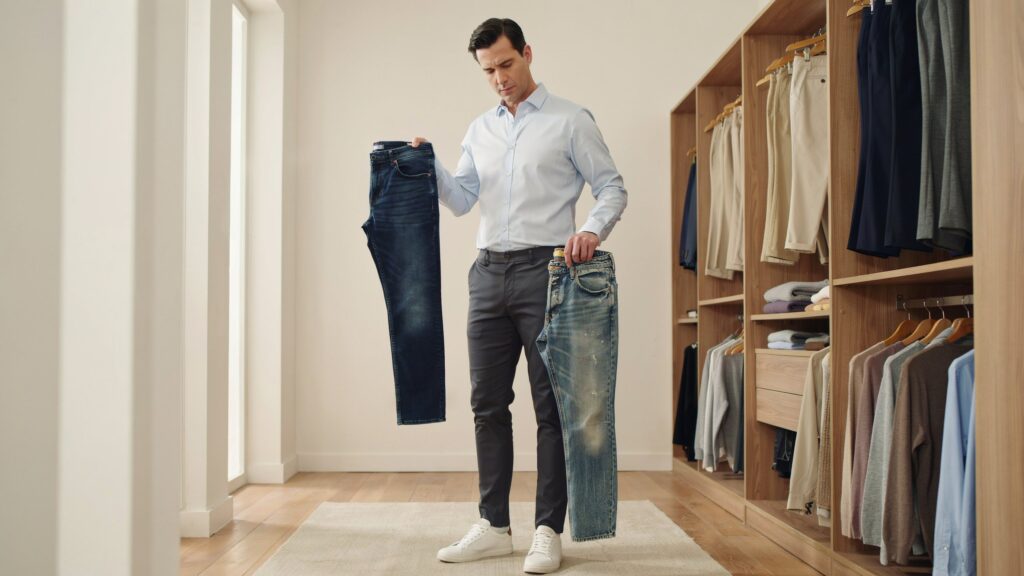
Knowing How Long Should Men’s Pants Last is only part of the equation. Equally important is recognizing the signs your pants need replacing. Even if you’re unsure how long do men’s pants last, their overall condition tells you more than their age. Some pants remain in excellent shape for years, while others wear out much sooner due to heavy use, poor maintenance, or lower-quality materials.
Below are the most common signs that indicate when to replace pants and invest in a new pair.
Fabric Is Becoming Thin
One of the earliest signs of wear is thinning fabric. Areas that experience constant friction—such as the knees, seat, inner thighs, and pockets—gradually lose strength over time.
Thin fabric is more likely to tear during everyday activities, especially if you wear the same pair frequently. This is one of the common reasons pants wear out, regardless of whether they’re jeans, chinos, or work pants.
Investing in high-quality men’s pants made from fabrics with excellent fabric durability for pants can help delay this problem.
Permanent Fading or Discoloration
Some fading is completely normal after years of use, but excessive fading that cannot be improved through washing may indicate that the fabric fibers are breaking down.
Frequent exposure to sunlight, harsh detergents, and repeated laundering can reduce men’s pants durability over time. This is especially noticeable in darker colors like black, navy, and dark denim.
Practicing washing men’s pants correctly and using the best way to wash men’s pants helps preserve both the color and fabric.
Holes, Tears, or Frayed Areas
Visible holes, ripped seams, or badly frayed hems are among the clearest signs your pants need replacing.
While small tears can often be repaired, multiple damaged areas usually indicate that the fabric has reached the end of its useful life. This applies whether you’re asking how long do men’s jeans last, how long do cargo pants last, or how long do work pants last.
Buying well-made men’s pants with reinforced seams helps minimize early wear and tear.
Loose Seams and Broken Stitching
Strong stitching is essential for long-lasting pants. If seams repeatedly split or threads continue coming loose even after repairs, the garment may no longer provide reliable performance.
This type of damage often appears around:
- The inseam
- Belt loops
- Pockets
- Crotch area
- Side seams
Well-made quality men’s trousers and premium men’s pants usually feature reinforced stitching that lasts much longer than lower-quality alternatives.
Zipper or Button Problems
Broken zippers, missing buttons, or damaged closures can make pants uncomfortable or impractical to wear.
Although these components can sometimes be repaired, repeated hardware failures often indicate that the pants have experienced years of heavy use.
If several problems appear at once, replacing the pants may be more cost-effective than repairing them.
Loss of Shape or Fit
Over time, repeated wear and washing can permanently change the shape of your pants.
Common signs include:
- Sagging knees
- Baggy seat
- Twisted pant legs
- Loose waist
- Fabric that no longer holds its original structure
These issues reduce both appearance and comfort, even if the pants are otherwise undamaged.
Caring for your pants properly and following the recommended maintenance instructions helps them retain their original shape and fit for a longer time.
Waistband Has Stretched Out
Elastic waistbands and stretch fabrics naturally lose elasticity after years of use.
Reduced stretch pants durability is especially common in joggers, sweatpants, athletic pants, and casual trousers with elastic waistbands.
If your pants constantly slip down or no longer fit securely, they may have reached the end of their practical lifespan.
Frequent Repairs Become Necessary
Occasional repairs are normal, but constantly fixing buttons, patching holes, or resewing seams usually indicates that the pants are wearing out.
Instead of spending time and money on repeated repairs, it may be wiser to replace them with one of the best durable pants for men, especially if you rely on them for daily wear.
Performance Is No Longer the Same
For specialized clothing such as hiking, outdoor, or work pants, performance matters just as much as appearance.
If water-resistant coatings wear off, reinforced panels become damaged, or protective features no longer function properly, it’s time to consider replacement.
This is particularly important if you’re evaluating how long do hiking pants last or how long do work pants last, where durability directly affects comfort and safety.
Age Isn’t the Only Factor
Many people ask how often should you replace men’s pants or when should men replace their pants, but there isn’t a fixed timeline.
The average lifespan of men’s pants varies depending on:
- Fabric quality
- Frequency of wear
- Daily activities
- Laundry habits
- Overall maintenance
For example, how long do dress pants last is often much longer than how long do joggers last or how long do sweatpants last, simply because formal clothing is usually worn less frequently.
Likewise, the cotton pants lifespan, denim pants lifespan, wool dress pants lifespan, and polyester pants durability all differ based on material quality and care.
Replace Pants Based on Condition, Not Just Years
Instead of focusing only on how many years should pants last, inspect them regularly for signs of wear. Understanding does washing shorten pants lifespan, does drying damage pants, and the benefits of air drying vs machine drying pants can help extend the life of men’s pants and reduce unnecessary replacements.
Simple habits like rotating multiple pairs, following pants maintenance tips, and practicing preventing pants from wearing out can significantly increase pants lifespan. However, once the fabric becomes weak, the fit deteriorates, or repairs become frequent, it’s time to replace them and invest in the best pants for long-term use that offer better everyday pants durability.
How to Make Men’s Pants Last Longer
If you’re wondering How Long Should Men’s Pants Last, the good news is that proper maintenance can significantly extend their lifespan. While how long do men’s pants last depends on factors like fabric quality and daily use, good habits can add years to your favorite pair. Whether you own jeans, chinos, dress pants, or work pants, following the right care routine helps improve men’s pants durability, reduces unnecessary wear, and saves money in the long run.
Here are the most effective ways to extend the life of men’s pants.
Rotate Between Multiple Pairs
One of the easiest ways to increase pants lifespan is to avoid wearing the same pair every day. Constant use causes fabric fibers to wear out more quickly, especially around the knees, seat, and inner thighs.
Rotating several pairs throughout the week allows each one to recover from daily stress, reducing friction and extending everyday pants durability. This simple habit also helps answer questions like how often should you replace men’s pants because well-rotated pants naturally last much longer.
Wash Less Frequently
Many people wash their pants after every wear, but this isn’t always necessary. Excessive laundering gradually weakens fabric fibers and fades colors.
A common question is does washing shorten pants lifespan. Generally, frequent washing can reduce the lifespan of your pants over time.. Washing only when pants are actually dirty helps preserve both the fabric and appearance.
For example:
- Jeans often need fewer washes than most people think.
- Dress pants may only require occasional cleaning if worn indoors.
- Spot cleaning small stains can reduce unnecessary full washes.
Reducing wash frequency is one of the simplest tips to make pants last longer.
Use Cold Water
Hot water can cause shrinkage, fading, and additional stress on fabric fibers.
Using cold water helps protect:
- Cotton fabrics
- Denim
- Wool blends
- Stretch materials
- Synthetic performance fabrics
Cold water washing supports a longer cotton pants lifespan, protects denim pants lifespan, and helps preserve polyester pants durability over time.
Choose a Gentle Wash Cycle
The washing machine itself isn’t always the problem—it’s the intensity of the wash cycle.
Selecting a gentle cycle reduces:
- Fabric abrasion
- Stretching
- Seam stress
- Fiber breakdown
This is an important part of washing men’s pants correctly and one of the best way to wash men’s pants regardless of style.
Gentle washing is especially beneficial for maintaining quality men’s trousers, wool pants, and pants made with stretch fabrics.
Avoid High Dryer Heat
Heat is one of the biggest enemies of clothing.
Many people ask, does drying damage pants? High dryer temperatures can:
- Shrink cotton
- Fade colors
- Weaken elastic fibers
- Reduce stretch pants durability
- Cause fabric to age faster
Understanding the difference between air drying vs machine drying pants helps preserve both fit and appearance.
Whenever possible, remove pants while they’re still slightly damp and allow them to finish drying naturally.
Air Dry Whenever Possible
Air drying is one of the most effective ways to extend the life of men’s pants.
Compared to machine drying, air drying:
- Reduces shrinkage
- Protects fabric strength
- Helps maintain color
- Preserves elasticity
- Prevents unnecessary heat damage
Whether you’re caring for jeans, chinos, or dress pants, air drying improves overall fabric durability for pants and helps maximize their lifespan.
Repair Minor Damage Early
Small problems often become expensive ones if ignored.
Repair minor issues such as:
- Loose buttons
- Small seam openings
- Tiny holes
- Frayed hems
Fixing these problems early helps prevent further damage and delays when to replace pants.
This habit is especially valuable for high-quality men’s pants and premium men’s pants, where repairs are often worthwhile.
Store Pants Properly
Storage plays an important role in maintaining men’s pants.
To keep your pants in good condition:
- Hang dress pants to reduce wrinkles.
- Fold jeans neatly to avoid unnecessary creases.
- Store pants in a clean, cool, and dry location.
- Avoid overcrowding your closet.
Good storage habits are an important part of proper pants care and help preserve the original fit and fabric.
Follow the Care Label
Every pair of pants is made differently, so always read the manufacturer’s care instructions.
The care label provides guidance on:
- Washing temperature
- Drying method
- Ironing
- Bleaching
- Dry cleaning
Learning how to care for men’s pants according to the care label helps prevent accidental damage and extends the life of every fabric type.
Choose High-Quality Pants
Durability starts before you even wear your pants.
Well-constructed durable men’s pants typically feature:
- Strong stitching
- Reinforced stress points
- Heavyweight fabrics
- Quality zippers
- Durable buttons
Although premium men’s pants usually cost more initially, they often become the best pants for long-term use because they resist wear far better than inexpensive alternatives.
Choosing the best durable pants for men also helps reduce the common reasons pants wear out, such as seam failure and fabric thinning.
Match Pants to the Right Activity
Wearing the right pants for the right purpose can dramatically improve men’s pants durability.
For example:
- Wear work pants for demanding jobs.
- Use hiking pants for outdoor adventures.
- Reserve dress pants for formal settings.
- Save casual chinos for everyday activities.
Using pants as intended helps answer questions like how long do work pants last, how long do hiking pants last, how long do dress pants last, and how long do chinos last, since improper use often shortens their lifespan.
Invest in Quality and Care for Long-Term Value
If you’re wondering how many years should pants last, remember that quality and maintenance matter more than age alone. Even the longest lasting men’s pants won’t perform well without regular care.
By following this pants durability guide, practicing proper pants care, and applying these practical pants maintenance tips, you can significantly increase pants lifespan while reducing the need for frequent replacements.
Regular inspections also help you recognize the signs your pants need replacing, ensuring you know when should men replace their pants based on condition rather than simply following a fixed timeline. With the right care routine, most high-quality men’s pants can provide years of reliable comfort, style, and performance.
Common Mistakes That Shorten the Life of Men’s Pants
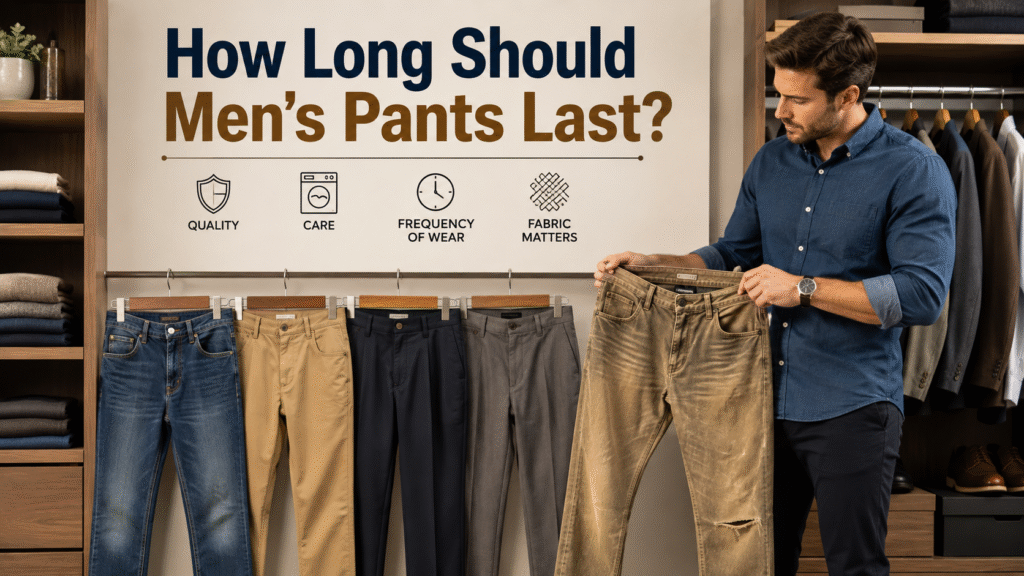
If you’re asking How Long Should Men’s Pants Last, avoiding a few common mistakes can make a significant difference. While how long do men’s pants last depends on fabric quality and construction, poor care habits often shorten the average lifespan of men’s pants much sooner than expected. Even the best durable pants for men can wear out prematurely if they aren’t cared for properly.
Below are the most common mistakes that reduce men’s pants durability and how you can avoid them.
Washing After Every Wear
One of the biggest mistakes people make is washing their pants after every use. Unless your pants are visibly dirty, stained, or have absorbed odors, frequent washing is usually unnecessary.
Many people ask, does washing shorten pants lifespan? The answer is often yes. Repeated washing gradually weakens fabric fibers, causes colors to fade, and reduces overall durability.
For example:
- Jeans usually require fewer washes than most people think.
- Dress pants often need only occasional cleaning.
- Spot cleaning minor stains can reduce unnecessary laundering.
Practicing washing men’s pants correctly is one of the easiest ways to extend the life of men’s pants.
Using Too Much Detergent
Adding extra detergent doesn’t make pants cleaner. Instead, excessive detergent can leave residue inside fabric fibers, making the material feel stiff and causing faster wear over time.
Using the best way to wash men’s pants means following the detergent amount recommended for your washing machine and load size. This simple habit helps protect fabric durability for pants while keeping them clean and comfortable.
Drying on High Heat
High dryer temperatures are one of the leading causes of premature fabric damage.
If you’ve wondered does drying damage pants, the answer is yes. Excessive heat can:
- Shrink cotton fabrics.
- Fade colors.
- Weaken elastic fibers.
- Reduce stretch pants durability.
- Cause fabric to lose its original shape.
When comparing air drying vs machine drying pants, air drying is generally the better option because it minimizes heat damage and helps preserve fabric strength.
Overloading the Washing Machine
Stuffing too many clothes into one wash cycle increases friction between garments.
Overloaded machines can cause:
- Excessive fabric abrasion.
- Twisted pant legs.
- Additional stress on seams.
- Poor cleaning performance.
Leaving enough space for clothes to move freely allows water and detergent to clean more effectively while reducing unnecessary wear.
Ignoring Care Labels
Every pair of pants comes with manufacturer care instructions for a reason.
Ignoring the label can lead to:
- Shrinkage
- Color fading
- Fabric damage
- Loss of shape
Learning how to care for men’s pants according to the recommended washing and drying instructions helps protect cotton pants lifespan, denim pants lifespan, wool dress pants lifespan, and polyester pants durability.
Following these instructions is an essential part of proper pants care.
Wearing the Same Pair Every Day
Even the most durable men’s pants need time to recover between wears.
Wearing the same pair every day increases friction on high-stress areas like:
- Knees
- Seat
- Inner thighs
- Pocket openings
Rotating multiple pairs throughout the week improves everyday pants durability and is one of the most effective tips to make pants last longer.
Choosing the Wrong Pants for the Job
Using lightweight casual pants for demanding work can quickly shorten their lifespan.
For example:
- Dress pants aren’t designed for construction work.
- Casual chinos aren’t ideal for hiking.
- Joggers shouldn’t replace heavy-duty work pants.
Choosing the right style for the activity helps explain why how long do work pants last, how long do hiking pants last, how long do cargo pants last, and how long do dress pants last vary so much.
Matching your pants to the intended use helps prevent unnecessary damage.
Delaying Small Repairs
Ignoring minor problems often leads to much larger ones.
Repair small issues like:
- Loose buttons
- Broken belt loops
- Small seam openings
- Frayed hems
Fixing minor damage as soon as it appears helps keep your pants in good condition and prevents small issues from turning into major problems.
Buying Low-Quality Pants
Price isn’t everything, but construction quality matters.
Cheap pants often use:
- Thin fabrics
- Weak stitching
- Lower-quality zippers
- Less durable buttons
By comparison, high-quality men’s pants, quality men’s trousers, and premium men’s pants are designed with stronger materials that resist daily wear much better.
Although the initial investment is higher, they often become the best pants for long-term use because they require fewer replacements.
Storing Pants Improperly
Improper storage can also reduce the lifespan of your clothing.
Avoid:
- Leaving pants crumpled for long periods.
- Storing them in damp areas.
- Overcrowding your closet.
- Hanging heavy pants from weak belt loops.
Instead, fold casual pants neatly and hang dress pants on quality hangers. Good storage habits are an important part of pants maintenance tips and preventing pants from wearing out.
Knowing When It’s Time to Replace Your Pants
Even with excellent care, every pair of pants eventually reaches the end of its useful life.
If you’re wondering how often should you replace men’s pants or when should men replace their pants, inspect them regularly for the signs your pants need replacing, including thinning fabric, repeated seam failures, broken hardware, or permanent stretching.
Understanding how many years should pants last depends not only on age but also on maintenance, fabric quality, and daily use. Whether you’re asking how long do chinos last, how long do men’s jeans last, or how long do sweatpants last, avoiding these common mistakes can significantly improve men’s pants lifespan.
By following a reliable pants durability guide, practicing proper pants care, and applying these simple maintenance habits, you can greatly extend the life of men’s pants and get the maximum value from every pair you own.
Does Price Affect How Long Men’s Pants Last?
Many shoppers assume that expensive pants automatically last longer, but that’s not always true. If you’re wondering How Long Should Men’s Pants Last, the answer depends on much more than the price tag. While how long do men’s pants last is influenced by cost to some extent, factors such as fabric quality, construction, daily use, and maintenance play a much bigger role. In many cases, the average lifespan of men’s pants is determined by how well they are made and how they are cared for rather than how much they cost.
Below is a closer look at how different price ranges compare.
Budget Pants
Budget-friendly pants can be a good option for occasional wear, but they often use thinner fabrics, simpler stitching, and lower-quality hardware. These cost-saving choices may reduce overall men’s pants durability, especially if the pants are worn frequently.
That doesn’t mean every affordable pair wears out quickly. Some budget brands offer excellent value, but they may not provide the same long-term performance as high-quality men’s pants. With proper pants care, even inexpensive pants can last several years.
Mid-Range Pants
Mid-range pants usually offer the best balance between quality and price. They often feature stronger stitching, better fabric blends, and improved construction without the premium price of luxury brands.
Many of the best durable pants for men fall into this category because they combine dependable materials with good craftsmanship. Whether you’re buying jeans, chinos, or work pants, mid-range options often deliver excellent value and solid everyday pants durability.
For many people, this price range offers the best combination of comfort, durability, and affordability.
Premium Pants
Premium men’s pants are generally made with superior materials and greater attention to detail. Manufacturers often use stronger thread, reinforced seams, durable zippers, and carefully selected fabrics that improve long-term performance.
For example:
- Premium denim often provides a longer denim pants lifespan.
- Well-made wool trousers can improve wool dress pants lifespan.
- Performance fabrics may offer better polyester pants durability.
- Higher-quality stretch materials can improve stretch pants durability when cared for correctly.
These features make premium clothing a strong choice for anyone looking for the longest lasting men’s pants or the best pants for long-term use.
Is Paying More Worth It?
Paying more is worthwhile when the higher price reflects better materials and construction rather than branding alone. Before purchasing, examine details such as:
- Fabric weight and quality
- Reinforced stitching
- Durable buttons and zippers
- Strong belt loops
- Overall craftsmanship
These features contribute to better fabric durability for pants and help explain why some pants last much longer than others.
However, even expensive pants won’t reach their full lifespan without proper care. Learning how to make men’s pants last longer is just as important as choosing a quality product.
Quality Matters More Than Price
Instead of focusing only on cost, evaluate the overall quality of the pants.
Look for:
- Strong seams
- Thick, durable fabric
- Reliable hardware
- Comfortable fit
- Positive customer reviews
Many quality men’s trousers outperform more expensive fashion brands simply because they’re built for long-term use rather than short-lived trends.
Care Habits Have a Bigger Impact
Even the most expensive pants can wear out quickly if they aren’t maintained properly.
To extend the life of men’s pants, remember to:
- Practice washing men’s pants correctly.
- Follow the best way to wash men’s pants by using cold water and gentle cycles.
- Understand that does washing shorten pants lifespan depends largely on how frequently and aggressively you wash them.
- Avoid excessive heat because does drying damage pants is a concern for many fabrics.
- Whenever possible, choose air drying vs machine drying pants to reduce heat-related wear.
These simple habits can significantly increase pants lifespan, regardless of the original purchase price.
Choose Pants That Match Your Lifestyle
Different activities place different demands on your clothing. Someone who works in an office will likely have different durability needs than someone working in construction or spending weekends hiking.
That’s why how long do dress pants last, how long do chinos last, how long do work pants last, how long do cargo pants last, how long do hiking pants last, and how long do joggers last all vary depending on how and where they’re worn.
Buying the right pants for your daily activities often provides better value than simply choosing the most expensive option.
Price Alone Doesn’t Determine Lifespan
If you’re asking how often should you replace men’s pants or when should men replace their pants, remember that replacement should be based on condition rather than cost. Watch for the signs your pants need replacing, such as thinning fabric, worn seams, broken hardware, or permanent stretching.
Whether you’re purchasing budget or premium styles, following a reliable pants durability guide, practicing how to care for men’s pants, and applying practical pants maintenance tips will help maximize men’s pants lifespan. By avoiding the common reasons pants wear out and focusing on preventing pants from wearing out, you can enjoy durable, comfortable pants for many years while getting the best value from every purchase.
How Different Fabrics Affect Pants Durability
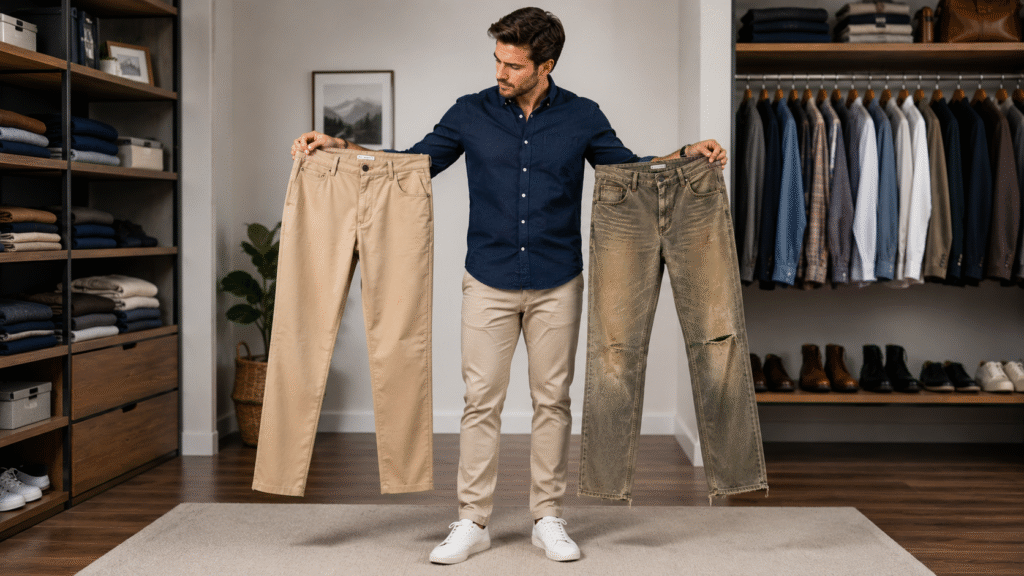
If you’re asking How Long Should Men’s Pants Last, one of the biggest factors to consider is the fabric. The material used to make a pair of pants has a direct impact on how long do men’s pants last, how well they resist everyday wear, and how much maintenance they require. While the average lifespan of men’s pants is generally between 2 and 5 years, choosing the right fabric can significantly increase that lifespan.
Some fabrics are naturally stronger and more resistant to wear, while others prioritize comfort, breathability, or flexibility. Understanding fabric durability for pants helps you choose the right pair for your lifestyle and get the best value from your purchase.
100% Cotton
Cotton is one of the most popular materials for men’s pants because it is soft, breathable, and comfortable for everyday wear. However, the cotton pants lifespan varies depending on the fabric weight and weave.
Lightweight cotton pants are ideal for warm weather but usually wear out faster than heavyweight cotton twill or canvas. Frequent washing and high-heat drying can also weaken cotton fibers over time.
To extend the life of men’s pants made from cotton:
- Wash with cold water.
- Use a gentle cycle.
- Avoid excessive heat when drying.
- Follow the manufacturer’s care instructions.
With proper pants care, cotton pants can provide several years of reliable use.
Denim
Denim is widely considered one of the most durable pants fabric choices for everyday wear. Its tightly woven cotton fibers provide outstanding strength, making jeans some of the longest lasting men’s pants available.
The excellent denim pants lifespan comes from its resistance to abrasion, stretching, and tearing. This is one reason why many people asking how long do men’s jeans last find that quality denim often lasts much longer than lightweight casual fabrics.
To maintain denim:
- Wash only when necessary.
- Turn jeans inside out before washing.
- Choose air drying vs machine drying pants whenever possible.
These habits help preserve both the fabric and color.
Wool
Wool is commonly used in dress pants because it combines durability with a refined appearance.
The wool dress pants lifespan is often longer than many lightweight fabrics because wool naturally resists wrinkles, retains its shape, and recovers well after repeated wear. This makes wool a popular choice for quality men’s trousers and business attire.
Although wool is durable, it benefits from gentle handling. Following how to care for men’s pants correctly, including proper storage and occasional professional cleaning when needed, helps preserve its quality.
Polyester
Polyester is a synthetic fabric known for excellent polyester pants durability. It resists shrinking, fading, wrinkles, and everyday wear better than many natural fibers.
Performance pants, travel pants, and many work pants use polyester blends because they dry quickly and maintain their shape after repeated washing.
If you’ve wondered how long do work pants last or how long do hiking pants last, polyester blends often contribute to a longer lifespan because they perform well in demanding conditions.
Practicing washing men’s pants correctly and avoiding excessive dryer heat will help maintain polyester’s strength for years.
Nylon
Nylon is another highly durable synthetic material frequently used in hiking, tactical, and outdoor pants.
Its key advantages include:
- Excellent abrasion resistance
- Lightweight construction
- Fast drying
- High tear resistance
These characteristics make nylon one of the best fabrics for rugged outdoor activities. Many hiking pants combine nylon with small amounts of spandex to improve comfort while maintaining impressive durability.
Spandex Blends
Spandex is usually added in small amounts to improve flexibility and comfort.
While stretch fabrics make pants easier to move in, stretch pants durability depends on how well the elastic fibers are protected during washing and drying.
High dryer temperatures can gradually weaken elasticity, causing the fabric to lose its original fit over time.
To preserve stretch fabrics:
- Wash with cold water.
- Use gentle cycles.
- Skip high-heat drying.
- Avoid overwashing.
These simple habits help increase pants lifespan and maintain comfort.
Linen
Linen is an excellent fabric for hot weather because it is lightweight, breathable, and comfortable. However, it isn’t usually considered the most durable pants fabric.
Linen fibers can wrinkle easily and gradually weaken if exposed to rough washing or excessive heat. Following the best way to wash men’s pants and allowing linen pants to air dry helps improve their longevity.
Although linen may not last as long as denim or canvas, proper care still provides several seasons of comfortable wear.
Fabric Weight Matters Too
The type of fabric isn’t the only factor that affects durability. Fabric weight also plays an important role.
For example:
- Heavyweight denim generally lasts longer than lightweight denim.
- Thick cotton canvas is usually more durable than lightweight cotton.
- Heavy wool fabrics often outlast thinner dress materials.
Heavier fabrics generally provide better everyday pants durability, especially for work and outdoor activities.
Choosing the Right Fabric for Your Needs
Selecting the right material depends on how you plan to use your pants.
- Denim is ideal for everyday casual wear.
- Wool works well for office and formal settings.
- Polyester and nylon are excellent choices for hiking, travel, and other outdoor adventures.
- Cotton offers excellent comfort for daily use.
- Linen is perfect for warm climates.
- Stretch blends provide flexibility for active lifestyles.
Choosing the right material helps answer questions such as how long do chinos last, how long do cargo pants last, how long do joggers last, and how long do sweatpants last, since each style relies on different fabric combinations.
Fabric Choice Plays a Major Role in Longevity
If you’re wondering how many years should pants last, remember that fabric selection is one of the biggest factors influencing men’s pants durability. Investing in durable men’s pants made from high-quality materials often provides better long-term value than simply choosing the lowest-priced option.
Combined with how to make men’s pants last longer, pants maintenance tips, and preventing pants from wearing out, selecting the right fabric can significantly improve the men’s pants lifespan. Regularly inspecting your clothing for the signs your pants need replacing and understanding when to replace pants will help you enjoy reliable performance from every pair while reducing unnecessary replacements.
How to Tell If Your Pants Are Still Worth Repairing
If you’re wondering How Long Should Men’s Pants Last, it’s important to know that not every damaged pair needs to be thrown away. In many cases, simple repairs can significantly extend the life of men’s pants and save you money. However, some damage is too severe to fix economically. Knowing the difference helps you decide whether to repair your pants or replace them.
Below are the key factors to consider before making that decision.
Repair Small Tears and Loose Seams
Minor damage is usually worth repairing, especially if the fabric is still strong.
Examples include:
- Small holes
- Loose stitching
- Minor seam separation
- Missing buttons
- Loose belt loops
Fixing these problems early is one of the easiest ways to increase pants lifespan and avoid larger repairs later. It’s also an important part of maintaining men’s pants and practicing proper pants care.
Check the Overall Condition of the Fabric
Before repairing your pants, inspect the fabric carefully.
If the material is still thick, flexible, and free from widespread wear, repairs are often worthwhile. However, if large areas have become thin or weak, stitching alone won’t restore the garment’s durability.
Understanding fabric durability for pants helps you determine whether the remaining material can continue handling everyday wear after the repair.
Consider the Type of Pants
Some pants are more valuable to repair than others.
For example:
- Quality men’s trousers used for work or business often justify professional repairs.
- Premium men’s pants made from wool or heavyweight denim are usually worth restoring.
- High-performance hiking or work pants with minor damage can often be repaired successfully.
By comparison, inexpensive pants with multiple worn areas may cost nearly as much to repair as replacing them.
Compare Repair Costs With Replacement Costs
Always compare the cost of repairs with the price of buying a new pair.
A repair is usually worthwhile if:
- The damage is limited.
- The pants are otherwise in excellent condition.
- The repair costs significantly less than replacement.
However, if several repairs are needed at the same time, investing in one of the best durable pants for men may provide better long-term value.
Look for Multiple Signs of Wear
A single problem is rarely a reason to replace pants, but several issues together often indicate they’ve reached the end of their useful life.
Watch for the signs your pants need replacing, such as:
- Thin fabric in multiple areas
- Large tears
- Permanent stretching
- Repeated seam failures
- Broken zippers and buttons
- Severe fading
These are some of the common reasons pants wear out and may signal that repairs are no longer practical.
Consider the Fabric Type
Some materials respond to repairs better than others.
For example:
- Heavy denim is often easy to patch, helping improve denim pants lifespan.
- Wool dress pants can usually be professionally repaired with excellent results, extending wool dress pants lifespan.
- Cotton fabrics with a good cotton pants lifespan often handle minor repairs well.
- Synthetic materials with strong polyester pants durability may continue performing well after repairs.
- Pants with high stretch content can be more difficult to repair because damaged elastic fibers are difficult to restore, reducing stretch pants durability.
The stronger the original fabric, the more successful repairs tend to be.
Think About Comfort and Fit
Even if repairs are possible, ask yourself whether the pants still fit comfortably.
If the waistband has permanently stretched, the knees are badly misshapen, or the fabric has lost its structure, repairing small holes may not restore the original appearance or comfort.
This is often an important factor when deciding when to replace pants.
Proper Care Makes Repairs Last Longer
Once repairs have been completed, proper maintenance helps prevent additional damage.
To how to make men’s pants last longer, remember to:
- Practice washing men’s pants correctly.
- Follow the best way to wash men’s pants using gentle cycles and cold water.
- Understand that does washing shorten pants lifespan depends on washing frequency and care methods.
- Avoid excessive heat because does drying damage pants can weaken repaired areas.
- Choose air drying vs machine drying pants whenever possible.
These simple habits protect repaired areas and improve overall men’s pants durability.
Repair or Replace? Make the Smart Choice
Whether you’re asking how long do men’s pants last, how often should you replace men’s pants, or when should men replace their pants, the answer depends on the overall condition of the garment rather than its age alone.
If the fabric remains strong, the damage is minor, and the repair cost is reasonable, fixing the pants is usually the smarter choice. On the other hand, if multiple areas are worn out or the material has lost its strength, replacing them with high-quality men’s pants designed for best pants for long-term use is often the better investment.
By following a reliable pants durability guide, practicing how to care for men’s pants, applying practical pants maintenance tips, and focusing on preventing pants from wearing out, you can maximize the average lifespan of men’s pants and enjoy dependable performance from every pair for years.
FAQs
How can I tell if my men’s pants have reached the end of their lifespan?
Look for signs such as thinning fabric, ripped seams, broken zippers, stretched waistbands, fading, or holes that are difficult to repair. If your pants no longer fit well or require constant repairs, it’s usually time to replace them.
What type of men’s pants usually lasts the longest?
Heavyweight denim jeans, high-quality work pants, wool dress pants, and well-made cargo pants are among the longest-lasting options. Their durable fabrics and reinforced construction help them withstand regular wear better than lightweight materials.
Does washing pants too often reduce their lifespan?
Yes. Frequent washing can gradually weaken fabric fibers, fade colors, and wear out stitching. Washing your pants only when necessary, using cold water, and choosing a gentle cycle can help preserve their quality and extend their lifespan.
Is it better to repair damaged pants or buy a new pair?
The decision depends on how severe the damage is. Small issues like loose seams, missing buttons, or minor tears are usually worth repairing. However, if the fabric is badly worn, stretched, or damaged in several areas, replacing the pants is often the more practical option.
What is the best way to make men’s pants last longer?
To maximize the lifespan of your pants, rotate between multiple pairs, wash them according to the care label, avoid high dryer heat, air dry when possible, repair small damages promptly, and store them properly. These simple habits help keep your pants in excellent condition for years.
Conclusion
Understanding How Long Should Men’s Pants Last helps you make smarter buying decisions and get the most value from every pair you own. While the average lifespan of men’s pants varies based on fabric, construction, frequency of wear, and care habits, most quality pants can provide years of reliable use when properly maintained.
Choosing durable materials, following the care label, washing your pants correctly, avoiding excessive dryer heat, and repairing minor damage early can significantly extend their lifespan. Just as important, recognizing the signs that your pants are no longer worth repairing helps you know when it’s time to invest in a replacement.
Ultimately, there isn’t a single answer to how long men’s pants should last. By selecting well-made pants, wearing them for the right activities, and practicing consistent maintenance, you can enjoy better comfort, improved durability, and long-term value from your wardrobe. With the right care, a quality pair of men’s pants can remain stylish, functional, and dependable for many years.