
Introduction
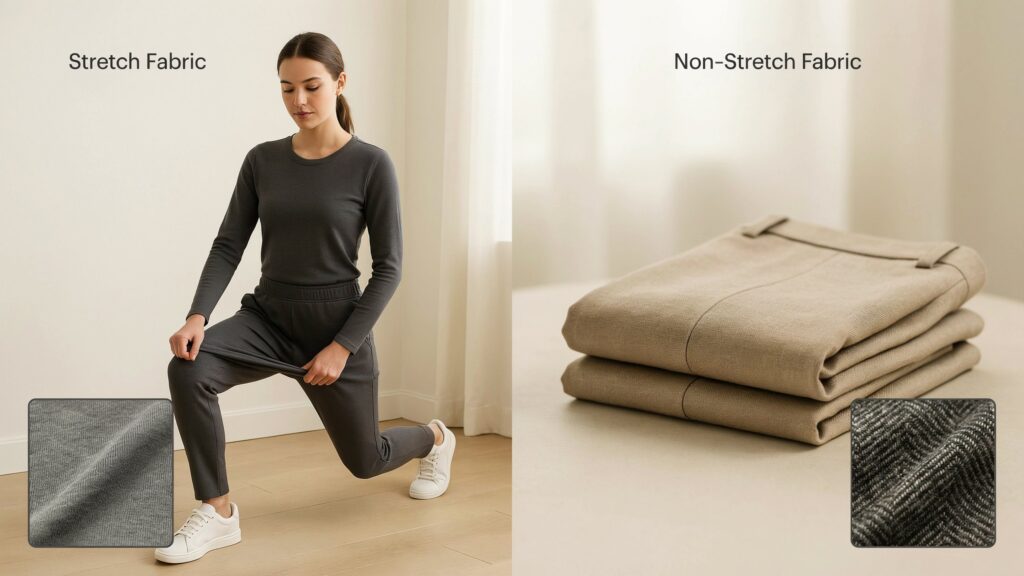
Stretch vs Non-Stretch Fabrics Which Is Better It’s a common question for anyone shopping for clothing, whether you’re buying jeans, dress pants, activewear, or everyday essentials. While stretch fabrics are known for their flexibility and comfort, non-stretch fabrics are valued for their durability, structure, and classic appearance. Understanding the differences between these two fabric types can help you choose clothing that fits your lifestyle and meets your comfort and style needs. In this guide, we’ll compare their features, advantages, drawbacks, and best uses so you can confidently decide which fabric is right for you.
Table of Contents
What Are Stretch Fabrics?
When comparing Stretch vs Non-Stretch Fabrics: Which Is Better?, it’s important to understand what stretch fabrics are and why they have become so popular in modern clothing. Stretch fabrics are textiles designed to expand and return to their original shape without losing their fit. This flexibility allows garments to move with your body, making them more comfortable than traditional rigid fabrics.
Most stretch fabrics are made by blending natural or synthetic fibers with elastic materials such as elastane (also known as spandex or Lycra). Even a small amount of elastic fiber—typically between 2% and 5%—can significantly improve comfort, mobility, and overall fit. Because of these qualities, stretch fabrics are widely used in everything from casual pants and jeans to activewear and office clothing.
How Stretch Fabrics Are Made
Stretch fabrics are created by combining standard textile fibers with elastic fibers during the manufacturing process. The most common elastic fiber is elastane, which is known for its exceptional ability to stretch several times its original length and then recover without becoming loose or misshapen.
Manufacturers often blend elastane with fabrics such as cotton, polyester, nylon, or rayon to achieve the desired balance of softness, durability, and flexibility. The amount of elastane used depends on the garment’s intended purpose. For example, everyday chinos may contain only 2% elastane for subtle flexibility, while sportswear often includes a higher percentage to provide greater freedom of movement.
Some fabrics also achieve stretch through specialized weaving or knitting techniques. Knit fabrics naturally offer more flexibility than woven fabrics because of their looped construction, even when they contain little or no elastane.
Common Types of Stretch Fabrics
Stretch fabrics come in many varieties, each offering unique benefits for different types of clothing. Some of the most common include:
- Stretch Cotton: A blend of cotton and elastane that provides softness, breathability, and everyday comfort.
- Stretch Denim: Traditional denim mixed with elastane to create jeans that are more flexible and comfortable while maintaining their classic appearance.
- Stretch Twill: Frequently used for chinos and casual trousers, offering durability with added ease of movement.
- Stretch Polyester Blends: Popular in sportswear and travel clothing because they are lightweight, wrinkle-resistant, and quick-drying.
- Stretch Nylon Fabrics: Often used in athletic apparel, outdoor clothing, and performance wear due to their strength and excellent elasticity.
- Jersey Knit Fabric: A naturally stretchy knit commonly used for T-shirts, dresses, and comfortable casual clothing.
- Performance Stretch Fabrics: Technical blends designed for active lifestyles, combining flexibility with moisture-wicking and fast-drying properties.
Each type offers a different combination of comfort, durability, and performance, making it easier to choose the right fabric for your specific needs.
Typical Uses of Stretch Fabrics
Stretch fabrics are valued for their ability to provide comfort without restricting movement, making them suitable for a wide range of clothing.
Some of the most common uses include:
- Everyday pants and chinos
- Stretch jeans
- Leggings and yoga pants
- Athletic and gym wear
- Office trousers with added flexibility
- Travel clothing
- Jackets with stretch panels
- Work uniforms that require mobility
- Casual dresses and skirts
- Children’s clothing for active movement
These fabrics are especially popular among people who spend long hours sitting, walking, or traveling because they offer greater comfort throughout the day.
When evaluating Stretch vs Non-Stretch Fabrics: Which Is Better?, stretch fabrics are an excellent choice for anyone who values flexibility, ease of movement, and a comfortable fit. They adapt to your body’s movements while maintaining their shape, making them ideal for everyday wear, active lifestyles, and modern fashion. However, whether they are the best option ultimately depends on how you plan to use the garment and the level of structure or flexibility you prefer.
What Are Non-Stretch Fabrics?
To fully understand Stretch vs Non-Stretch Fabrics: Which Is Better?, it’s essential to know what non-stretch fabrics are and how they differ from stretch materials. Non-stretch fabrics are textiles that have little to no elasticity. Unlike stretch fabrics, they do not expand or flex significantly when pulled, allowing them to maintain a firm structure and consistent shape.
These fabrics are typically made from a single fiber or a blend of fibers without adding elastic materials such as elastane or spandex. As a result, garments made from non-stretch fabrics offer a more structured fit and are often chosen for formal clothing, workwear, and garments that require a clean, tailored appearance.
Although they don’t provide the same level of flexibility as stretch fabrics, non-stretch fabrics are known for their durability, stability, and timeless look. They are also less likely to lose their original shape over time when properly cared for.
How Non-Stretch Fabrics Are Made
Non-stretch fabrics are produced by weaving or knitting fibers without incorporating elastic yarns. Most woven non-stretch fabrics use tightly interlaced warp and weft threads, creating a stable fabric that resists stretching during everyday wear.
Manufacturers commonly use natural fibers like cotton, linen, and wool or synthetic fibers such as polyester and acrylic to produce non-stretch fabrics. Since these materials are not blended with elastane, the finished fabric maintains its original dimensions and provides a structured fit.
The weaving pattern also plays an important role in the fabric’s characteristics. Plain weave, twill weave, and satin weave are among the most common techniques used to create durable non-stretch fabrics for different types of clothing and home textiles.
Common Types of Non-Stretch Fabrics
Non-stretch fabrics are available in many varieties, each offering unique benefits depending on the garment’s purpose. The following are among the most widely used non-stretch fabrics:
- 100% Cotton: Soft, breathable, and widely used for shirts, trousers, and casual wear.
- Linen: Lightweight and highly breathable, making it an excellent choice for warm-weather clothing.
- Wool: Known for its durability, insulation, and elegant appearance in suits, coats, and dress pants.
- Rigid Denim: Traditional denim without added elastane, valued for its strength and classic look.
- Canvas: A heavy-duty fabric commonly used for workwear, utility clothing, and bags.
- Twill Fabric: Durable and structured, often used for uniforms, chinos, and jackets.
- Polyester Woven Fabric: Resistant to wrinkles and shrinking, making it suitable for uniforms and formal garments.
Each of these fabrics offers different levels of comfort, breathability, and durability while maintaining a stable shape without added stretch.
Typical Uses of Non-Stretch Fabrics
Because they hold their shape well, non-stretch fabrics are commonly used in clothing and products that require structure, durability, and a polished appearance.
Some of the most common uses include:
- Dress pants and formal trousers
- Business suits and blazers
- Button-down shirts
- Uniforms and workwear
- Jackets and coats
- Structured skirts and dresses
- Traditional jeans made from rigid denim
- Home textiles such as curtains and tablecloths
- Tote bags and canvas accessories
- Upholstery and decorative fabrics
These fabrics are ideal for garments where maintaining shape is more important than providing extra flexibility.
When comparing Stretch vs Non-Stretch Fabrics: Which Is Better?, non-stretch fabrics are an excellent option for people who prioritize durability, structure, and a classic appearance. While they may not offer the same freedom of movement as stretch fabrics, they often provide better shape retention, a more tailored fit, and long-lasting performance. Choosing between the two ultimately depends on your lifestyle, comfort preferences, and the intended use of the garment.
Stretch vs Non-Stretch Fabrics: Key Differences
When deciding Stretch vs Non-Stretch Fabrics: Which Is Better?, understanding their key differences is essential. Although both fabric types are used to create high-quality clothing, they differ in comfort, flexibility, durability, appearance, and overall performance. The right choice depends on how and where you plan to wear the garment.
The table below highlights the main differences between stretch and non-stretch fabrics.
| Feature | Stretch Fabrics | Non-Stretch Fabrics |
|---|---|---|
| Flexibility | Designed to stretch and move with your body. | Little to no stretch, offering a firm and structured feel. |
| Comfort | Highly comfortable for extended wear due to added elasticity. | Comfortable when properly fitted but less forgiving during movement. |
| Fit | Adapts to body shape for a closer, more flexible fit. | Maintains its original shape and provides a tailored appearance. |
| Mobility | Excellent freedom of movement for walking, bending, and sitting. | More restrictive, especially during active movement. |
| Shape Retention | Returns to its original shape after stretching but may lose elasticity after years of heavy use. | Retains its structure well and is less likely to become loose over time. |
| Breathability | Breathability depends on the fiber blend and may be slightly reduced if synthetic fibers are used. | Natural non-stretch fabrics like cotton and linen are generally more breathable. |
| Durability | Durable for everyday use, though elastic fibers can wear out with repeated stretching. | Often lasts longer because it contains no elastic fibers that can weaken. |
| Wrinkle Resistance | Many stretch fabrics resist wrinkles and recover quickly after wear. | Wrinkle resistance varies by fabric type, with natural fibers tending to wrinkle more easily. |
| Maintenance | Usually easy to care for but should be washed according to care labels to protect elasticity. | Generally easy to care for, although certain fabrics may need occasional ironing to keep a neat, polished look. |
| Best Uses | Casual wear, activewear, travel clothing, jeans, leggings, and comfortable office pants. | Dress pants, suits, uniforms, structured jackets, formal wear, and traditional denim. |
Flexibility and Freedom of Movement
The biggest difference between these two fabric types is flexibility. Stretch fabrics contain elastic fibers or are constructed to allow movement, making them ideal for people with active lifestyles. They bend and recover with your body, reducing restriction during daily activities.
Non-stretch fabrics remain firm and stable. While they provide a polished look, they do not offer the same range of motion, making them better suited for structured garments rather than high-mobility clothing.
Comfort and Everyday Wear
Stretch fabrics are often preferred for all-day comfort because they adapt to your body’s natural movements. Whether you’re sitting at a desk, traveling, or walking throughout the day, they provide a comfortable wearing experience without feeling restrictive.
Non-stretch fabrics can also be comfortable, but achieving the right fit is more important since the fabric will not stretch to accommodate movement. A properly tailored garment usually delivers the best comfort.
Appearance and Fit
If you prefer a modern, body-contouring fit, stretch fabrics are an excellent choice. They create a sleek appearance while maintaining comfort, making them popular in jeans, chinos, and casual trousers.
Non-stretch fabrics offer a cleaner, more structured silhouette. This is why they are commonly used in dress pants, blazers, and formal clothing where maintaining shape is a priority.
Durability and Longevity
Non-stretch fabrics generally have an advantage when it comes to long-term durability. Without elastic fibers, they are less susceptible to losing their original structure after years of regular wear.
Stretch fabrics are still highly durable, but the elastic component may gradually weaken if garments are frequently overstretched, washed incorrectly, or exposed to excessive heat.
Which Fabric Performs Better?
When comparing Stretch vs Non-Stretch Fabrics: Which Is Better?, there is no single winner for every situation. Stretch fabrics excel in comfort, flexibility, and ease of movement, making them ideal for everyday wear and active lifestyles. Non-stretch fabrics stand out for their structure, durability, and classic appearance, making them a better option for formal clothing and garments that require a crisp, tailored look.
The best choice depends on your personal preferences, lifestyle, and the purpose of the garment. By understanding these key differences, you can confidently select the fabric that best meets your needs.
Pros and Cons of Stretch Fabrics
When evaluating Stretch vs Non-Stretch Fabrics: Which Is Better?, it’s important to look beyond flexibility and consider both the strengths and limitations of stretch fabrics. These materials are widely used in modern clothing because they offer excellent comfort and freedom of movement. However, like any fabric, they also have a few drawbacks that may influence your buying decision.
Understanding the pros and cons of stretch fabrics will help you choose clothing that best suits your lifestyle, preferences, and intended use.
Pros of Stretch Fabrics
Superior Comfort
One of the biggest advantages of stretch fabrics is their exceptional comfort. Because the material moves with your body instead of resisting movement, it feels more natural during everyday activities. Whether you’re walking, sitting, or bending, stretch fabrics help reduce tightness and discomfort.
Greater Freedom of Movement
Stretch fabrics provide excellent flexibility, making them ideal for people with active lifestyles. They allow a wider range of motion than traditional non-stretch materials, which is why they are commonly used in sportswear, casual pants, and travel clothing.
Better Fit for Different Body Shapes
Garments made from stretch fabrics adapt more easily to different body types. Instead of feeling restrictive, they gently conform to your shape, creating a comfortable and flattering fit without sacrificing mobility.
Improved Wrinkle Resistance
Many stretch fabric blends resist wrinkles better than rigid fabrics. As a result, clothing often looks neat throughout the day with less need for frequent ironing, making these fabrics a practical choice for travel and everyday wear.
Ideal for Everyday Clothing
Stretch fabrics are commonly used in jeans, chinos, leggings, office trousers, and activewear because they combine comfort with a modern appearance. Their adaptable nature makes them an excellent choice for both everyday outfits and smart-casual attire.
Enhanced Wearing Experience
Small amounts of elastane can significantly improve how a garment feels. Stretch fabrics reduce pressure around the waist, hips, and knees, allowing clothing to remain comfortable even during long hours of wear.
Cons of Stretch Fabrics
Elasticity Can Diminish Over Time
Although stretch fabrics are designed to recover after stretching, the elastic fibers can gradually weaken after repeated use or improper washing. High heat during washing or drying may speed up this process.
May Be Less Breathable
Some stretch fabrics contain a higher percentage of synthetic fibers, which can reduce airflow compared to natural non-stretch fabrics. This may make certain garments feel warmer in hot or humid weather.
Not Always Ideal for Formal Wear
While stretch fabrics create a comfortable fit, they may not provide the crisp structure required for highly formal clothing. Traditional suits and tailored garments often rely on non-stretch fabrics to achieve a sharper silhouette.
Requires Proper Care
To preserve elasticity, stretch garments should be washed according to the care label. Excessive heat, harsh detergents, and aggressive drying methods can shorten the lifespan of the elastic fibers.
Can Be More Expensive
High-quality stretch fabrics often cost more than standard woven fabrics because they include specialized elastic fibers and advanced manufacturing techniques. However, many people consider the added comfort worth the extra investment.
Are Stretch Fabrics the Right Choice?
In the debate over Stretch vs Non-Stretch Fabrics: Which Is Better?, stretch fabrics stand out for their comfort, flexibility, and ability to adapt to everyday movement. They are an excellent option for casual wear, office clothing, travel, and active lifestyles. However, they do require proper care to maintain their elasticity and may not always deliver the structured appearance needed for formal occasions.
If comfort and ease of movement are your top priorities, stretch fabrics are a smart investment. By understanding both their advantages and disadvantages, you can decide whether they are the right choice for your wardrobe.
Pros and Cons of Non-Stretch Fabrics
When comparing Stretch vs Non-Stretch Fabrics: Which Is Better?, it’s equally important to understand the advantages and disadvantages of non-stretch fabrics. These materials have been used for centuries because of their durability, structured appearance, and timeless appeal. While they do not offer the flexibility of stretch fabrics, they remain a preferred choice for formal wear, workwear, and garments that require a crisp, tailored look.
Knowing the strengths and limitations of non-stretch fabrics will help you decide whether they are the right option for your wardrobe and daily needs.
Pros of Non-Stretch Fabrics
Excellent Durability
One of the biggest benefits of non-stretch fabrics is their long-lasting performance. Since they do not contain elastic fibers that can weaken over time, they often retain their original quality even after years of regular use. With proper care, garments made from non-stretch fabrics can provide excellent value and longevity.
Maintains a Structured Shape
Non-stretch fabrics are well known for holding their shape. Instead of conforming to the body, they create clean lines and a polished silhouette. This makes them an ideal choice for suits, dress pants, blazers, uniforms, and other garments where structure is important.
More Breathable Options
Many non-stretch fabrics are made from natural fibers such as cotton, linen, and wool. These materials allow better air circulation than many synthetic stretch blends, helping you stay cooler and more comfortable, especially in warm weather.
Classic and Professional Appearance
If you want clothing with a timeless and sophisticated look, non-stretch fabrics are an excellent option. Their crisp finish and tailored appearance make them suitable for professional settings, business meetings, and formal occasions.
Better Shape Retention
Unlike stretch fabrics that may gradually lose elasticity, non-stretch fabrics maintain their original dimensions over time. This helps garments preserve their intended fit and appearance, even after repeated wear.
Suitable for Heavy-Duty Use
Because of their strength and stability, non-stretch fabrics are commonly used in workwear, uniforms, canvas products, and outdoor clothing. They are designed to withstand daily wear while maintaining their structure.
Cons of Non-Stretch Fabrics
Limited Flexibility
The most noticeable drawback is the lack of stretch. Since these fabrics do not expand with body movement, they can feel restrictive during activities such as bending, squatting, or reaching.
Fit Must Be More Precise
Because there is little room for adjustment, choosing the correct size is especially important. A garment that is too tight may feel uncomfortable, while one that is too loose may not provide the desired appearance.
Can Wrinkle More Easily
Natural non-stretch fabrics, particularly cotton and linen, are more likely to develop wrinkles during regular wear. Some garments may require ironing or steaming to maintain a smooth, polished finish.
May Feel Less Comfortable During Long Wear
For people who spend long hours sitting, driving, or traveling, non-stretch fabrics may feel less forgiving than stretch fabrics. The lack of flexibility can reduce overall comfort during extended periods of wear.
Less Suitable for Active Lifestyles
If your daily routine involves frequent movement or physical activity, non-stretch fabrics may not provide the comfort and mobility you need. Stretch fabrics generally perform better in situations that require unrestricted movement.
Are Non-Stretch Fabrics the Right Choice?
In the discussion of Stretch vs Non-Stretch Fabrics: Which Is Better?, non-stretch fabrics remain an excellent choice for anyone who values durability, structure, and a refined appearance. They are particularly well suited for formal clothing, business attire, uniforms, and garments that benefit from a crisp, tailored fit.
However, if comfort and flexibility are your top priorities, stretch fabrics may be the better option. Ultimately, the best fabric depends on your lifestyle, the purpose of the garment, and your personal preferences. By understanding the pros and cons of non-stretch fabrics, you can make a more confident and informed purchasing decision.
Which Fabric Is Better for Different Uses?
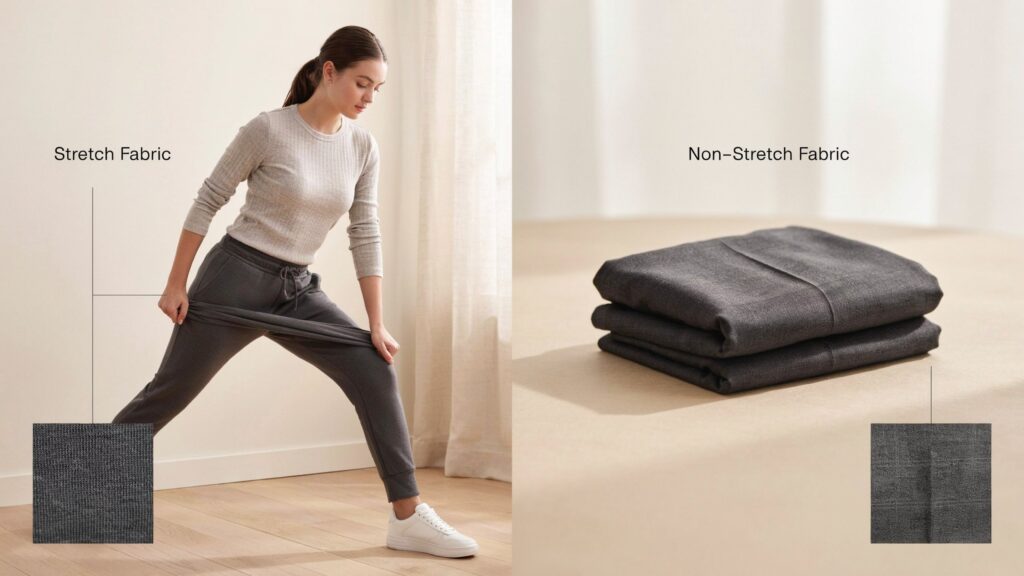
When deciding Stretch vs Non-Stretch Fabrics: Which Is Better?, there is no one-size-fits-all answer. The ideal fabric depends on how you plan to use the garment. While stretch fabrics excel in comfort and flexibility, non-stretch fabrics offer superior structure and durability for specific situations.
Below is a closer look at which fabric performs best for different uses.
Everyday Wear
For everyday clothing, stretch fabrics are usually the better choice. They move with your body, making daily activities more comfortable whether you’re walking, commuting, shopping, or spending long hours sitting at work. Stretch fabrics also provide a more forgiving fit, which many people appreciate for all-day wear.
Non-stretch fabrics can still be a good option for everyday clothing if you prefer a structured fit or classic style. However, they may feel less comfortable during frequent movement.
Best Choice: Stretch Fabrics
Office Clothing
Both fabric types work well for office attire, but the best option depends on your work environment.
If your workplace has a formal dress code, non-stretch fabrics create a sharp, professional appearance that suits dress pants, blazers, and tailored outfits. On the other hand, stretch fabrics have become increasingly popular in modern office wear because they provide greater comfort during long hours at a desk while maintaining a polished look.
Best Choice: Stretch fabrics for business-casual offices; non-stretch fabrics for formal business attire.
Travel
Travel often involves extended periods of sitting, walking through airports, and carrying luggage. Stretch fabrics offer greater comfort during these activities because they reduce restriction and recover their shape after movement. Many travel garments also include wrinkle-resistant stretch blends, making them practical for packing.
Although non-stretch fabrics can be durable, they are generally less comfortable for long journeys and may wrinkle more easily.
Best Choice: Stretch Fabrics
Outdoor Activities
For hiking, sightseeing, gardening, or other outdoor activities, flexibility is an important factor. Stretch fabrics allow unrestricted movement and often feature lightweight, quick-drying materials that improve overall comfort.
However, for rugged environments where abrasion resistance is essential, heavy-duty non-stretch fabrics such as canvas can provide extra durability.
Best Choice: Stretch fabrics for mobility; non-stretch fabrics for heavy-duty outdoor work.
Sports and Exercise
Stretch fabrics are the clear winner for athletic activities. Whether you’re running, cycling, practicing yoga, or working out at the gym, they provide the flexibility needed for unrestricted movement. Many performance stretch fabrics also include moisture-wicking and quick-drying properties that help keep you comfortable during exercise.
Non-stretch fabrics are generally not suitable for sports because they limit movement and may become uncomfortable during intense physical activity.
Best Choice: Stretch Fabrics
Formal Wear
Formal clothing benefits from clean lines and a structured appearance. Non-stretch fabrics naturally hold their shape, making them ideal for suits, tuxedos, dress pants, blazers, and elegant dresses. Their crisp finish contributes to a refined and professional look.
Some modern formal garments include a small amount of stretch for added comfort, but traditional non-stretch fabrics remain the preferred choice for classic tailoring.
Best Choice: Non-Stretch Fabrics
Casual Fashion
Casual fashion allows greater flexibility in fabric choice. Stretch fabrics are perfect for jeans, leggings, joggers, chinos, and other everyday clothing where comfort is a priority. They offer a relaxed fit that adapts to daily movement.
Non-stretch fabrics also have a place in casual wardrobes, especially for classic denim, cotton trousers, linen shirts, and vintage-inspired styles that emphasize structure and durability.
Best Choice: Stretch fabrics for comfort; non-stretch fabrics for a timeless, structured style.
Final Thoughts
When considering Stretch vs Non-Stretch Fabrics: Which Is Better?, the answer depends on the purpose of the garment. Stretch fabrics are the better option for everyday wear, travel, sports, and activities that require flexibility and comfort. In contrast, non-stretch fabrics are better suited for formal clothing, tailored garments, and situations where durability and structure matter most.
Choosing the right fabric for each occasion ensures better comfort, improved performance, and a wardrobe that meets your lifestyle and fashion needs.
How to Choose Between Stretch and Non-Stretch Fabrics
Choosing the right fabric is just as important as selecting the right style or size. When comparing Stretch vs Non-Stretch Fabrics: Which Is Better?, the best option depends on your lifestyle, comfort preferences, climate, and how you plan to wear the garment. Rather than searching for a single “best” fabric, choose the one that aligns with your lifestyle, preferences, and intended use.
Before selecting a fabric, keep the following important factors in mind.
Consider Your Lifestyle
Start by thinking about your daily routine. If you’re frequently on the move, travel often, or spend long hours walking, driving, or sitting, stretch fabrics can provide the flexibility and comfort you need. Their ability to move with your body makes them ideal for active lifestyles.
If your wardrobe is primarily for office work, business meetings, or formal events, non-stretch fabrics may be a better choice because they offer a more structured and professional appearance.
Think About Comfort
Comfort is one of the biggest factors when choosing fabric. Stretch fabrics naturally adapt to your movements, reducing tightness around the waist, hips, and knees. This makes them a popular option for everyday clothing, jeans, and casual trousers.
Non-stretch fabrics can also be comfortable, but only when they fit correctly. Since they have little or no flexibility, selecting the proper size and cut is especially important.
Match the Fabric to the Occasion
Different occasions call for different fabrics. Stretch fabrics work best for casual outfits, travel clothing, athletic wear, and business-casual attire where comfort is a priority.
Non-stretch fabrics are more suitable for formal wear, tailored suits, uniforms, and garments that need to maintain a crisp, polished appearance throughout the day.
Consider the Climate
Weather conditions should also influence your decision. In hot and humid climates, breathable non-stretch fabrics made from natural fibers such as cotton or linen help improve airflow and keep you cool.
Stretch fabrics can also perform well in warm weather, particularly when they contain moisture-wicking technology. However, blends with a high percentage of synthetic fibers may trap more heat than natural fabrics.
Evaluate Durability
If you want clothing that lasts for many years, pay attention to fabric construction and quality. Non-stretch fabrics are generally more durable because they do not rely on elastic fibers that can weaken over time.
Stretch fabrics are also durable, especially when made with high-quality materials, but they require proper washing and drying to preserve their elasticity.
Check the Fabric Composition
Always read the garment label before buying. The fabric composition tells you what materials are used and can help you predict comfort, durability, and flexibility.
For example:
- 100% Cotton: Structured, breathable, and non-stretch.
- 98% Cotton, 2% Elastane: Offers light stretch with the comfort of cotton.
- 95% Polyester, 5% Spandex: Flexible, wrinkle-resistant, and commonly used in activewear.
- 100% Linen: Lightweight, breathable, and non-stretch.
Understanding the fiber blend helps you choose a fabric that matches your expectations.
Consider Maintenance Requirements
Different fabrics require different levels of care. Stretch fabrics should be washed according to the manufacturer’s instructions to protect the elastic fibers. Avoid excessive heat, as it can reduce elasticity over time.
Non-stretch fabrics are often easier to care for in terms of preserving their structure, although natural fibers may require ironing to maintain a neat appearance.
Balance Quality and Budget
Well-made fabrics typically offer greater comfort, longer-lasting durability, and more reliable performance over time. While premium stretch fabrics may cost slightly more because of their specialized construction, they often deliver added comfort that many people find worthwhile.
Similarly, investing in well-made non-stretch fabrics can result in garments that maintain their appearance and last for years.
Make the Right Choice for Your Needs
There is no single answer to Stretch vs Non-Stretch Fabrics: Which Is Better? The right choice depends on how you plan to use the clothing. If comfort, flexibility, and ease of movement are your priorities, stretch fabrics are an excellent option. If you prefer a structured fit, timeless style, and long-term durability, non-stretch fabrics may be the better investment.
By considering your lifestyle, climate, comfort preferences, budget, and the purpose of the garment, you can confidently choose the fabric that best fits your wardrobe and everyday needs.
Common Myths About Stretch and Non-Stretch Fabrics
When discussing Stretch vs Non-Stretch Fabrics: Which Is Better?, it’s easy to come across misconceptions that can influence buying decisions. Many people believe one fabric type is always superior, but the truth is that both have unique strengths and are designed for different purposes.
Let’s clear up some of the most common myths about stretch and non-stretch fabrics.
Myth 1: Stretch Fabrics Are Less Durable
A common belief is that stretch fabrics wear out much faster than non-stretch fabrics. While elastic fibers can lose some elasticity after years of heavy use or improper care, high-quality stretch fabrics are designed to withstand regular wear.
Following the recommended washing and drying instructions can significantly extend the life of garments made from stretch fabrics. In many cases, premium stretch fabrics remain comfortable and reliable for years.
Reality: Well-made stretch fabrics are durable enough for everyday use when cared for properly.
Myth 2: Non-Stretch Fabrics Are Uncomfortable
Many people assume that non-stretch fabrics are always stiff and uncomfortable. In reality, comfort depends on several factors, including fabric quality, garment construction, and proper sizing.
Natural materials such as cotton, linen, and wool can feel soft, breathable, and comfortable, especially when tailored correctly. A well-fitted non-stretch garment can be just as pleasant to wear as a stretch garment in many situations.
Reality: A proper fit and quality fabric have a greater impact on comfort than stretch alone.
Myth 3: Stretch Fabrics Are Only for Sportswear
Because stretch fabrics are commonly used in athletic clothing, some people think they are suitable only for workouts and exercise.
Today, stretch fabrics are found in a wide range of clothing, including jeans, chinos, dress pants, shirts, jackets, skirts, and even business-casual attire. Their added flexibility makes them popular across many clothing categories.
Reality: Stretch fabrics are suitable for everyday, professional, travel, and casual clothing—not just sportswear.
Myth 4: Non-Stretch Fabrics Always Shrink
Another common misconception is that all non-stretch fabrics shrink after washing. While certain natural fibers may shrink if exposed to high heat or improper laundering, many garments are pre-shrunk during manufacturing to reduce this risk.
Following the care label and washing garments correctly helps maintain their original size and shape.
Reality: Proper care greatly reduces the chances of noticeable shrinkage.
Myth 5: Stretch Fabrics Always Lose Their Shape
Some shoppers avoid stretch garments because they believe they quickly become loose or baggy.
In reality, quality stretch fabrics are engineered to recover after stretching. Although elastic fibers can weaken over many years, garments made with premium materials and proper construction usually maintain their fit through repeated wear.
Reality: High-quality stretch fabrics are designed to retain their shape when properly maintained.
Myth 6: Non-Stretch Fabrics Are Always Better for Formal Clothing
While non-stretch fabrics have traditionally been the standard for formal wear, modern tailoring has evolved. Many contemporary suits, trousers, and blazers include a small amount of elastane to improve comfort without sacrificing a polished appearance.
This allows wearers to enjoy greater flexibility while maintaining a professional look.
Reality: Both stretch and non-stretch fabrics can work well for formal clothing, depending on the garment’s design.
Myth 7: Stretch Fabrics Are Always More Expensive
Some buyers believe that any garment made with stretch fabric costs significantly more. Although premium stretch fabrics can be more expensive due to specialized fibers and manufacturing, many affordable options are widely available.
The price of clothing depends on several factors, including fabric quality, brand, construction, and design—not simply whether the fabric stretches.
Reality: Cost varies by quality and brand rather than stretch alone.
The Truth About Stretch and Non-Stretch Fabrics
Understanding the facts makes it easier to answer the question, Stretch vs Non-Stretch Fabrics: Which Is Better? Neither fabric type is inherently better than the other. Stretch fabrics are valued for their comfort and flexibility, whereas non-stretch fabrics are appreciated for their durability, structured fit, and classic style.
By looking beyond common myths and focusing on your specific needs, you can choose the fabric that best matches your lifestyle, wardrobe, and personal preferences.
Expert Tips for Buying Quality Fabrics
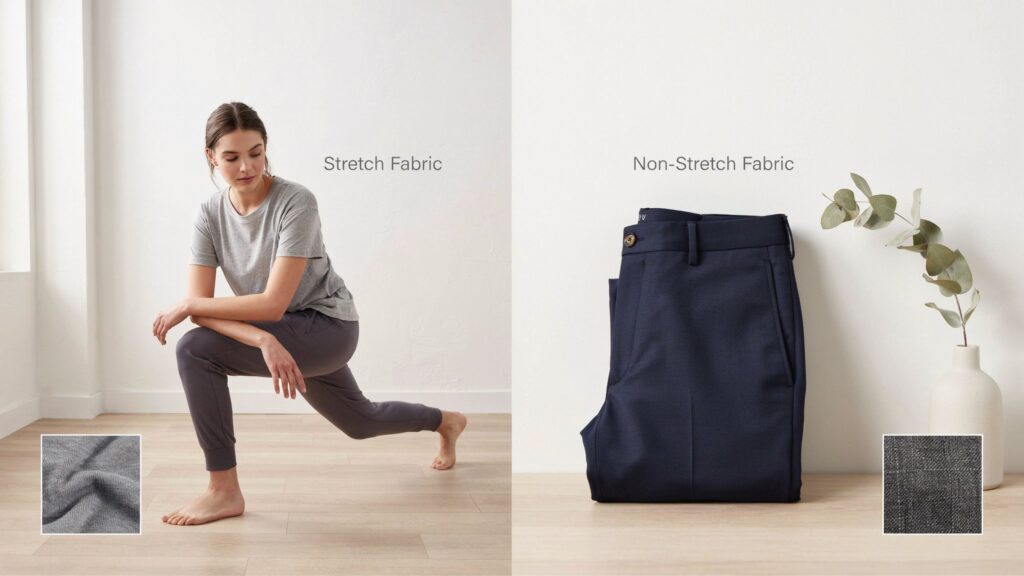
Choosing high-quality fabric is one of the best ways to ensure your clothing looks better, feels more comfortable, and lasts longer. Whether you’re shopping for everyday pants, office wear, or formal clothing, understanding what to look for can help you make a smarter purchase. When comparing Stretch vs Non-Stretch Fabrics: Which Is Better?, fabric quality is just as important as the type of fabric itself.
Use the practical tips below to evaluate fabric quality and select the option that best matches your requirements.
Read the Fabric Composition Label
Always check the garment label before making a purchase. It tells you exactly what fibers are used and their percentages, giving you a better idea of how the fabric will perform.
For example, 100% cotton offers breathability and a structured feel, while a blend such as 98% cotton and 2% elastane provides a small amount of stretch for added comfort. Understanding the fiber content makes it easier to choose clothing that matches your lifestyle.
Feel the Fabric Before Buying
Whenever possible, touch the fabric to evaluate its quality. A well-made fabric should feel smooth, consistent, and comfortable without being excessively thin or rough.
Pay attention to the fabric’s texture and weight. Quality materials often have a balanced feel that suggests durability while remaining comfortable against the skin.
Test the Fabric’s Recovery
If you’re buying stretch garments, gently stretch a small section of the fabric and let it return to its original shape. Good-quality stretch fabrics recover quickly without appearing loose or distorted.
For non-stretch fabrics, check whether the material maintains its structure without feeling stiff or brittle. A well-constructed fabric should feel stable while still allowing comfortable movement.
Inspect the Weave or Knit
Take a close look at the fabric’s construction. The weave or knit should appear even and consistent, with no visible gaps, loose threads, or irregular patterns.
A tightly woven or well-knitted fabric generally offers better durability and resists wear more effectively than loosely constructed materials.
Consider Breathability
Breathability plays a major role in overall comfort, especially if you live in a warm climate or wear the garment for extended periods.
Natural fibers like cotton and linen usually allow better airflow, while performance stretch fabrics often include moisture-wicking technology that helps keep you dry during physical activity.
Match the Fabric to Its Purpose
Think about how you’ll use the garment before choosing a fabric.
- For everyday comfort, stretch fabrics are often the better choice.
- For formal clothing, structured non-stretch fabrics usually provide a sharper appearance.
- For travel, wrinkle-resistant stretch blends can be especially practical.
- For workwear or heavy-duty clothing, durable woven fabrics may perform better.
Selecting a fabric based on its intended use ensures better comfort and longer-lasting performance.
Check the Care Instructions
Quality fabrics should also fit your maintenance preferences. Before purchasing, review the care label to see whether the garment requires hand washing, machine washing, air drying, or dry cleaning.
Choosing fabrics with care requirements that match your routine helps keep your clothing looking its best over time.
Don’t Focus on Price Alone
A higher price does not always guarantee better quality, and a lower price does not automatically mean poor performance. Instead, evaluate the fabric based on its fiber content, construction, finishing, and overall craftsmanship.
Well-made garments often provide better long-term value because they maintain their appearance and performance through repeated wear.
Buy from Trusted Brands and Retailers
Reputable brands and established retailers are generally more consistent in their fabric quality and manufacturing standards. Reading customer reviews and checking product descriptions can also provide valuable insights before making a purchase.
While brand reputation should not be the only factor in your decision, it can help you identify products with a proven track record for quality.
Make an Informed Choice
When considering Stretch vs Non-Stretch Fabrics: Which Is Better?, remember that the best fabric is one that matches your needs while offering reliable quality. By checking the fiber composition, examining the fabric’s construction, considering its intended use, and following the care instructions, you can confidently select garments that provide comfort, durability, and lasting value.
Taking a few extra minutes to evaluate fabric quality before buying can help you build a wardrobe that performs well and stands the test of time.
FAQs
Which is better: stretch or non-stretch fabrics?
There is no single fabric that is best for every situation. Stretch fabrics are ideal if you value comfort, flexibility, and ease of movement, while non-stretch fabrics are better for structured clothing, formal wear, and long-lasting durability. The right choice depends on how you plan to use the garment.
Are stretch fabrics durable enough for everyday use?
Yes. High-quality stretch fabrics are designed to withstand regular wear and maintain their shape when cared for properly. Washing garments according to the care label and avoiding excessive heat can help preserve their elasticity and extend their lifespan.
Do non-stretch fabrics always feel stiff or uncomfortable?
No. Comfort depends on the fabric type, garment construction, and fit. Natural non-stretch materials such as cotton, linen, and wool can be soft, breathable, and comfortable, especially when the clothing is tailored correctly.
Which fabric is more suitable for hot weather?
Breathable non-stretch fabrics made from natural fibers like cotton and linen are excellent choices for warm climates because they promote airflow. However, lightweight stretch fabrics with moisture-wicking properties can also provide comfort during hot weather and outdoor activities.
How can I tell if a fabric is high quality before buying?
Check the fabric composition label, examine the weave or knit, feel the texture, and inspect the stitching. Quality fabrics usually have a consistent finish, recover well after handling, and are made from durable fibers. Reading the care instructions and customer reviews can also help you make a more informed purchase.
Conclusion
Choosing between Stretch vs Non-Stretch Fabrics: Which Is Better? ultimately comes down to your personal preferences and the purpose of the garment. Stretch fabrics offer outstanding comfort, flexibility, and freedom of movement, making them an excellent choice for everyday wear, travel, and active lifestyles. In contrast, non-stretch fabrics provide superior structure, durability, and a timeless appearance, making them ideal for formal clothing, workwear, and tailored outfits.
Rather than viewing one fabric as better than the other, consider where and how you’ll wear the clothing. Factors such as comfort, fit, climate, maintenance, and durability all play an important role in selecting the right fabric for your needs.
By understanding the key differences, advantages, and ideal uses of both fabric types, you can shop with greater confidence and choose garments that deliver the perfect balance of comfort, performance, and style. Investing in quality fabrics that match your lifestyle will help you build a wardrobe that not only looks great but also lasts for years.