
Introduction
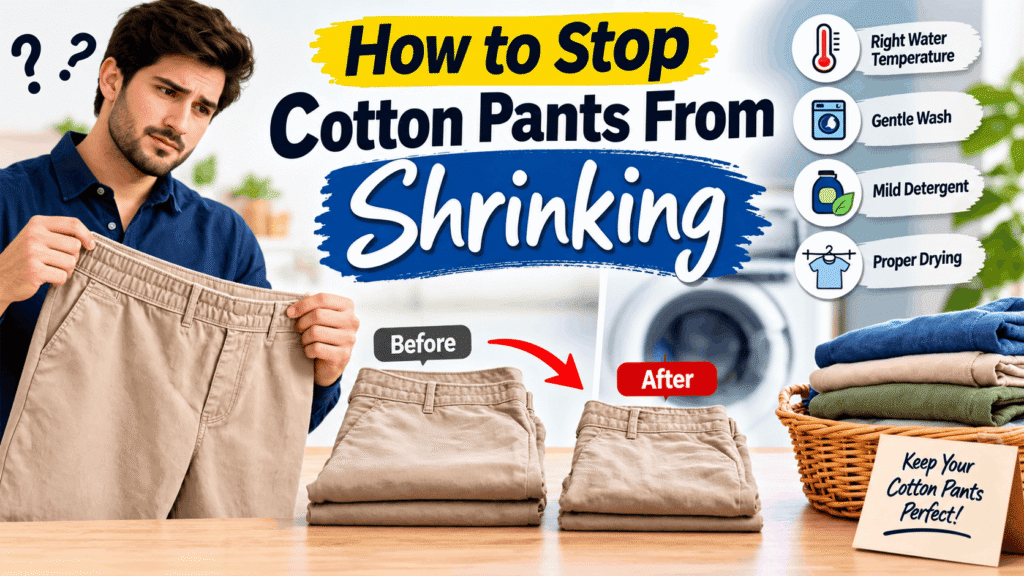
Have you ever washed a comfortable pair of cotton pants only to find that the legs feel shorter or the waistband feels tighter afterward? This can be frustrating, especially when the pants fitted perfectly before laundry day. Fortunately, a few simple changes to your washing and drying routine can reduce the risk of unwanted shrinkage.
Learning how to stop cotton pants from shrinking starts with understanding how cotton responds to water, heat, and movement. Cotton is a natural fiber, and its fabric can relax or change dimensions during washing and drying. Some pants shrink more than others, depending on the fabric construction, previous treatments, and care instructions.
The good news is that you do not need expensive laundry products to care for cotton pants properly. Washing cotton pants at the right temperature, selecting a gentle cycle, and limiting dryer heat can help them maintain their original size and shape. It is also important to check the garment’s care label because cotton pants do not all require identical treatment.
This guide explains how to wash, dry, and care for cotton pants while reducing the chance of shrinkage. Whether you wear cotton jeans, chinos, khakis, or casual pants, these practical steps can help you maintain their comfort and original shape for longer.
Table of Contents
Quick Answer: How Do You Stop Cotton Pants from Shrinking?
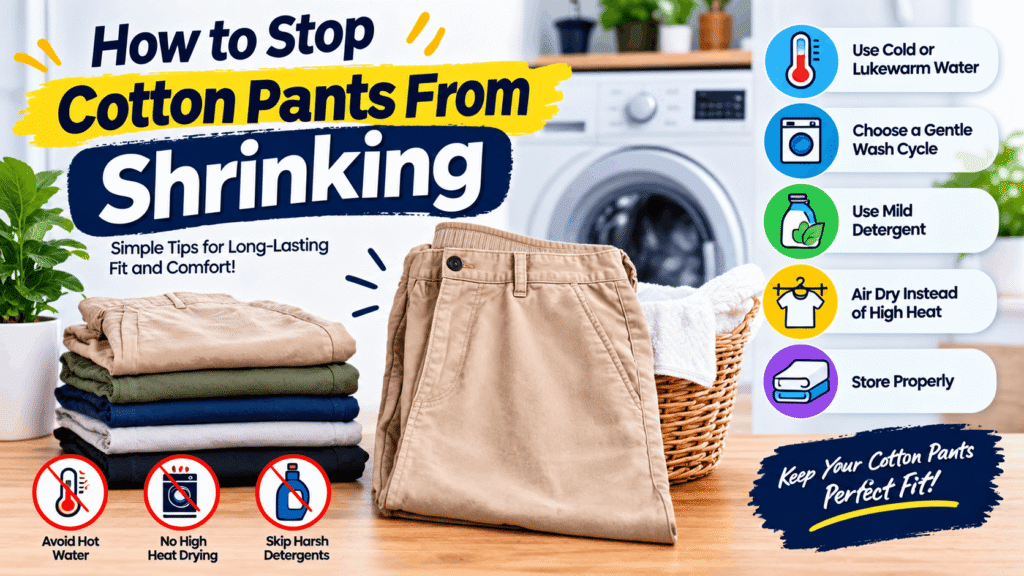
To reduce shrinkage, wash cotton pants in cold water when permitted by the care label, use a gentle cycle when appropriate, and air-dry them whenever practical. If you use a dryer, select a suitable low-heat setting and avoid unnecessary drying time.
Before washing, check the fabric composition and care instructions. Pre-shrunk cotton may be less prone to shrinkage, but it is not completely shrink-proof.
1. Check the Care Label Before Washing
The first step is to read the care label inside your pants. It provides instructions based on the garment’s material and construction.
Look for the recommended water temperature, machine-washing instructions, and drying method. While many cotton pants are safe to wash in a machine, certain fabrics or finishes need gentler care to help prevent damage.
Do not assume that every cotton garment can tolerate the same temperature. If the label recommends a particular washing method, follow it rather than relying on a general laundry rule.
Helpful tip: Before washing a new pair of cotton pants, read the care label to understand how to clean them safely. This helps you avoid settings that may cause unnecessary changes in fit.
2. Wash Cotton Pants in Cold Water
Cold water is a useful default for reducing the risk of cotton shrinkage. It also helps preserve the color of many garments, particularly dark jeans and chinos.
For regular laundry, warm or cold water is often enough without needing to use hot water. For lightly worn cotton pants, a suitable detergent and the correct washing cycle may be enough to clean them effectively without using high temperatures.
Here is a simple comparison:
| Water temperature | What to consider |
|---|---|
| Cold | A good choice for routine washing when permitted by the label |
| Warm | May suit certain garments or more demanding cleaning needs |
| Hot | Can increase shrinkage risk for susceptible cotton fabrics |
Water temperature is only one part of the process. Drying method, fabric construction, and the manufacturer’s instructions also affect the final result.
3. Choose a Suitable Washing Cycle
Selecting a delicate wash setting helps limit vigorous movement, which can put extra stress on cotton pants during cleaning. This is particularly useful for lightweight cotton pants or garments with special finishes.
Secure all zippers and buttons before washing, then turn the pants inside out to minimize friction with other clothes and help keep the outer fabric in good condition.
Avoid packing the washing machine too tightly. Leave enough space in the washer so your clothes can circulate freely through the water and detergent.
You do not necessarily need a delicate cycle for every pair of sturdy cotton pants. Follow the care label and choose a cycle that balances effective cleaning with appropriate fabric care.
4. Avoid High Dryer Heat
Pay close attention to the drying process to help cotton pants retain their original fit. High temperatures and prolonged drying can increase shrinkage risk in susceptible garments.
Whenever practical, let your cotton pants air-dry. If machine drying is allowed and more convenient, use an appropriate low-heat setting rather than automatically choosing the hottest option.
Take the pants out of the dryer at the stage recommended on their care label, rather than leaving them inside longer than necessary. Avoid leaving them in a hot dryer longer than necessary.
Keep in mind that low heat reduces risk but does not guarantee zero shrinkage. Some cotton fabrics can still change dimensions during ordinary laundering.
5. Air-Dry Pants Without Stretching Them Out
Air drying helps you avoid the high temperatures associated with tumble drying. The method you use to hang or lay out your pants during drying can also make a difference.
Follow these steps:
- Remove the pants from the washer without twisting or wringing them aggressively.
- Smooth the fabric and straighten the legs.
- Hang them by the waistband or place them on a suitable drying rack.
- Keep the pants in their natural shape while they dry.
- Keep the pants spread out so air can circulate freely, and avoid folding them before they are completely dry.
For thick cotton pants, choose a strong hanger or stable drying rack that can hold their weight without sagging. Avoid pulling forcefully on the waistband or hems, because wet fabric can stretch or distort.
6. Understand Pre-Shrunk Cotton
Some cotton pants are labeled “pre-shrunk.” This means the fabric or garment has undergone a manufacturing treatment intended to reduce later shrinkage.
Pre-shrunk cotton can be a useful choice if maintaining a consistent fit is important to you. Even with this label, cotton pants may still shrink if they are exposed to unsuitable washing or drying conditions.
The result depends on the fabric, manufacturing process, and care routine. Even treated cotton may change dimensions if repeatedly exposed to unsuitable washing or drying conditions.
When choosing a new pair of pants, pay attention to both the fabric composition and the care instructions. Do not rely on the words “pre-shrunk” alone.
7. Wash Cotton Pants Only When Needed
Every wash exposes clothing to water, detergent, movement, and drying. Washing pants more frequently than necessary can contribute to wear over time.
For pants that are only lightly worn, consider whether airing them out or spot-cleaning a small mark is sufficient. Wash them whenever they genuinely need cleaning, especially after heavy sweating, visible dirt, or spills.
This is not a reason to leave dirty clothes unwashed. It simply means matching the cleaning method and frequency to how the garment has been worn.
Using an appropriate detergent amount and avoiding unnecessary extra wash cycles can also help maintain the fabric’s condition.
8. Measure Your Pants to Monitor Shrinkage
If you are concerned about repeated shrinkage, measuring your pants before and after washing can help you identify changes.
Choose a few consistent measurements:
- Waistband: Measure across the waistband while the pants are laid flat.
- Inseam: Measure from the crotch seam to the bottom of the leg.
- Outseam: Measure from the top of the waistband to the hem along the outside of the leg.
Lay the pants flat without stretching them. Use the same method each time, and compare the measurements once the garment is fully dry.
This simple check can help you determine whether a particular washing or drying routine is affecting the fit.
Common Mistakes That Can Shrink Cotton Pants
Avoid these common laundry mistakes:
- Using hot water without checking the care label.
- Drying cotton pants on high heat unnecessarily.
- Leaving garments in the dryer after they are dry.
- Overloading the washing machine.
- Ignoring special instructions for cotton blends or finished fabrics.
- Pulling or stretching wet pants too aggressively.
- Assuming pre-shrunk cotton cannot shrink at all.
The best approach is to follow the garment’s instructions and use consistent, gentle care rather than relying on one trick to prevent every type of shrinkage.
FAQs
Can cotton pants shrink in cold water?
Yes, some shrinkage can still occur in cold water. The fabric’s construction, previous treatment, and drying method all matter. Cold water generally helps reduce the risk compared with hot washing.
Do cotton pants shrink more in the washer or dryer?
It depends on the garment and the laundry conditions. Both washing and drying can contribute to shrinkage. High dryer heat and prolonged drying are important factors to avoid when the care label permits air drying or low-heat drying.
Can pre-shrunk cotton pants still shrink?
Yes. Pre-shrinking reduces the potential for later shrinkage but does not guarantee that the garment will maintain exactly the same measurements forever.
Should I turn cotton pants inside out before washing?
Turning them inside out can reduce friction on the visible surface and help protect the color. It does not eliminate shrinkage by itself, so the correct washing and drying settings still matter.
Can I put cotton pants in the dryer?
You can if the care label allows it. Choose a suitable low-heat setting when recommended, avoid excessive drying time, and consider air drying if preserving the original fit is your priority.
What should I do if my cotton pants have already shrunk?
You may be able to recover a small amount of length or width by gently reshaping the pants while damp. However, the result is unpredictable, and substantial shrinkage may be permanent. Avoid forceful stretching that could damage the seams.
Does fabric softener prevent cotton pants from shrinking?
No. Fabric softener is not a reliable shrinkage-prevention method. Correct washing and drying practices are more important.
Conclusion
Keeping cotton pants at their original size begins with understanding the fabric and following its care instructions. Cold-water washing, appropriate cycles, and air drying or suitable low-heat drying can reduce the risk of unwanted shrinkage.
No method can guarantee that every pair will retain exactly the same measurements, but a consistent laundry routine can help protect the fit and appearance of your favorite cotton pants.