
Introduction
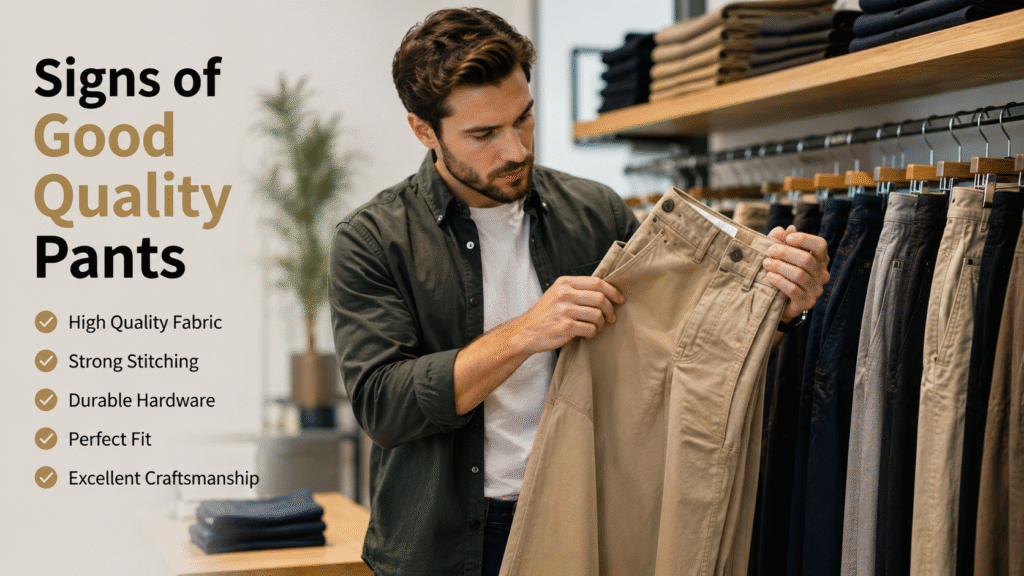
Signs of Good Quality Pants are something every shopper should understand before investing in a new pair. While style and price often influence buying decisions, they don’t always reflect the true quality of a garment. High-quality pants are designed with durable fabrics, strong stitching, reliable construction, and a comfortable fit that stands up to everyday wear.
In this guide, you’ll learn how to identify well-made pants, what features to look for, which fabrics offer the best durability, and how to avoid poorly made options. By the end, you’ll have the knowledge to choose pants that provide lasting comfort, excellent performance, and great value for your money.
Table of Contents
Why It Matters to Buy Good Quality Pants
Buying good quality pants is about more than just looking stylish. The Signs of Good Quality Pants can help you choose clothing that offers better comfort, durability, and long-term value. While cheaper pants may seem like a bargain at first, they often wear out quickly, lose their shape, or develop issues such as fading, torn seams, and broken zippers. Understanding how to tell if pants are good quality allows you to make smarter purchasing decisions and avoid frequent replacements.
One of the biggest benefits of investing in well-made pants is their durability. High-quality pants are designed to handle regular wear without showing signs of damage too soon. They are made using best pants materials, reinforced pants construction, and strong seams in pants that reduce the risk of tearing in high-stress areas. Whether you’re shopping for casual chinos, jeans, dress pants, or workwear, choosing durable pants means they’ll stay in good condition much longer than poorly made alternatives.
Comfort is another important reason to focus on quality. Comfortable durable pants are made from fabrics that feel soft against the skin while allowing freedom of movement. The right pants fabric quality helps regulate temperature, improves breathability, and prevents discomfort during long hours of wear. In many cases, premium pants also include a small amount of stretch, providing flexibility without losing their original shape.
Good construction also plays a major role in how long pants last. One of the easiest ways to identify quality pants is by checking the quality stitching on pants. Straight, even stitches, reinforced belt loops, and secure pocket corners are all high quality pants features that indicate careful craftsmanship. These details may seem small, but they greatly improve the overall lifespan of the garment.
Another reason to buy quality is that good pants maintain their appearance over time. They resist fading, shrinking, pilling, and sagging better than lower-quality options. If you’ve ever wondered what makes pants high quality, the answer often lies in the combination of premium fabrics, strong stitching, durable hardware, and thoughtful design. These features help long-lasting pants continue looking polished even after repeated washing and everyday use.
Buying quality also saves money in the long run. Although the initial price may be higher, you won’t need to replace your pants as often. A single pair of quality trousers can outlast several cheaper pairs, making them a better overall investment. This is why many experts recommend following a reliable quality pants buying guide instead of choosing pants based only on price or brand name.
Before making a purchase, it’s helpful to learn how to inspect pants before buying. Examine the fabric, inspect the stitching, test the zipper, and check the interior seams for neat finishing. These simple checks can reveal many of the Signs of Good Quality Pants and help you avoid poorly made clothing. Knowing the best fabric for pants and recognizing the signs of well-made clothing will make shopping much easier and more rewarding.
Ultimately, understanding the Signs of Good Quality Pants helps you buy clothing that offers better performance, comfort, and value. By paying attention to fabric, stitching, construction, and overall craftsmanship, you can confidently select pants that fit well, last longer, and continue looking great for years to come.
15 Signs of Good Quality Pants
Knowing the Signs of Good Quality Pants can help you avoid wasting money on poorly made clothing. Whether you’re shopping for jeans, chinos, dress pants, or workwear, paying attention to a few important details makes it much easier to choose pants that are comfortable, durable, and worth the investment. If you’ve ever wondered how to tell if pants are good quality, the following signs will help you make a confident buying decision.
1. High-Quality Fabric
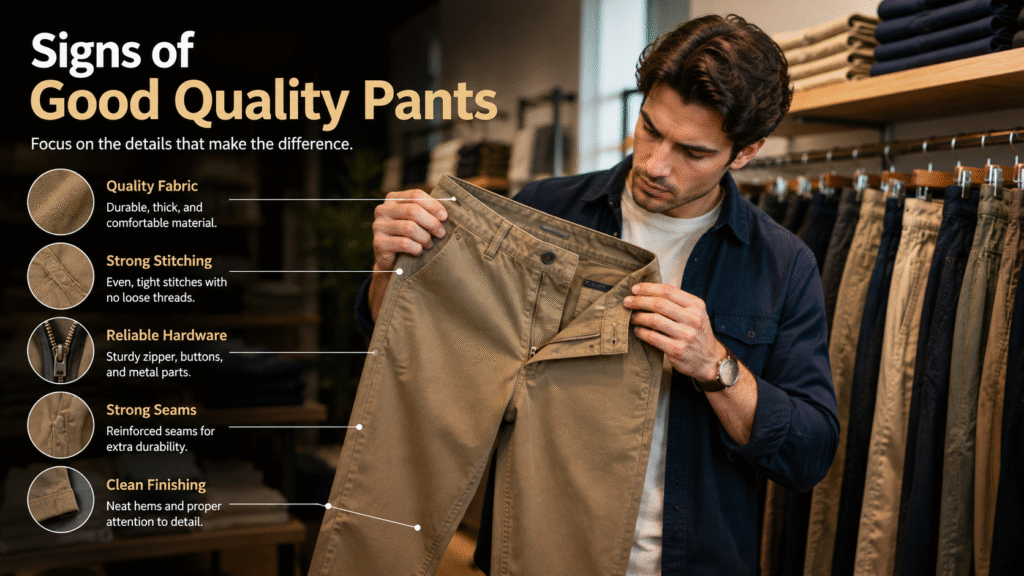
The first thing to examine is the fabric. Pants fabric quality has a major impact on comfort, durability, and appearance. Good-quality pants are usually made from the best pants materials, such as long-staple cotton, wool, linen, twill, or premium fabric blends with a small amount of elastane for flexibility. The fabric should feel smooth, strong, and evenly woven without being overly thin or stiff.
A high-quality fabric also maintains its shape after repeated washing and resists excessive fading or pilling. This is one of the easiest ways to identify quality pants before making a purchase.
2. Strong and Even Stitching
One of the most reliable high quality pants features is neat stitching. Every stitch should be straight, evenly spaced, and securely sewn. Loose threads, skipped stitches, or uneven seams often indicate poor craftsmanship.
When checking quality stitching on pants, pay close attention to the waistband, pockets, belt loops, and inseam. These areas experience the most stress during everyday wear, so they should be carefully reinforced.
3. Durable Seams
Strong seams are essential for long-lasting pants. The seams should lie flat without puckering or gaps and should not separate when gently pulled apart.
Many well-made pants use double stitching or reinforced stitching in high-stress areas like the crotch and seat. These strong seams in pants greatly reduce the chances of tearing during regular use and are an important part of quality pants construction.
4. High-Quality Zippers and Buttons
Quality hardware is another sign of superior craftsmanship. Zippers should glide smoothly without catching or separating, while buttons should feel firmly attached and securely stitched.
Metal zippers and durable buttons generally last much longer than inexpensive plastic alternatives. Reliable hardware improves both the appearance and durability of premium pants.
5. Reinforced Belt Loops
Belt loops experience constant pulling, especially if you wear a belt daily. High-quality pants have belt loops that are securely stitched at both the top and bottom.
Strongly reinforced belt loops help prevent tearing and demonstrate careful attention to detail during manufacturing.
6. Well-Made Pockets
Pockets are often overlooked, but they reveal a lot about overall quality. The pocket lining should be made from sturdy fabric that won’t tear easily after carrying everyday items like keys, phones, or wallets.
Reinforced pocket corners and clean stitching indicate thoughtful pants construction, making the garment more durable over time.
7. Proper Fit and Shape Retention
A pair of quality pants should fit comfortably without feeling too tight or too loose. More importantly, they should maintain that fit after multiple wears and washes.
Comfortable durable pants retain their original shape without becoming baggy at the knees or stretched out around the waistband. Fabrics with excellent recovery help the pants continue fitting properly for years.
8. Neatly Finished Interior
Turn the pants inside out before buying. The inside should look almost as neat as the outside.
Clean seam finishes, trimmed threads, and professionally sewn edges are all Signs of Good Quality Pants. Sloppy interior construction often reflects poor manufacturing standards that may affect durability.
9. Even and Secure Hemming
The bottom hems should be neatly aligned and finished with strong, consistent stitching for lasting durability. Uneven hems or loose stitching may begin to unravel after only a few washes.
Well-finished hems help maintain the overall appearance of quality trousers and improve their lifespan.
10. Color That Resists Fading
High-quality pants are dyed using better manufacturing processes that help maintain rich, consistent color over time.
Quality fabrics are less likely to bleed excessively during washing or become dull after repeated wear. Color retention is another important factor in determining what makes pants high quality.
11. Fabric That Resists Pilling
Low-quality fabrics often develop small fabric balls, known as pills, after only a few wears. Premium fabrics are designed to resist this problem.
Checking the fabric texture and weave can help you recognize one of the common signs of well-made clothing before purchasing.
12. Comfortable Yet Durable Construction
The best pants combine comfort with strength. They allow easy movement while remaining durable enough for everyday activities.
Whether you’re buying office trousers, jeans, or outdoor pants, quality construction ensures flexibility without sacrificing durability. This balance is one reason many shoppers prefer durable pants over cheaper alternatives.
13. Quality Lining (When Applicable)
Some dress pants, wool trousers, and premium chinos include partial or full lining for added comfort and durability.
The lining should feel smooth, be securely attached, and show no loose stitching. A quality lining helps reduce wear, improves comfort, and enhances the overall finish of the garment.
14. Trusted Brand Reputation
Although brand names alone don’t guarantee quality, reputable manufacturers usually maintain higher production standards.
Reading customer reviews, checking warranty information, and researching a company’s reputation can complement any quality clothing guide. Trusted brands often invest more in premium materials and strict quality control.
15. Clear Care Label and Fabric Information
The final sign of quality is a detailed care label. It should clearly list the fabric composition, washing instructions, drying recommendations, and country of manufacture.
A complete label demonstrates transparency and helps you properly care for your pants. It also allows you to compare fabric blends and determine whether the garment uses the best fabric for pants based on your needs.
Final Thoughts
Learning the Signs of Good Quality Pants makes shopping much easier and helps you avoid poor-quality clothing. By examining the fabric, stitching, seams, hardware, fit, and overall construction, you can confidently choose well-made pants that provide lasting comfort and value. If you’re creating your own quality pants buying guide, remember that quality isn’t determined by price alone. Instead, focus on craftsmanship, pants fabric quality, and thoughtful design. The more you practice how to inspect pants before buying, the easier it becomes to recognize premium pants that will serve you well for years to come.
How to Check the Quality of Pants Before Buying
Knowing how to check the quality of pants before buying can help you choose clothing that offers better comfort, durability, and value for your money. While brand names and price tags may influence your decision, they don’t always guarantee superior craftsmanship. The best approach is to carefully inspect the pants yourself. By understanding the Signs of Good Quality Pants, you’ll be able to recognize well-made garments that are built to last.
Inspect the Fabric
The first thing to examine is the fabric. Pants fabric quality plays a major role in how comfortable and durable the pants will be. Feel the material with your hands and check whether it feels smooth, strong, and evenly woven. Avoid fabrics that feel overly thin, rough, or loosely woven, as they may wear out quickly.
When possible, check the care label to see what fibers are used. The best pants materials often include high-quality cotton, wool, linen, twill, or durable fabric blends with a small amount of stretch. Understanding the fabric is one of the easiest ways to learn how to tell if pants are good quality.
Examine the Stitching
Carefully inspect all the stitching throughout the pants. Straight, evenly spaced stitches are one of the most important high quality pants features. Look closely around the waistband, inseam, pockets, belt loops, and hems, since these areas experience the most stress during regular wear.
Good quality stitching on pants should have no loose threads, skipped stitches, or uneven sewing. Consistent stitching reflects careful manufacturing and contributes to stronger pants construction.
Check the Seams
The seams should feel firm and lie flat without gaps or puckering. Gently pull the seams apart to see if they remain secure. If the stitching begins to separate easily, the pants may not last long.
Strong seams in pants are a key characteristic of well-made pants because they help prevent tearing during everyday use. Reinforced seams are especially valuable for jeans, work pants, and other durable pants designed for frequent wear.
Test the Zipper and Buttons
Quality hardware is another important indicator. Open and close the zipper several times to make sure it moves smoothly without sticking. Buttons and snaps should be firmly attached and show no signs of looseness.
Reliable hardware may seem like a small detail, but it plays a big role in determining what makes pants high quality and contributes to a better overall wearing experience.
Inspect the Pockets
Take a close look at both the inside and outside of the pockets. The pocket lining should be made from durable fabric and securely stitched to prevent tearing. Reinforced pocket corners are another sign of quality craftsmanship.
Strong pockets are especially important if you regularly carry items like your phone, wallet, or keys, as they improve the lifespan of long-lasting pants.
Look Inside the Pants
Turning the pants inside out can reveal a great deal about their construction. Check for clean seam finishes, neatly trimmed threads, and professional stitching throughout the interior.
A tidy interior is one of the common signs of well-made clothing and often indicates that the manufacturer paid close attention to detail during production. This simple inspection is an essential step in learning how to identify quality pants.
Evaluate the Fit
Try the pants on whenever possible. A quality pair should fit comfortably around the waist, hips, thighs, and legs without restricting movement. Walk, bend, and sit to ensure the pants remain comfortable in different positions.
Comfortable durable pants should maintain their shape without becoming overly tight or sagging. Good fit not only improves comfort but also helps extend the life of the garment.
Read the Care Label
Always check the care label before buying. It lists important details about the fabric blend, proper cleaning methods, and recommended care practices.
The label can also help you compare different premium pants and determine whether they use fabrics suitable for your lifestyle. Understanding proper care helps preserve the quality of your pants for years to come.
Compare Overall Construction
Instead of focusing only on one feature, evaluate the pants as a whole. Consider the fabric, stitching, seams, hardware, fit, and finishing together. High-quality garments consistently show excellent craftsmanship across every detail.
Following a trusted quality pants buying guide makes it easier to compare different brands and styles while identifying quality trousers that offer the best long-term value.
Final Thoughts
Learning how to inspect pants before buying is one of the smartest ways to avoid poor-quality clothing. By carefully checking the fabric, stitching, seams, hardware, interior finishing, and fit, you can quickly recognize the Signs of Good Quality Pants. These simple inspections will help you confidently choose premium pants with reliable pants construction, ensuring you invest in clothing that remains comfortable, stylish, and durable for years to come.
Common Signs of Poor Quality Pants
Recognizing the Common Signs of Poor Quality Pants is just as important as understanding the Signs of Good Quality Pants. Many pants may look attractive on the store shelf, but hidden flaws in the fabric, stitching, or construction can cause them to wear out quickly. Learning how to tell if pants are good quality also means knowing what warning signs to avoid. By identifying these issues before making a purchase, you can invest in well-made pants that provide better comfort, durability, and long-term value.
Loose Threads
Loose or hanging threads are one of the first indicators of poor craftsmanship. While a few stray threads may seem harmless, they often suggest rushed manufacturing and poor attention to detail. Over time, loose threads can lead to unraveling seams and reduced durability.
In contrast, quality stitching on pants should appear clean, tight, and evenly finished throughout the garment. Neat stitching is one of the easiest ways to identify quality pants.
Thin or Low-Quality Fabric
The fabric is one of the most important parts of any pair of pants. Thin, loosely woven, or rough materials tend to wear out much faster than premium fabrics. They may also become transparent, stretch out easily, or lose their shape after only a few washes.
Choosing pants made from the best pants materials improves comfort and extends their lifespan. High pants fabric quality is a key characteristic of durable pants that can withstand regular use.
Weak or Poorly Sewn Seams
Seams hold every part of the garment together, so weak seams can quickly lead to damage. If the stitching pulls apart easily or the seams appear uneven and puckered, the pants may not last long.
High-quality garments use strong seams in pants to reinforce areas that experience the most stress, such as the crotch, seat, and pockets. Strong seams are one of the most important high quality pants features.
Cheap Zippers and Buttons
Low-quality hardware is another common warning sign. Plastic zippers that snag, buttons that feel loose, or snaps that don’t close securely often fail after only a short period of use.
Reliable hardware is part of what makes pants high quality and contributes to a better overall wearing experience.
Uneven Stitching
Take a close look at the stitching around the waistband, pockets, hems, and side seams. Crooked lines, uneven stitch spacing, or skipped stitches indicate poor manufacturing standards.
Professional pants construction always includes consistent stitching that strengthens the garment while giving it a clean, polished appearance.
Poor Fit and Shape Retention
Poor-quality pants often lose their original fit after only a few wears. The knees may become baggy, the waistband may stretch out, or the fabric may sag around the seat.
In comparison, comfortable durable pants are designed to maintain their shape while providing consistent comfort. This is one reason many shoppers choose premium pants over lower-quality alternatives.
Fabric That Pills or Fades Quickly
If the fabric develops small fuzz balls (pilling) or fades noticeably after only a few washes, it may not be made from high-quality fibers. Poor dyeing processes and low-grade materials often reduce the lifespan of the garment.
Long-lasting pants use better-quality fabrics and dyes that maintain their appearance even after repeated washing and regular wear.
Weak Pocket Construction
Pockets are frequently used, so they should be built to withstand daily wear. Thin pocket linings or poorly stitched pocket corners can tear easily when carrying everyday items.
Well-designed pockets are an important feature of quality trousers and demonstrate careful attention to detail during manufacturing.
Missing or Incomplete Care Label
A missing or unclear care label can also be a warning sign. A proper label should clearly state the fabric composition, washing instructions, and maintenance recommendations.
Checking the care label is an important step in learning how to inspect pants before buying, as it helps you understand the materials used and how to care for the garment properly.
Inconsistent Overall Construction
Sometimes the biggest warning sign is inconsistent craftsmanship. Uneven hems, misaligned pockets, twisted seams, and poor finishing all suggest that quality control was lacking during production.
A reliable quality clothing guide recommends examining the entire garment instead of focusing on only one feature. Consistent workmanship is one of the most recognizable signs of well-made clothing.
Final Thoughts
Understanding the Common Signs of Poor Quality Pants helps you avoid clothing that may wear out quickly or become uncomfortable after only a short time. By checking the fabric, stitching, seams, hardware, fit, and overall construction, you can easily distinguish low-quality garments from well-made pants. Combining these inspections with the Signs of Good Quality Pants gives you a complete quality pants buying guide and makes it much easier to choose long-lasting pants that deliver excellent comfort, durability, and value.
Does Price Always Mean Better Quality?
The simple answer is no. A higher price does not automatically guarantee better craftsmanship, durability, or comfort. While some expensive pants are made with premium materials and excellent construction, others cost more because of brand reputation, designer labels, or marketing. That’s why understanding the Signs of Good Quality Pants is far more important than relying on the price tag alone.
Expensive Doesn’t Always Mean Better
Many shoppers assume that costly pants must be superior, but that isn’t always the case. Some luxury brands charge higher prices because of their name rather than the actual quality of the garment. In contrast, many affordable brands produce well-made pants using reliable pants construction, durable fabrics, and careful stitching.
Instead of judging a pair of pants by its price, examine the fabric, stitching, seams, hardware, and overall finish. These details reveal what makes pants high quality far better than the price label.
Look at the Construction, Not Just the Brand
When shopping, focus on the actual craftsmanship. Check the quality stitching on pants, inspect the waistband and pockets, and look for strong seams in pants that can withstand regular wear. These high quality pants features are much better indicators of durability than a famous logo.
Learning how to identify quality pants allows you to compare products objectively, regardless of whether they come from a luxury brand or a budget-friendly manufacturer.
Fabric Quality Matters More Than Cost
One of the biggest factors that determines quality is the fabric itself. High pants fabric quality contributes to better comfort, improved durability, and a longer lifespan. Pants made from the best pants materials, such as premium cotton, wool, linen, or durable twill, generally perform better than garments made from low-grade fabrics.
Even moderately priced quality trousers can offer outstanding value if they use quality materials and are manufactured with care.
Consider Long-Term Value
Instead of focusing only on the purchase price, think about the total value over time. A pair of long-lasting pants that stays comfortable and maintains its appearance for several years is often a better investment than replacing inexpensive pants every few months.
High-quality comfortable durable pants usually resist fading, stretching, shrinking, and seam damage, helping you save money over the long run.
Read Reviews and Inspect Before Buying
Customer reviews can provide useful insights into durability, fit, and overall satisfaction. However, don’t rely on reviews alone. Take the time to inspect pants before buying by checking the fabric, stitching, seams, zippers, buttons, and interior finishing.
Following a trusted quality pants buying guide helps you evaluate every important detail and makes it easier to recognize signs of well-made clothing, regardless of the brand or price.
Focus on Value Instead of Price
The smartest buyers look for the best combination of quality, comfort, durability, and cost. Whether you’re shopping for jeans, chinos, dress pants, or workwear, the goal is to find premium pants that justify their price through excellent craftsmanship and reliable performance.
Understanding how to tell if pants are good quality allows you to confidently choose garments that offer real value instead of simply paying more for a brand name.
Final Thoughts
Price can sometimes reflect higher quality, but it should never be the only factor in your decision. The best way to choose durable pants is by evaluating the Signs of Good Quality Pants, including fabric quality, stitching, seams, hardware, fit, and overall construction. By focusing on craftsmanship rather than cost alone, you’ll be able to find well-made pants that provide excellent comfort, durability, and value for years to come.
The fabric is one of the most important factors that determines how comfortable, durable, and long-lasting a pair of pants will be. If you’re learning the Signs of Good Quality Pants, understanding different fabric types is essential. The best fabric for pants depends on how and where you plan to wear them, but high-quality materials generally provide better comfort, maintain their shape longer, and resist everyday wear.
Whether you’re shopping for casual trousers, dress pants, jeans, or workwear, knowing the best pants materials makes it much easier to choose clothing that offers excellent value.
Cotton
Cotton is one of the most popular fabrics used in quality trousers because it is soft, breathable, and comfortable for everyday wear. Premium cotton varieties, such as combed or long-staple cotton, are stronger and smoother than lower-grade cotton, making them more resistant to wear and tear.
High-quality cotton pants maintain their appearance well when properly cared for and provide excellent comfort in both warm and moderate climates. Cotton is also commonly blended with a small amount of elastane to improve flexibility without sacrificing durability.
Wool
Wool is widely used in premium dress pants because of its refined appearance, excellent durability, and natural wrinkle resistance. High-quality wool fabrics regulate body temperature effectively, keeping you warm in cool weather while remaining breathable.
Well-made wool pants also drape beautifully and retain their shape for years. Their smooth finish and durability make them a popular choice for premium pants designed for business and formal occasions.
Linen
Linen is one of the best fabric for pants if you live in a warm or humid climate. It is lightweight, highly breathable, and absorbs moisture efficiently, helping you stay cool throughout the day.
Although linen wrinkles more easily than some other fabrics, high-quality linen offers excellent comfort and durability when properly maintained. Many manufacturers also blend linen with cotton to improve wrinkle resistance while maintaining breathability.
Denim
Denim is known for its exceptional strength and long lifespan, making it one of the most reliable choices for durable pants. Premium denim is woven from high-quality cotton yarns that become softer and more comfortable with regular wear while maintaining excellent durability.
Good-quality denim jeans resist tearing, stretching, and fading better than lower-grade alternatives, making them an excellent investment for everyday use.
Twill
Twill is recognized by its distinctive diagonal weave, which gives the fabric additional strength and flexibility. This weaving method improves durability while helping the fabric resist wrinkles and everyday wear.
Many chinos, work pants, and casual trousers use cotton twill because it combines comfort with excellent pants construction. Twill fabrics also hold their shape well, making them ideal for long-lasting pants.
Stretch Cotton Blends
Modern pants often include a small percentage of elastane or spandex blended with cotton. These stretch fabrics provide greater flexibility while maintaining the natural comfort of cotton.
High-quality stretch blends allow the pants to move with your body and recover their original shape after stretching. This makes them an excellent choice for comfortable durable pants, especially if you spend long hours sitting, walking, or working.
Polyester Blends
Although natural fibers are often preferred, premium polyester blends can also produce high-quality pants when combined with cotton or rayon. These blends improve wrinkle resistance, reduce shrinkage, and increase durability without significantly reducing comfort.
The key is selecting garments that use balanced fabric blends rather than fabrics made almost entirely from low-grade synthetic fibers.
Corduroy
Corduroy is a durable cotton fabric with raised ridges that provide warmth and a distinctive texture. It is commonly used for casual and seasonal pants because it offers both comfort and long-lasting performance.
Well-made corduroy maintains its shape well and resists everyday wear, making it another excellent option for high-quality trousers.
How Fabric Quality Affects Overall Performance
High pants fabric quality influences much more than appearance. It affects breathability, flexibility, wrinkle resistance, moisture management, color retention, and overall durability. Even the finest stitching cannot compensate for poor-quality fabric.
If you’re wondering how to tell if pants are good quality, start by feeling the fabric. A premium material should feel smooth, dense, and evenly woven without appearing thin or loosely constructed. Combining quality fabric with excellent quality stitching on pants and strong seams in pants creates garments that perform well for years.
Choosing the Right Fabric for Your Needs
The ideal fabric varies depending on your lifestyle, comfort preferences, and intended use. Instead, choose materials based on your lifestyle and intended use:
- Cotton: Ideal for everyday casual wear.
- Wool: Best for business and formal occasions.
- Linen: Perfect for hot and humid weather.
- Denim: Excellent for daily use and durability.
- Twill: Great for chinos and workwear.
- Stretch Cotton Blends: Best for flexibility and all-day comfort.
- Corduroy: Suitable for cooler seasons and casual outfits.
Following a reliable quality clothing guide helps you match the right fabric to your needs while making it easier to identify quality pants before purchasing.
Final Thoughts
The fabric is one of the clearest Signs of Good Quality Pants and should always be carefully evaluated before buying. Whether you choose cotton, wool, linen, denim, twill, or premium stretch blends, selecting the best pants materials significantly improves comfort, durability, and long-term value. When combined with excellent craftsmanship, reinforced pants construction, and thoughtful finishing, these fabrics create well-made pants that remain comfortable, stylish, and dependable for years.
How Long Should Good Quality Pants Last?
One of the biggest advantages of buying high-quality clothing is its longer lifespan. While no pair of pants lasts forever, well-made pants can remain comfortable, stylish, and functional for many years when properly cared for. If you understand the Signs of Good Quality Pants, you’ll be better equipped to choose garments that withstand regular wear without quickly losing their shape or appearance.
The lifespan of pants depends on several factors, including pants fabric quality, pants construction, frequency of use, and how well the garment is maintained. High-quality materials combined with excellent craftsmanship generally result in long-lasting pants that offer better value than cheaper alternatives.
Casual Pants
Casual pants made from premium cotton, twill, or quality fabric blends typically last 3 to 5 years with regular use. If you rotate between several pairs instead of wearing the same one every day, they may last even longer.
Choosing comfortable durable pants with reinforced stitching and quality fabrics helps reduce wear in high-stress areas such as the knees, seat, and pockets.
Dress Pants
High-quality dress pants usually last 5 to 10 years, especially when worn only for work, business meetings, or formal events. Wool and premium fabric blends naturally resist wrinkles and maintain their shape better than lower-quality materials.
Proper storage, occasional dry cleaning when recommended, and avoiding excessive washing all contribute to extending the life of quality trousers.
Jeans
Premium denim jeans are among the most durable pants available. With regular wear and proper care, high-quality jeans often last 5 to 10 years or even longer.
Strong denim fabric, reinforced seams, and excellent quality stitching on pants allow jeans to withstand frequent movement while maintaining their structure over time.
Work Pants
Work pants are exposed to heavier wear than most other styles, so their lifespan depends on the work environment. Work pants built with reinforced construction and durable seams can typically withstand 2 to 5 years of regular, heavy-duty use.
Selecting pants made from the best pants materials designed for demanding jobs can significantly improve durability.
What Affects the Lifespan of Pants?
Several factors determine how long your pants will remain in good condition:
- Fabric Quality: High pants fabric quality resists fading, pilling, shrinking, and tearing more effectively.
- Construction: Reinforced stitching, durable seams, and reliable hardware improve overall longevity.
- Frequency of Wear: Wearing the same pair daily causes faster wear than rotating multiple pairs.
- Washing Habits: Washing in cold water, using gentle cycles, and avoiding excessive dryer heat help preserve fabric strength.
- Proper Storage: Hanging or folding pants correctly helps maintain their shape and reduces unnecessary wrinkles.
These factors are also useful if you’re learning how to tell if pants are good quality before making a purchase.
Signs It’s Time to Replace Your Pants
Even the highest-quality pants eventually wear out. Consider replacing them if you notice:
- Permanent thinning or holes in the fabric.
- Seams repeatedly coming apart despite repairs.
- Excessive fading that cannot be restored.
- Waistband or knees that have permanently stretched out.
- Broken zippers or hardware that can no longer be repaired.
- Fabric that has become uncomfortable or lost its original structure.
Knowing these warning signs helps you distinguish normal aging from poor craftsmanship.
How to Make Good Quality Pants Last Longer
You can significantly extend the life of your pants by following a few simple care practices:
- Wash only when necessary.
- Use cold water and a gentle wash cycle.
- Avoid high dryer temperatures whenever possible.
- Follow the care label instructions carefully.
- Rotate multiple pairs instead of wearing the same pants every day.
- Repair small tears or loose stitching before they become larger problems.
These maintenance habits help preserve premium pants and maximize the value of your investment.
Final Thoughts
The lifespan of a pair of pants depends on the quality of the fabric, construction, and how well they are cared for. By understanding the Signs of Good Quality Pants, you can confidently choose well-made pants that provide years of reliable wear. Whether you’re shopping for jeans, chinos, dress pants, or workwear, focusing on high quality pants features, durable construction, and the best fabric for pants will help you build a wardrobe of long-lasting pants that deliver excellent comfort, performance, and value.
Tips for Making Quality Pants Last Longer
Buying high-quality pants is only the first step. Proper care is just as important if you want them to stay comfortable, maintain their appearance, and last for years. Understanding the Signs of Good Quality Pants helps you choose a well-made pair, but following good maintenance habits protects your investment over time. Whether you own jeans, chinos, dress pants, or workwear, these practical tips will help extend the life of your favorite pants.
Wash Your Pants Properly
Frequent or improper washing is one of the main reasons pants wear out prematurely. Always read the care label before laundering your pants, as different fabrics require different cleaning methods. Washing with cold water and using a gentle cycle helps protect pants fabric quality, minimizes shrinkage, and reduces fading.
Using a mild detergent instead of harsh cleaning products also helps preserve the fabric fibers, allowing long-lasting pants to maintain their original appearance for a longer period.
Avoid High Dryer Heat
Excessive heat can weaken fabric fibers, cause shrinkage, and reduce the lifespan of your pants. Whenever possible, air dry your pants or use the lowest heat setting recommended on the care label.
This is especially important for garments made from the best pants materials, as proper drying helps maintain their shape, color, and overall durability.
Store Pants Correctly
Proper storage prevents unnecessary wrinkles and reduces stress on the fabric. Fold casual pants neatly or hang dress pants using quality hangers that support the waistband without causing stretching.
Keeping your pants in a cool, dry place also protects them from moisture, odors, and unnecessary fabric damage.
Rotate Multiple Pairs
Wearing the same pair every day accelerates wear in high-friction areas such as the knees, seat, and pockets. Rotating between several pairs allows the fabric to recover between wears and significantly extends the lifespan of each garment.
This simple habit helps preserve comfortable durable pants while keeping your wardrobe looking fresh.
Repair Small Problems Early
Small issues such as loose buttons, minor tears, or loose stitching are much easier and less expensive to repair before they become major damage. Regularly inspect your pants for signs of wear and fix small problems as soon as they appear.
Paying attention to quality stitching on pants and reinforcing weak areas when necessary can prevent larger repairs in the future.
Follow the Care Instructions
Every fabric has different care requirements. Cotton, wool, linen, denim, and synthetic blends all respond differently to washing, drying, and ironing. Following the manufacturer’s recommendations helps preserve the garment’s structure and improves its overall lifespan.
Understanding what makes pants high quality also means knowing how to care for those materials properly after purchase.
Avoid Overloading Your Pockets
Carrying heavy wallets, phones, keys, or tools in your pockets every day places extra stress on the fabric and stitching. Over time, this can stretch the pockets and weaken surrounding seams.
Reducing unnecessary weight helps protect strong seams in pants and preserves the original shape of well-made pants.
Treat Stains Promptly
Removing stains as soon as possible prevents permanent discoloration and reduces the need for aggressive scrubbing or repeated washing. Always use stain-removal products that are appropriate for the fabric type and test them on an inconspicuous area first.
Gentle stain treatment helps maintain both the appearance and pants construction of your favorite trousers.
Choose Quality From the Start
Proper maintenance begins before you even purchase a pair of pants. Learning how to inspect pants before buying helps you identify garments made with durable fabrics, reinforced seams, and careful craftsmanship.
A reliable quality pants buying guide recommends looking beyond brand names and focusing on high quality pants features, including strong stitching, premium fabrics, and solid construction. These characteristics make future maintenance easier and improve the overall lifespan of the garment.
Final Thoughts
Proper care is essential if you want your pants to provide years of reliable performance. By washing them correctly, avoiding excessive heat, storing them properly, rotating multiple pairs, and repairing small issues early, you can significantly extend their lifespan. When combined with an understanding of the Signs of Good Quality Pants, these maintenance habits help preserve premium pants, protect pants fabric quality, and ensure your quality trousers continue to look and feel their best for many years.
FAQs
How can I recognize good quality pants before making a purchase?
You can recognize good quality pants by checking the fabric, stitching, seams, and hardware. Look for durable materials, straight and secure stitching, reinforced stress points, sturdy zippers or buttons, and a comfortable fit. These features indicate that the pants are designed to last.
Which fabric is considered the best for high-quality pants?
The best fabric depends on the purpose of the pants. Cotton is ideal for everyday wear, wool works well for dress pants, linen is excellent for hot weather, and premium denim is known for its durability. Choosing a fabric that matches your needs ensures better comfort and longevity.
Are expensive pants always made with better materials?
Not necessarily. While some premium brands use superior fabrics and craftsmanship, a higher price doesn’t always mean better quality. It’s important to inspect the fabric, stitching, construction, and overall finish instead of relying solely on the brand name or price tag.
How can I make my pants last longer?
To extend the life of your pants, wash them according to the care instructions, use cold water whenever possible, avoid high dryer heat, rotate between multiple pairs, and repair minor damage before it becomes worse. Proper care helps maintain both appearance and durability.
What are the most common signs that pants are poor quality?
Poor-quality pants often have thin fabric, uneven stitching, loose threads, weak seams, cheap hardware, and poor shape retention. Identifying these warning signs before buying can help you choose pants that offer better comfort, durability, and long-term value.
Conclusion
Understanding the Signs of Good Quality Pants can help you make smarter purchasing decisions and build a wardrobe that lasts. Instead of focusing only on price or brand reputation, pay attention to the details that truly matter, such as fabric quality, stitching, seams, hardware, fit, and overall construction. These features determine how comfortable, durable, and reliable a pair of pants will be over time.
Before buying, take a few minutes to inspect the garment carefully and compare its craftsmanship with other options. Choosing pants made from quality materials and built with strong construction not only improves comfort but also reduces the need for frequent replacements, saving you money in the long run.
Whether you’re shopping for jeans, chinos, dress pants, or work pants, investing in well-made clothing is always worthwhile. By using the tips and quality checks covered in this guide, you’ll be able to confidently identify high-quality pants that offer lasting performance, comfort, and style for years to come.