
Introduction
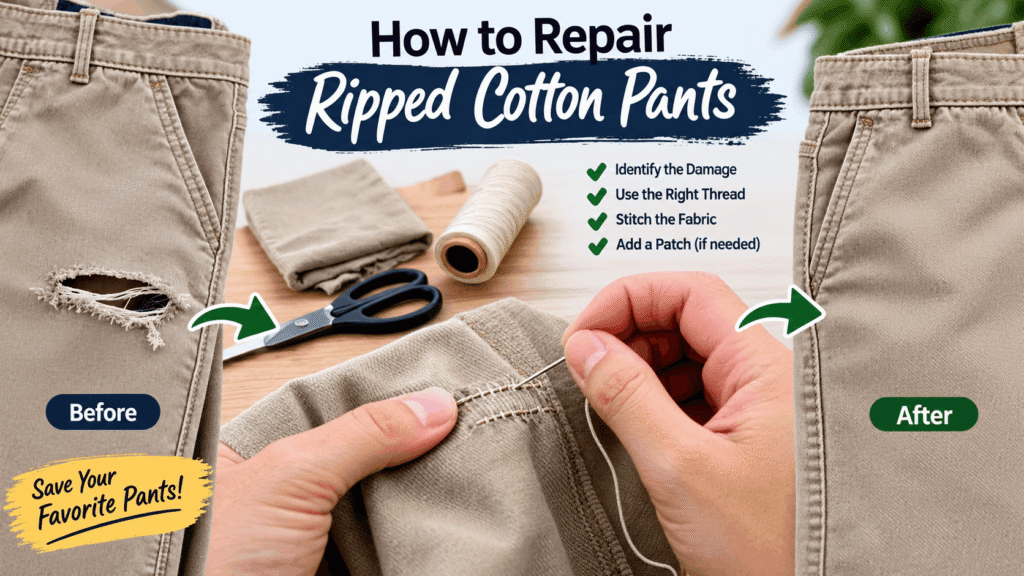
Cotton pants can develop holes, split seams, or torn areas after repeated wear and washing. These problems often appear around the knees, inner thighs, pockets, and crotch, where the fabric experiences regular friction and pressure. Instead of discarding a damaged pair, you can often restore it with a few basic sewing supplies and the right repair technique.
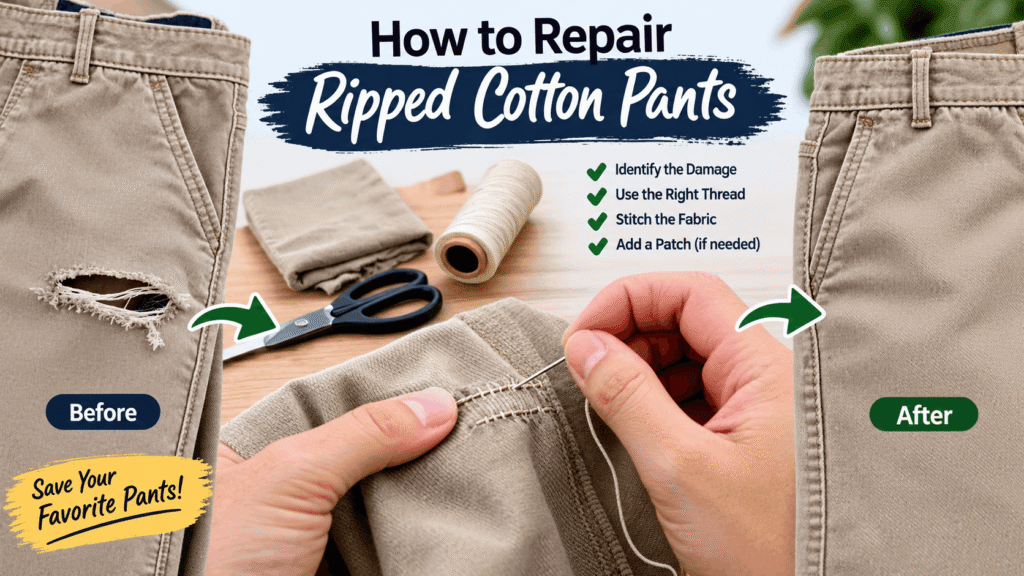
Learning how to repair ripped cotton pants starts with identifying the type of damage. A small tear with intact edges may need only a few stitches, while a larger hole usually requires a fabric patch to strengthen the surrounding material. If you prefer not to sew, an iron-on patch or suitable fabric adhesive may also work for certain repairs.
The best solution depends on the size of the tear, the condition of the cotton, and how much movement the repaired area must withstand. A quick fix that works on a small opening may not be strong enough for a rip in the crotch or inner thigh.
In this guide, you will learn how to inspect damaged pants, sew small tears, repair open seams, patch larger holes, and maintain your clothing after mending. You will also discover common repair mistakes and practical ways to help your cotton pants last longer.
Table of Contents
Quick Answer: How Do You Repair Ripped Cotton Pants?
You can repair ripped cotton pants by sewing small tears, restitching open seams, or attaching a fabric patch over holes and weakened areas. For a temporary or lightweight repair, a compatible iron-on patch may be suitable.
Follow these basic steps:
- Inspect the tear and check whether the surrounding fabric is still strong.
- Clean and prepare the damaged area.
- Choose a suitable thread, patch, or repair product.
- Repair the tear using an appropriate technique.
- Check the finished area for loose stitches, rough edges, or remaining weak spots.
The most important rule: Do not simply pull a large hole closed with tight stitches. If fabric is missing or badly worn, reinforce the area with a patch that extends into stronger material.
Can You Repair Ripped Cotton Pants?
Yes, many ripped cotton pants can be repaired at home. Cotton is generally straightforward to sew, making it suitable for basic hand stitching, machine sewing, and fabric patching.
However, not every tear can be repaired in the same way. The location and condition of the damage determine which method is most likely to work.
| Damage area | Suggested fix | Skill level |
|---|---|---|
| Small tear with intact edges | Hand stitching | Easy |
| Open side or leg seam | Restitch the original seam | Easy |
| Small hole with frayed edges | Patch or darning | Moderate |
| Large knee or inner-thigh rip | Reinforced fabric patch | Moderate |
| Tear near the crotch | Apply a durable fabric patch and secure it with extra stitching | Intermediate to advanced |
| Small tear requiring a quick fix | Suitable iron-on patch | Easy, depending on the product |
Before beginning, examine the fabric around the damaged area. If it has become thin, rough, or fragile, the surrounding material may also need reinforcement.
What Supplies Do You Need to Repair Torn Cotton Pants?
You do not need an extensive sewing kit for most small repairs. Gather the following supplies before starting:
- A sewing needle or sewing machine
- Matching thread suitable for the fabric
- A cotton or compatible fabric patch
- Fabric scissors
- Sewing pins or fabric clips
- A ruler or measuring tape
- An iron and pressing cloth, if required for your chosen patch
Choose thread that blends with the pants if you want the repair to be less noticeable. For a decorative repair, a contrasting thread can create a visible mending detail.
The patch should have a similar weight and flexibility to the original fabric. A patch that is too thick may create a bulky area, while one that is too thin may not provide enough support.
If you are unsure whether your garment can tolerate heat, check the care instructions before using an iron-on product.
1. Inspect and Prepare the Damaged Area
Proper preparation helps you avoid uneven stitches and weak repairs. Before sewing, determine whether the fabric has torn, the seam has opened, or the material has worn away.
Follow these preparation steps
- Examine the damage. Check the length of the tear and look for thinning fabric around its edges.
- Clean the pants. If they need washing, follow the garment’s care instructions and allow them to dry completely.
- Remove loose threads. Trim dangling fibers carefully without cutting away sound material.
- Flatten the fabric. Place the damaged section on a flat surface and smooth out wrinkles.
- Turn the pants inside out. This usually makes it easier to work on the damaged area and hide the stitching.
- Choose your repair method. Decide whether the damage needs simple stitching, a patch, or a no-sew solution.
Avoid stretching the torn edges to make them meet. Excessive tension can distort the pants and place unnecessary pressure on the new stitches.
2. Sew a Small Tear by Hand
Hand sewing is one of the simplest ways to repair a small tear in cotton pants. It works best when the edges are intact and enough fabric remains to hold the stitches securely.
How to sew a small rip
- Thread a needle with suitable matching thread.
- Tie a secure knot at the end of the thread.
- Turn the pants inside out and align the torn edges.
- Begin stitching slightly before the tear starts.
- Use small, even stitches along the damaged section.
- Continue slightly beyond the end of the tear.
- Secure the thread with a knot and trim the excess.
A backstitch is a useful hand-sewing technique because it creates a strong line of stitching. Keep the stitches close enough to secure the fabric without pulling it into tight folds.
After sewing, turn the pants right side out and inspect the repair. The area should lie relatively flat and feel comfortable against the skin.
When this method is unsuitable: If the hole has missing fabric or the surrounding cotton is badly frayed, stitching the edges together may create a weak, puckered repair. Use a patch instead.
3. Repair a Torn Seam Without Patching
Sometimes the cotton itself is undamaged, but the stitching that holds the pants together has broken. This can happen along the side seam, inner leg, pocket edge, or waistband.
An open seam is often easier to repair than a hole through the fabric because the original material may still be intact.
How to repair an open seam
- Turn the pants inside out.
- Remove loose or broken threads without damaging the fabric.
- Align the seam edges according to the original stitching line.
- Secure the fabric with pins or clips.
- Sew along the original seam, overlapping the intact stitching slightly at both ends.
- Secure the thread and remove the pins.
- Turn the pants right side out and check the seam.
You can use a sewing machine or a strong hand-sewing stitch. Avoid making the seam unnecessarily thick, especially around the inner thighs and crotch, where bulky stitching may cause discomfort.
If the fabric has torn beside the seam, restitching alone may not be enough. Reinforce the damaged section with a suitable patch.
4. Patch a Hole in Cotton Pants
A fabric patch is usually the better option when a hole is too large to close neatly with stitches or when the material around the opening has weakened.
A patch provides additional support by spreading tension across a larger area. You can use matching fabric for a discreet repair or choose a contrasting patch for a decorative finish.
How to sew a fabric patch onto ripped pants
- Measure the hole and examine the surrounding fabric.
- Cut a patch that extends approximately one inch beyond the damaged area on each side, adjusting the size when necessary.
- Round the corners to help reduce lifting and catching.
- Turn the pants inside out.
- Position the patch behind the hole, covering all weakened material.
- Pin or clip the patch in place and smooth out any folds.
- Sew around the patch edges, attaching it securely to the pants.
- Add extra stitching across the damaged area if needed.
- Remove the pins and inspect the finished repair.
The patch must reach beyond the frayed edges into stronger fabric. Otherwise, the surrounding material may tear again before the patch has a chance to provide lasting support.
Choosing the right patch placement
- Knee holes: Cover the full worn area rather than only the visible opening.
- Inner-thigh damage: Choose a flexible patch that will not create uncomfortable friction.
- Crotch tears: Reinforce the surrounding fabric because this area experiences repeated movement and tension.
- Pocket damage: Keep the repair clear of the pocket opening and ensure the pocket remains functional.
For a large or complicated tear, a professional tailor may be able to provide a neater and more durable finish.
5. Use an Iron-On Patch for a Quick Repair
An iron-on patch is a convenient alternative when you do not want to sew by hand. These patches use heat-activated adhesive to attach the repair material to the garment.
They can work well on suitable cotton pants, but their durability depends on the patch, fabric, application method, and amount of friction the area experiences.
How to apply an iron-on patch
- Check that the patch is suitable for your pants.
- Trim loose threads and flatten the damaged section.
- Position the patch according to the product instructions.
- Place a pressing cloth over the area if recommended.
- Apply the specified heat and pressure, following both the patch instructions and garment care requirements.
- Allow the repaired area to cool completely.
- Check whether the edges have bonded securely.
Do not assume every cotton garment can tolerate a high iron temperature. Cotton blends, decorative finishes, and coated fabrics may require special care.
For areas that experience frequent movement, a sewn patch may be more dependable than adhesive alone. Only add stitching to an iron-on patch if the product instructions allow it.
6. Repair a Large Tear in the Crotch or Inner Thigh
Crotch and inner-thigh tears need special attention because these areas experience friction, stretching, and repeated movement. If the fabric has become thin around the hole, simply sewing the edges together may not restore enough strength.
A stronger repair method
- Turn the pants inside out and inspect the entire damaged area.
- Check whether the fabric around the tear is still strong enough to support stitching.
- Select a patch with a similar weight and suitable flexibility.
- Cut it large enough to extend beyond all weakened material.
- Position the patch on the inside of the pants.
- Secure it with pins or clips.
- Sew around the patch edges, attaching it to sound fabric.
- Add reinforcement stitches where needed without creating excessive bulk.
- Check the repair for rough edges and uncomfortable stitching.
Do not limit the repair to the visible hole if the surrounding fabric is also worn. A larger reinforced area can help distribute tension more evenly.
If the fabric has deteriorated across a wide section or the tear runs through several intersecting seams, professional repair may be the better choice.
7. Can You Repair Cotton Pants Without Sewing?
Yes. Some tears can be repaired without a needle and thread by using an iron-on patch, fabric adhesive, or fusible repair material designed for clothing.
The right option depends on the damage and the product’s compatibility with your pants.
| No-sew method | Suitable use | Limitation |
|---|---|---|
| Iron-on patch | Small holes and suitable flat areas | Adhesion may weaken with friction or washing |
| Fabric adhesive | Certain small tears or patch edges | Requires proper application and curing |
| Fusible repair material | Reinforcing fabric from the inside | Requires compatible fabric and suitable heat |
Follow the manufacturer’s instructions carefully. Avoid household glue or superglue, which may leave a hard, uncomfortable patch and damage the fabric.
No-sew repairs are generally better suited to light-duty damage. For a large rip, a crotch tear, or an area under frequent tension, a sewn patch is usually a stronger choice.
8. How to Care for Cotton Pants After Repairing Them
Repairing a tear is only part of keeping your pants in good condition. Proper washing, drying, and storage can help reduce unnecessary wear and protect the repaired area.
Read the garment care label
Before washing or ironing repaired pants, check the care symbols and written instructions. These can indicate suitable washing temperatures, drying methods, and ironing requirements.
For more guidance, read our article on how to read pants care labels. Understanding the label can help you avoid treatments that may damage the fabric or weaken an adhesive repair.
Avoid excessive heat during washing and drying
Some cotton pants can shrink when exposed to certain combinations of moisture, heat, and agitation. Follow the recommended washing temperature and drying instructions for your particular garment.
Our guide on how to stop cotton pants from shrinking explains practical ways to reduce avoidable shrinkage. You can also learn why pants shrink after washing to understand the factors that may affect their size.
Keep the fabric smooth without damaging the repair
If your repaired pants become wrinkled, use a suitable ironing or steaming method based on the care label. Avoid pressing directly over an adhesive patch unless its instructions allow it.
For more detailed advice, see how to remove wrinkles from cotton pants.
Store your pants properly
Allow pants to dry fully before putting them away. Fold them neatly or hang them using a suitable hanger, depending on the fabric and available storage space.
Our guide on how to store pants properly offers more tips for keeping garments organized and ready to wear.
9. Other Habits That Help Cotton Pants Last Longer
A good repair can extend the useful life of your pants, but everyday care also matters. Several common clothing problems are related to how garments are washed, handled, worn, and stored.
Prevent unnecessary fading
Strong detergents, unsuitable washing conditions, and repeated laundering can contribute to color loss in some garments. Wash pants according to their care instructions and avoid unnecessary washing when they are still clean.
Read what causes pants to fade for more information about common causes of fading. If you wear dark cotton pants, our guide on how to keep black pants from fading provides additional color-care advice.
Keep the fabric in good condition
Inspect high-friction areas regularly and address loose threads before they turn into larger tears. Avoid overloading pockets with heavy items, as the added weight can pull on the fabric and stitching.
You can find more general maintenance tips in our guide on how to keep pants looking new.
If your pants start feeling stiff after purchase or washing, the problem may relate to the fabric, finishing, or laundry products rather than a tear. Learn more in why new pants feel stiff.
Understand how fabric affects comfort and wear
Not all pants respond to wear in the same way. The construction, fiber content, and thickness of the fabric can affect comfort, flexibility, and how well the material holds up over time.
For example, cotton-polyester blend pants for everyday wear may behave differently from pants made entirely of cotton. You can also explore why cotton pants are comfortable to learn more about cotton’s everyday wear characteristics.
If you notice a change in the fit of your pants after repeated use, read why pants lose their shape for more information about factors that can affect their appearance and fit.
Remove lint and pet hair carefully
Lint and pet hair can make repaired pants look untidy, even when the stitching is strong. Use a lint roller, clothing brush, or another suitable cleaning tool to remove loose fibers without pulling on the repair.
Our guides on how to remove lint from pants and how to remove pet hair from pants explain practical ways to keep clothing looking cleaner.
10. Common Mistakes to Avoid When Repairing Ripped Cotton Pants
Even a straightforward repair can fail if you use the wrong technique or overlook weak fabric.
Avoid these common mistakes:
- Pulling a hole closed too tightly: This can distort the fabric and put excessive tension on the stitches.
- Using a patch that is too small: The patch should extend into sound fabric beyond the damaged area.
- Ignoring surrounding wear: Thin material near the tear may need reinforcement as well.
- Choosing unsuitable thread or fabric: A patch that is too heavy or stiff can make the repaired section uncomfortable.
- Applying too much heat: An unsuitable iron temperature can damage the fabric or adhesive.
- Using ordinary household glue: It may create a hard area that does not move naturally with the pants.
- Skipping the final inspection: Loose stitches or lifting patch edges should be addressed before wearing the garment.
- Ignoring repeated strain: If the same area tears again, inspect the fit, surrounding fabric, and repair strength.
The goal is not simply to hide the hole. A good repair should support the fabric while allowing the pants to move comfortably.
FAQs
What is the easiest way to repair ripped cotton pants?
For a small tear with intact edges, hand stitching is usually a straightforward option. If the fabric is missing or badly frayed, a fabric patch is more appropriate. A compatible iron-on patch may also work for certain light-duty repairs.
Can I fix a hole in cotton pants without sewing?
Yes. An iron-on patch or clothing-specific fabric adhesive may work for some small holes. Check the product instructions and garment care label first. For larger tears and high-stress areas, a sewn patch is generally more dependable.
How do I repair a large hole in cotton pants?
Cut a patch that extends beyond the hole into strong fabric. Attach it securely and reinforce the damaged section with suitable stitching. If the surrounding material is extensively worn, consider professional repair or replacing the pants.
Can I repair ripped cotton pants by hand?
Yes. You can use a needle, matching thread, and suitable stitches to fix small tears and open seams. Larger holes can also be repaired by hand, but they usually require a properly sized patch and additional reinforcement.
How do I fix ripped cotton pants in the crotch?
Turn the pants inside out and inspect the full damaged area. Place a suitable patch behind the tear, extending into strong fabric, and sew it securely. Because this area experiences repeated movement and friction, a carefully reinforced repair is important.
Will an iron-on patch stay on cotton pants after washing?
It may remain attached if it is suitable for the fabric and applied correctly. However, washing, friction, and repeated movement can weaken the adhesive. Follow the product instructions and inspect the patch periodically.
Is it better to repair or replace ripped cotton pants?
Repairing is often worthwhile when the rest of the garment remains in good condition and the damage is limited. If the cotton is thin across several areas, the pants repeatedly tear, or the fit is no longer suitable, replacement may be more practical.
How can I prevent cotton pants from tearing again?
Follow the care label, avoid unnecessary strain on pockets and seams, and inspect high-friction areas regularly. Repair small openings early and choose a suitable washing and drying method to help preserve the fabric.
Final Thoughts
Learning how to repair ripped cotton pants can help you make better use of clothing you already own. Small tears and open seams often need only basic stitching, while larger holes usually require a patch that extends into stronger material. Iron-on patches and fabric adhesives can provide alternatives for suitable repairs, but they may not be ideal for areas exposed to heavy friction.
Choose the method that matches the damage, reinforce weakened fabric where necessary, and follow the garment’s care instructions after repairing it. With careful mending and regular maintenance, many cotton pants can remain useful and comfortable for longer.